Wallpaper Removal & Wall Prep Guide
Your Walls Look Terrible After Wallpaper Removal. Now What?
The paper came off and took part of the wall with it. That is the usual outcome, and it is fixable, but not by priming and hoping.
Published September 2026 by Shreveport Drywall Pro
Quick answer
Torn drywall face and leftover adhesive are the normal result of stripping wallpaper, not a sign anyone did it wrong. Repairing torn paper across 30 to 50 percent of a wall runs roughly $2 to $4 per square foot, and a full skim coat where damage covers more than half runs roughly $3 to $6, based on 2026 contractor pricing data. The one thing that does not work is painting over it. Adhesive residue and torn face both reject paint, and the wall will telegraph every patch.
The short answer
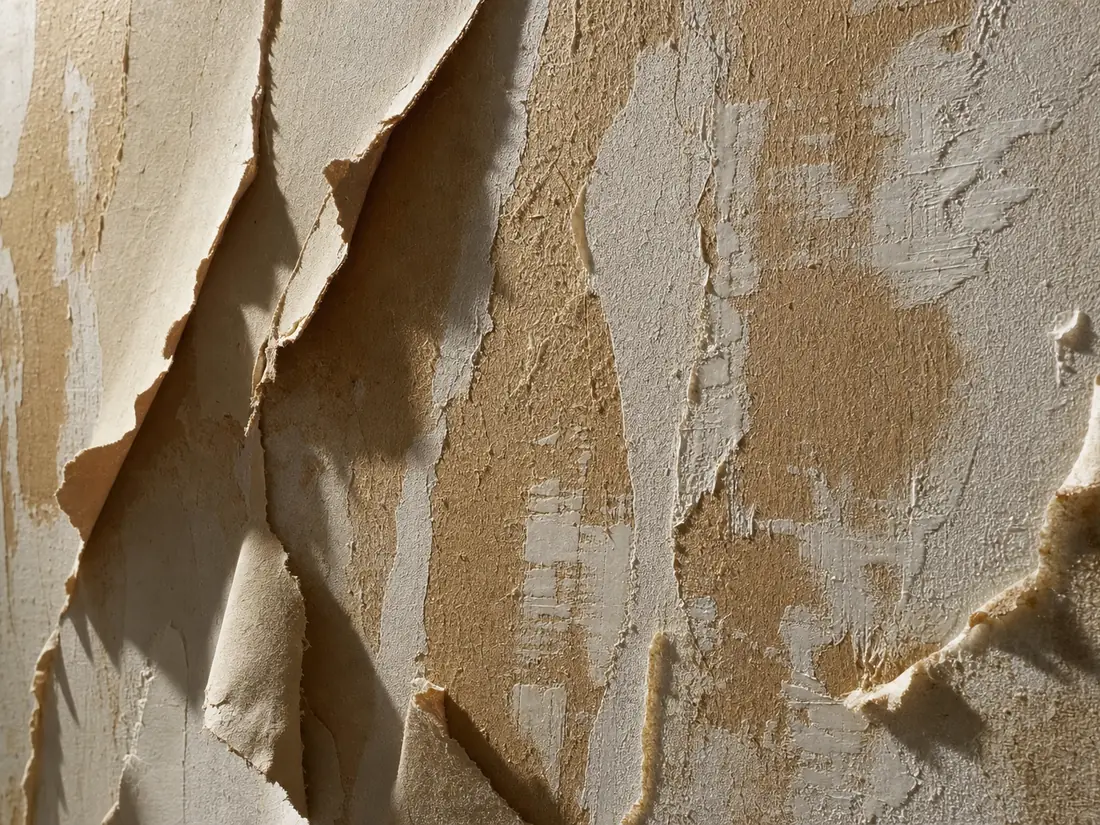
Drywall is a gypsum core wrapped in paper, and that paper facing is structural to the finish. When wallpaper is glued directly to it, especially when it was hung without a primer or sealer underneath, stripping the paper pulls the top layer of the drywall face away with it.
You end up with three problems on the same wall: torn brown paper face where the surface lifted, glossy patches of dried adhesive that survived the stripping, and gouges where a scraper went in too hard. Each one needs a different treatment, which is why "just prime it" fails.
This is a normal outcome. Most walls where wallpaper has been in place for decades come off this way. It is not evidence that the stripping was botched.
Why paint over it never works
Two separate mechanisms, both reliable.
Exposed drywall face is raw paper. Apply a water-based primer or paint to it and the paper absorbs moisture, swells and lifts into bubbles and fuzzy raised edges. The wall looks worse after painting than before, and stripping that back is more work than sealing it properly would have been.
Adhesive residue is the other half. Old wallpaper paste reactivates when it gets wet. Roll paint over it and the paste softens under the film, which gives you a surface that stays tacky, cracks as it dries unevenly, or peels off in sheets later. Adhesive also reads as a gloss difference under side light even where it does bond.
The sequence that does work is: get the adhesive fully off, seal the torn face with a product made for it, then skim, then sand, then prime. Skipping the sealer is the single most common failure, and it is the one that is invisible until the paint is already on.
What it costs to put right
Contractor pricing data for 2026 puts the repair work in fairly consistent bands, and the band is set by how much of the wall is damaged rather than by the size of the room.
- Light damage. Scattered torn patches and some residue. Spot sealing, patching and sanding. Usually priced as repair work rather than by area.
- Medium, roughly 30 to 50 percent of the surface. A problem surface sealer over the torn face, then two thin coats of joint compound and sanding. Roughly $2 to $4 per square foot.
- Heavy, more than 50 percent. A full skim coat over the entire surface, two to three coats with sanding between, then priming. Roughly $3 to $6 per square foot.
Quoted by room rather than by area, professional skim coating commonly lands around $300 to $1,200 with many jobs near $600, and wall repair after wallpaper removal is often quoted at $400 to $1,200 per room on top of the removal itself. Removal of the paper alone can run $800 to $2,000 per room depending on the paper and the wall condition.
Those are published national ranges, not this business's price list. They are useful mainly for sanity-checking a quote and for understanding why two quotes on the same room can differ by a factor of three: one is patching and one is skimming, and those are different jobs.
Patch, partial skim or full skim
Deciding between these is most of the estimating, and you can get close on your own.
Stand at one end of the wall and look along it with a light held close to the surface, near parallel. Raking light like that reveals every ridge and every glossy patch of residue that straight-on daylight hides. If the defects are isolated and the rest of the wall reads flat, it is a patch job. If the whole surface is a landscape of torn face and residue edges, patching will leave a visible map of repairs and a full skim is the cheaper answer in the end.
The middle case is the awkward one. Partial skim across the damaged half of a wall creates a transition line that can read under raking light even when the work is good. On a wall that gets strong side light from a window, skimming the whole wall is usually worth it.
The finish level matters here too. If the room is going to carry gloss or semi-gloss paint, hold out for a level of flatness closer to the Gypsum Association's Level 5, because gloss magnifies everything underneath it. Flat paint in a hallway forgives far more.
Why this comes up so often around here
A lot of the housing stock across Shreveport, Bossier City and the surrounding parishes was papered during eras when wallpaper was standard in dining rooms, kitchens and hallways, and much of it went on over unprimed drywall. That combination is exactly the one that tears.
Humidity adds a second layer. Old paste is hygroscopic, so in a humid stretch residue that felt dry can stay slightly soft and reactivate readily once you introduce water, which makes both removal and sealing less predictable. It is a reason to let walls dry properly after washing residue off rather than moving straight to compound.
The other pattern worth naming is that these walls are frequently in older homes where the surface underneath is not perfectly flat to begin with. Stripping the paper reveals the wall you actually had rather than creating a new problem, and a skim coat then does double duty.
When to do it yourself and when not to
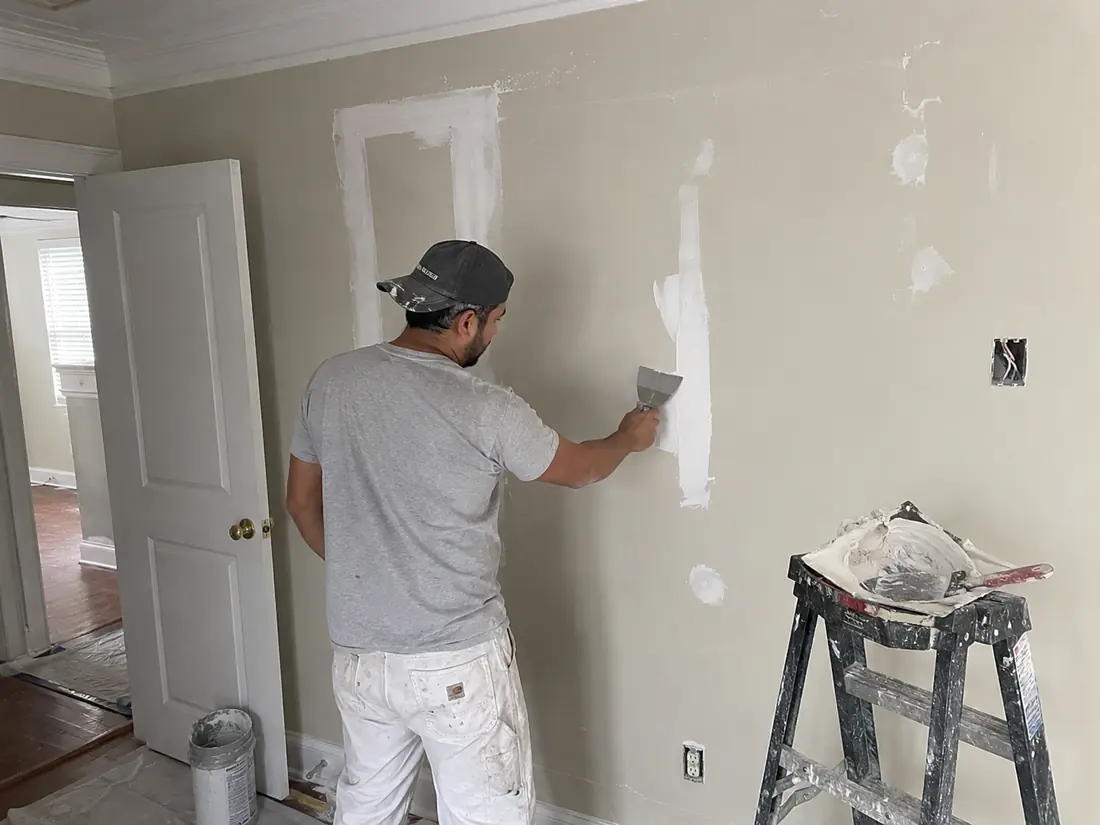
Washing adhesive off and spot patching a few torn areas is realistic DIY. It is tedious, it takes more rinsing than anyone expects, and the main risk is impatience rather than skill.
Skim coating a whole room is a different proposition. It is the part of drywall work that most rewards practice, because the flatness comes from blade control and from knowing how thin each coat should be. A first attempt usually produces ridges that then need aggressive sanding, and aggressive sanding on already-torn face opens up fresh damage.
The honest dividing line is the light in the room. A hallway under flat paint will forgive an amateur skim. A living room with a big window throwing raking light across the wall will show every pass, and that is the room to hand over. Our wallpaper removal and wall prep page covers where the preparation scope normally sits.
The bottom line
Walls that look ruined after wallpaper comes off are usually in normal condition for the job. The mistake that turns a fixable wall into an expensive one is priming and painting before the adhesive is fully gone and the torn face is sealed.
If you have stripped a room and stopped, Shreveport Drywall Pro will tell you honestly whether it needs patching or skimming, which is the difference between two quite different numbers. Related reading on getting a flat result: Level 4 versus Level 5 finish explains when the extra flatness is genuinely worth paying for.
Stripped the paper and stopped?
Send a photo of the worst wall. You get an honest read on whether it needs patching, a partial skim or a full skim, and what each one costs, before anyone books anything.
Or call (318) 666-5548.
FAQ
Common Questions
Why did the wall tear when I removed the wallpaper?
Drywall is a gypsum core wrapped in paper, and that paper facing is part of the finished surface. When wallpaper is glued directly to unprimed drywall, stripping it pulls the top layer of the facing away with it. It is the normal outcome on walls papered without a primer or sealer underneath, particularly where the paper has been up for decades.
Can I just paint over wallpaper adhesive?
No. Old paste reactivates when it gets wet, so paint rolled over residue softens the adhesive under the film. That produces a surface that stays tacky, dries unevenly or peels later, and residue also shows as a gloss difference under side light. The adhesive has to come off fully before anything else happens.
How much does it cost to repair walls after wallpaper removal?
2026 contractor pricing data puts medium damage across 30 to 50 percent of a surface at roughly $2 to $4 per square foot for sealing, two coats of compound and sanding, and heavy damage above 50 percent at roughly $3 to $6 per square foot for a full skim coat. Quoted per room, wall repair after removal is often $400 to $1,200. Those are published national ranges rather than a local price list.
Do I need to skim coat the whole wall or just the damaged parts?
Look along the wall with a light held nearly parallel to the surface. If the damage is isolated and the rest reads flat, patch it. If torn face and residue cover most of the wall, a full skim usually costs less than chasing a map of patches. Partial skims can leave a transition line that shows under raking light, so on a wall with strong side light, skimming the whole surface is normally worth it.
What primer should be used on torn drywall paper?
A problem surface sealer intended for torn drywall face, applied before any joint compound. Its job is to lock down the raw paper so it does not swell and bubble when water-based products go over it. Using an ordinary wall primer at that stage is the most common reason a repair fails after everything looks fine.
How long does the whole process take?
Removal is usually a day per room. The repair is what sets the schedule, because compound has to dry fully between coats and a skim is two to three coats plus sanding. In a humid stretch that stretches out noticeably, and rushing coats is what causes cracking later. Plan on several days between stripping and painting rather than a weekend.