Ceilings
Ceiling Drywall Repair in Shreveport, LA
Sagging, cracking or stained ceilings corrected at the cause, with the right board thickness for your actual joist spacing.
Ceiling Drywall Repair That Addresses the Cause
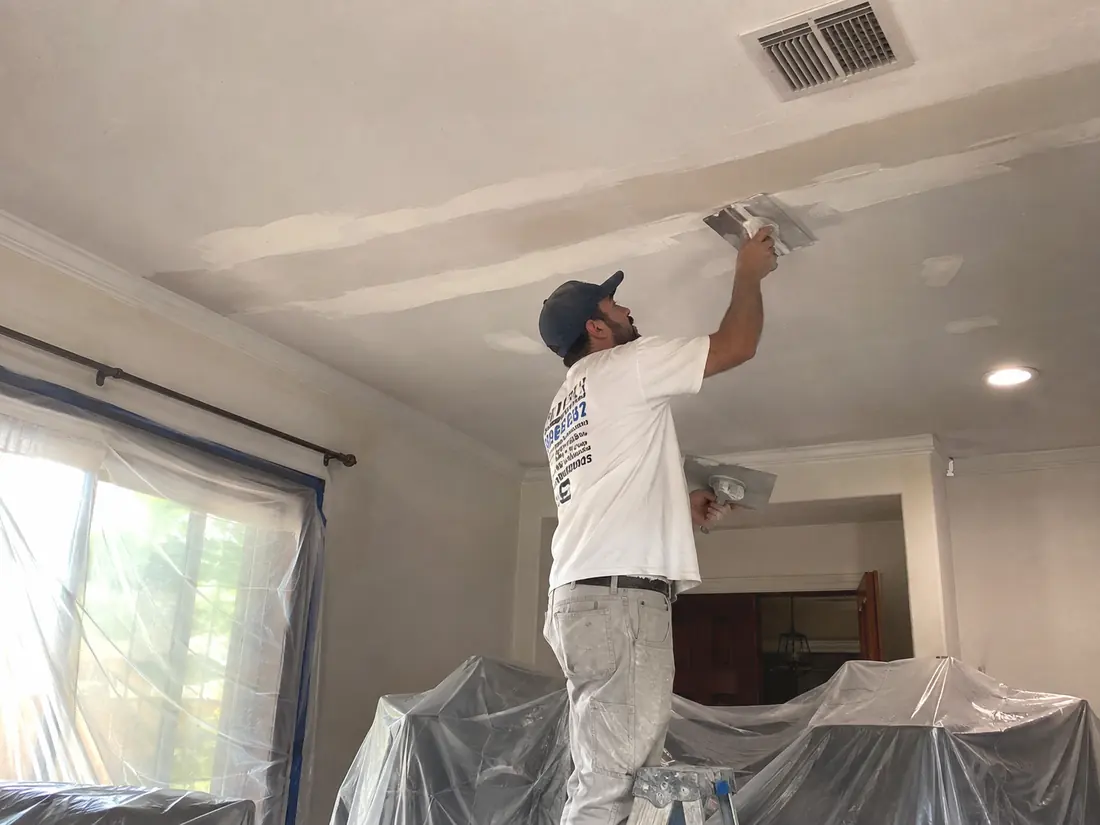
Ceiling drywall repair in Shreveport is harder than wall repair for two reasons that have nothing to do with working overhead. The first is that ceilings are lit from the side by every window and fixture in the room, so raking light exposes imperfections that the same repair would hide on a wall. The second is that ceilings fail for structural reasons more often than walls do. Gravity is a constant load, and a ceiling that sags or cracks is usually telling you something about board thickness, joist spacing or moisture rather than about the drywall itself.
Replacing a sagging ceiling with the same specification that sagged is a repair with an expiration date. We check why it failed first.
What's Included
- Cause diagnosis. We check joist spacing, existing board thickness, fastener pattern and moisture before quoting a repair.
- Moisture testing on any ceiling with staining or softness, including confirming the source is actually stopped.
- Removal back to sound material with the framing above inspected once the board is open.
- Correct board specification for your framing, which frequently means 5/8-inch board rather than the half-inch that failed.
- Proper fastening pattern with screws at correct spacing, and adhesive where appropriate to reduce fastener count and future popping.
- Tape, three coats and sanding to the specified level.
- Texture matching for knockdown or other existing ceiling textures.
- Stain-blocking primer on any area with previous water staining, because water stains bleed through ordinary paint indefinitely.
Signs Your Ceiling Needs Attention
Visible sag or a dip between joists
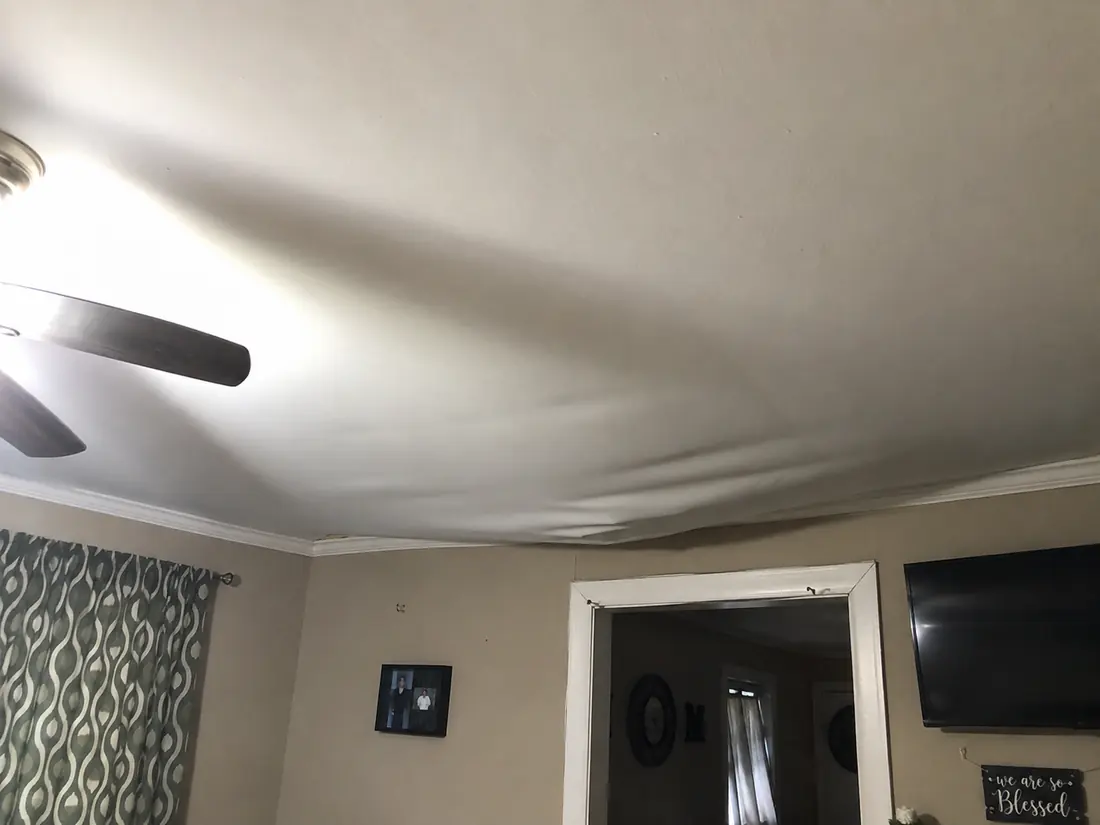
Stand at one end of the room and sight along the ceiling plane. A ceiling that dips between framing members is carrying more load than its board thickness supports, or it has absorbed moisture. This gets worse, not better.
Brown or yellow rings
Water has passed through. The stain is downhill from the leak, not directly beneath it. These bleed through ordinary paint every time, which is why a repainted ceiling stain reappears within weeks.
Cracks along joint lines
A straight crack following a seam means the tape has released. That is a finishing failure. A crack that wanders across the field of the board rather than along a seam suggests movement in the structure above.
Nail pops or fastener rings across the ceiling
Very common where half-inch board was used on joists spaced at 24 inches, particularly if a heavy water-based texture was sprayed on afterward and added weight while wet.
Our Process
Diagnose before quoting
We measure joist spacing, check existing board thickness, look at the fastener pattern and test for moisture. A quote written without those four facts is a guess.
Confirm any water source is stopped
If there is staining, the leak is found and confirmed dry before drywall work is scheduled. Closing a ceiling over an active leak guarantees the repair fails.
Remove and inspect the framing
Damaged board is removed to sound edges, then the joists, insulation and any services above are inspected while they are accessible.
Rebuild to the correct specification
New board sized for the actual joist spacing, fastened at correct screw spacing, with adhesive where it will reduce fastener count and future popping.
Tape, coat and sand
Three coats with full dry time between, sanded to the specified finish level. Ceilings get extra attention here because side lighting is unforgiving.
Texture, stain-block and prime
Texture matched to the existing ceiling, then stain-blocking primer over any previously stained area so nothing bleeds back through your paint.
Patch, Replace, or Overlay
Sectional patch
Right for isolated damage such as a single water event or an access hole. On a ceiling with a heavy texture the patch blends readily. On a smooth ceiling under strong side light, a sectional patch is much harder to hide, and we will tell you when the seam is likely to show.
When the whole ceiling comes down
Where the board is undersized for the joist spacing, replacing it with the same specification repeats the problem. Taking the surface off and reboarding correctly is covered on drywall removal and replacement.
Plaster ceilings
A plaster ceiling that sounds hollow or has started to sag is a different and more urgent problem than a drywall ceiling with the same symptom, because the plaster is held up by keys squeezed through the lath and those keys can let go. See plaster and lath repair.
Full ceiling replacement
Warranted when the board is undersized for the framing, when sagging is widespread, or when moisture has affected a large area. Replacing the whole plane also lets us correct the specification and gives you a single uninterrupted surface with no old and new junctions.
Overlay with new board
New board installed over the existing ceiling. This is quicker and much less messy than tearing out, and it is sometimes the right call over a sound but ugly ceiling. The trade-offs are that it lowers the ceiling, adds real weight to the framing, and requires every fixture box and vent to be extended down to the new plane. We will not recommend it over a ceiling with moisture damage, because it seals the problem in.
Half-inch versus 5/8-inch board
This is the specification question that determines whether the repair lasts. On joists spaced at 24 inches on center, 5/8-inch board is the standard specification, and half-inch board is prone to sagging over time, particularly under a sprayed texture that added weight while wet. If we find half-inch board on 24-inch spacing, we will quote the correct replacement and explain why.
Why Shreveport Ceilings Fail
Ceiling failures we see locally cluster around three causes.
Roof and storm intrusion is the most common. Northwest Louisiana gets both severe thunderstorm activity and extended periods of heavy rainfall, and Shreveport averages roughly 50 inches of rain a year. Wind-driven rain finds flashing details and roof penetrations, and the first visible evidence is almost always a ring on a ceiling well away from the actual entry point.
Attic humidity is the second and is more insidious. Air conditioning runs for a long season here, and warm humid attic air meeting cool ceiling surfaces and cold duct lines produces condensation. That moisture accumulates without any dramatic leak event, softening board gradually. A ceiling that sags without any history of a leak is often reporting an attic ventilation or duct insulation problem rather than a roof problem.
Undersized board is the third. Half-inch board on joists at 24 inches on center appears throughout the regional housing stock, and where a heavy water-based texture was sprayed onto it, the board absorbed that moisture and took a set it never recovered from. The visible result is a gentle scalloping between every joist, and no amount of patching fixes it. That ceiling needs the correct board.
What Affects the Price
Ceiling repairs cost more than the equivalent wall repair. Expect a room-sized ceiling repair to sit in the upper part of the $200 to $750 range, with full ceiling replacement quoted by area. What drives it:
- Overhead work. Everything is slower, and finishing overhead to a standard that survives side lighting takes longer than the same work on a wall.
- Ceiling height. Standard height is straightforward. Vaulted ceilings and stairwell ceilings require staging.
- Extent of moisture damage. Not knowable until the board is opened, which is why water-damage quotes carry ranges.
- Insulation replacement. Insulation that got wet loses its performance and needs replacing, not drying.
- Texture matching. Most local ceilings carry knockdown, which needs testing before application.
- Board upgrade. Moving from half-inch to 5/8-inch costs more in material and is heavier to handle, and it is the difference between a repair and a fix.
Sagging or Stained Ceiling? Let Us Find Out Why.
We check joist spacing, board thickness and moisture before quoting, because a ceiling repaired with the same specification that failed will fail the same way. Send a photo and we will tell you what we are likely looking at.
Prefer to talk it through? Call (318) 666-5548.
Why Choose Us
Why Choose Us for Ceiling Repair
Shreveport Drywall Pro is a drywall specialist, not a general contractor who takes drywall on the side. Three things set the work apart.
We Check the Specification That Failed
Before quoting we measure joist spacing and existing board thickness. Half-inch board on joists at 24 inches on center is a common cause of sagging locally, especially where a heavy sprayed texture added weight while wet. Replacing it with the same half-inch board reproduces the failure. We quote 5/8-inch where the framing calls for it and explain why.
5/8-inch board is the standard specification for joists at 24 inches on centerMoisture Verified Dry Before We Close It Up
Any stained or soft ceiling gets moisture tested, and we confirm the source is actually stopped before drywall work is scheduled. Closing a ceiling over an active leak or damp framing guarantees a callback. The EPA notes mold can begin growing on damp material within 24 to 48 hours, so this is a health issue and not only a durability one.
EPA: mold can begin growing on damp material within 24 to 48 hoursFinished for the Way Ceilings Are Actually Lit
Ceilings get raking light from every window and fixture in the room, which exposes flaws that the identical repair would hide on a wall. We inspect finished ceilings under a low-angle work light before calling them done, and we apply stain-blocking primer over any previously stained area so old water marks do not bleed back through your paint weeks later.
Low-angle light inspection and stain-blocking primer as standardFAQ
Ceiling Drywall Repair Questions
Why is my ceiling sagging?
Usually one of two reasons. Either the board is too thin for the joist spacing, commonly half-inch board on joists at 24 inches on center, or it has absorbed moisture and lost strength. Gypsum does not recover its strength once it has been saturated. We check spacing, thickness and moisture before quoting so the repair addresses the actual cause.
Can you just paint over a water stain?
Not with ordinary paint. Water stains bleed through standard paint indefinitely, which is why a painted-over stain reappears within a few weeks. The area needs a stain-blocking primer first, and more importantly the source needs to be confirmed stopped, otherwise you are painting over an active problem.
How much does ceiling drywall repair cost?
Room-sized ceiling repairs generally sit in the upper part of the $200 to $750 range, and full replacements are quoted by area. Ceilings cost more than the same repair on a wall because the work is overhead and the finishing has to survive side lighting that walls never get.
Do you fix the leak too?
We do not do roofing or plumbing, but we will not start drywall work until the source is confirmed stopped and the cavity is dry. We can usually tell you where to look based on where the staining appears, since water travels along framing before it shows itself and the stain is rarely directly under the entry point.
My ceiling cracks along the same line every year. Why?
A crack that follows a joint line is failed tape, and rebedding it properly resolves it. A crack that keeps returning in the same place after a proper repair usually means seasonal structural movement, which in our clay soils is common. In that case the fix is upstream of the drywall.
Can you match my knockdown ceiling texture?
Yes. Knockdown is the most common ceiling texture in the area and it matches well. We test on a sample board held against your ceiling in the room's own light before applying anything, since knockdown timing shifts with humidity and getting it wrong is very visible overhead.
Guides
More on Ceiling Drywall Repair
Service Area
Ceiling Drywall Repair Near You
We cover ceiling drywall repair across Shreveport and the surrounding parishes. Each area page covers what is specific to that community's housing and conditions.
Related Services
Popcorn Ceiling Removal
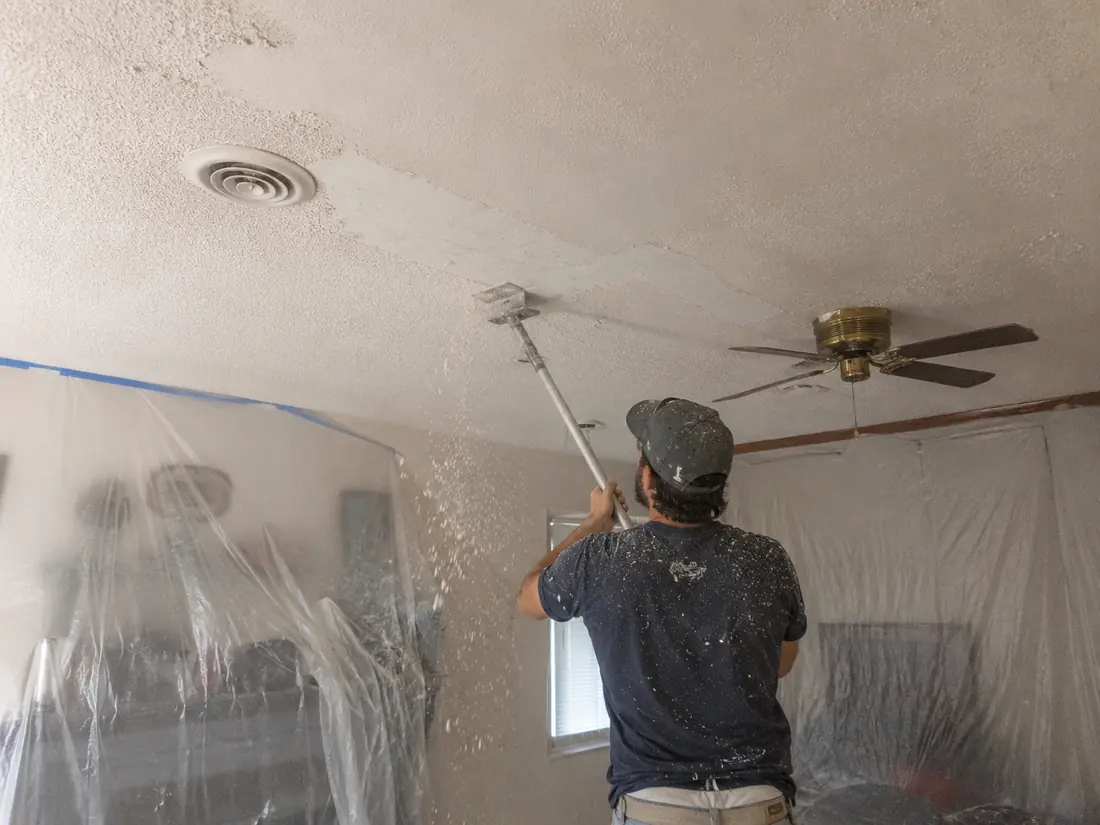
Textured ceilings scraped, skimmed and refinished. Pre-1980 ceilings tested for asbestos before any work begins.
Learn more →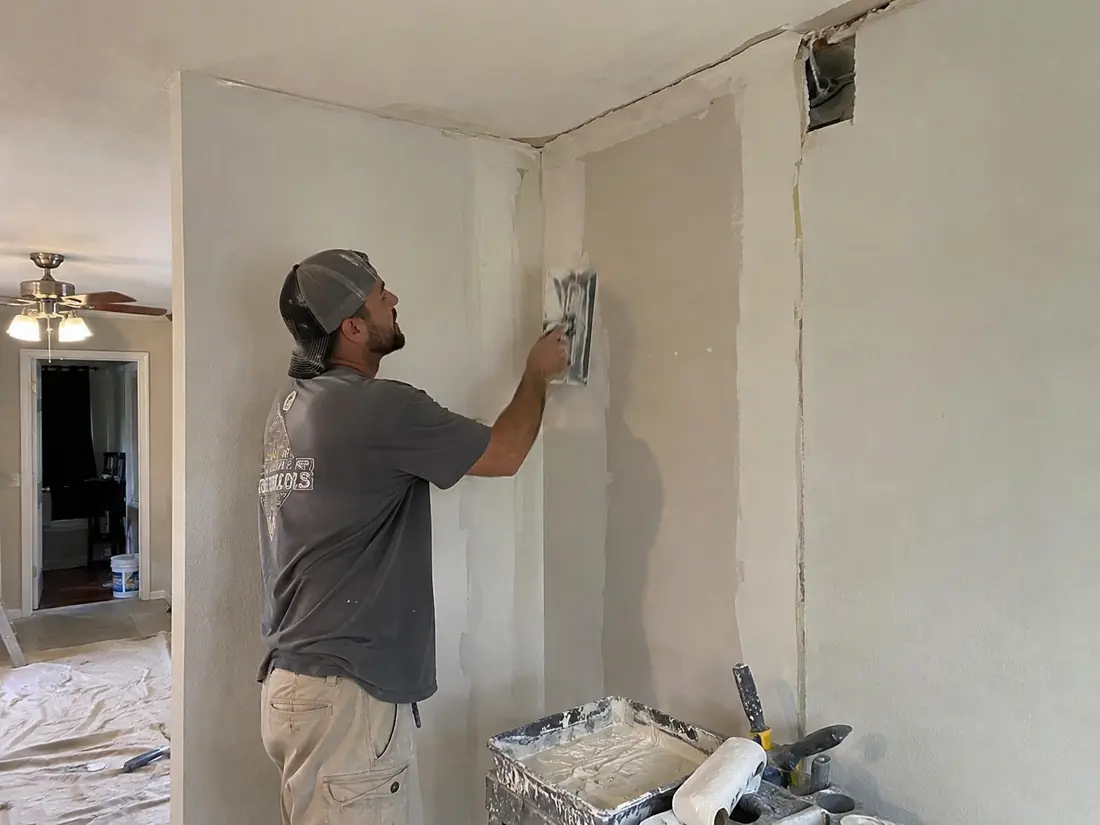
Water Damage Repair
Roof leaks, plumbing failures and storm damage. Wet board removed back to sound material, framing verified dry.
Learn more →
Drywall Repair
Holes, cracks, nail pops and settlement damage repaired and textured to match the surrounding wall.
Learn more →Not what you were looking for? See all drywall services or learn more about us.
Ready to get started?
Free written estimate, itemized before anything begins. We respond within 2 business hours.
Get a Free Quoteor call (318) 666-5548