Drywall Installation Guide
Drywall vs Sheetrock: Is There Actually a Difference?
Sheetrock is a brand name for drywall, the way Kleenex is a brand of tissue. The differences worth knowing are elsewhere.
Published August 2026 by Shreveport Drywall Pro
Quick answer
No. Sheetrock is a brand of drywall made by USG, the way Kleenex is a brand of tissue. Every sheet of Sheetrock is drywall. The differences that actually matter are thickness, core type and facing, not the name on the sheet.
The short answer
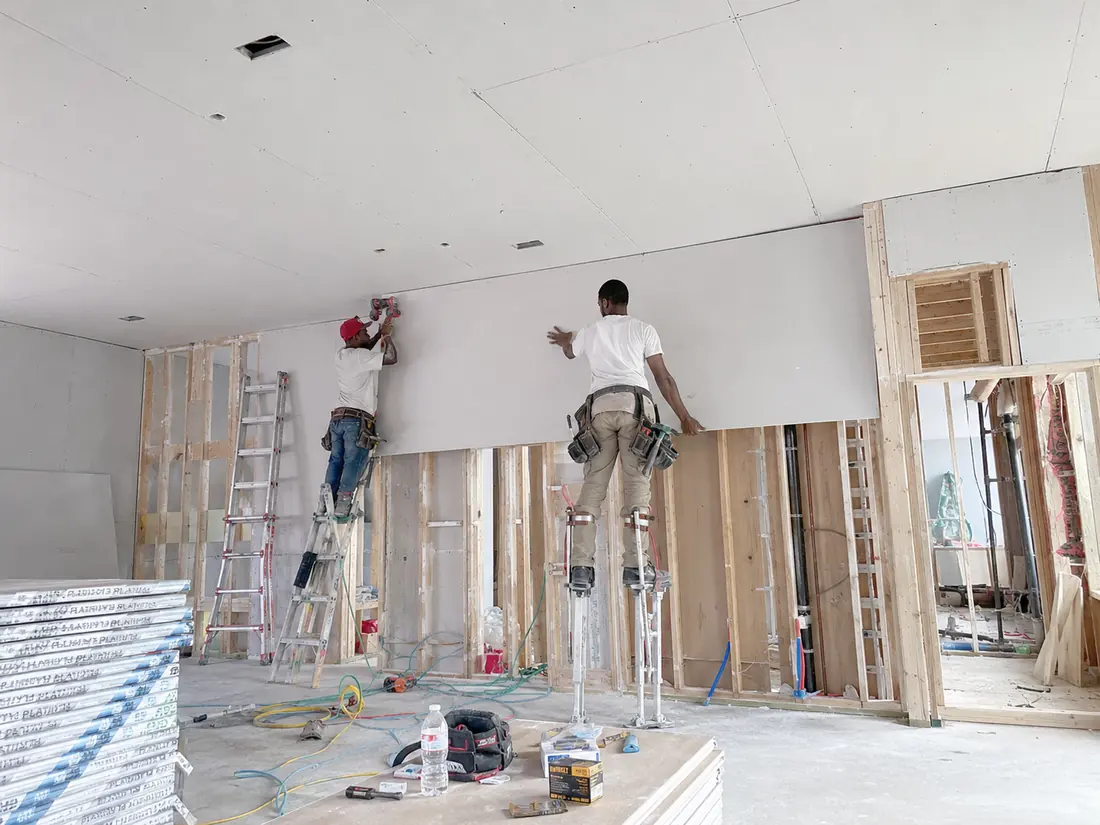
Sheetrock is a registered brand of drywall manufactured by United States Gypsum Company. Drywall is the generic product: a panel with a compressed gypsum core faced on both sides with paper or a mat.
So asking whether to use drywall or Sheetrock is a little like asking whether to use tissues or Kleenex. Every sheet of Sheetrock is drywall. Not every sheet of drywall is Sheetrock.
The term became genericised because the brand was dominant for decades, particularly in the American South, and plenty of contractors here still use the words interchangeably without meaning anything by it.
The other names you will hear
- Gypsum board is the correct technical term, and the one used in codes and standards documents such as ASTM C1396.
- Wallboard and plasterboard are older generic terms. Plasterboard is standard usage in Britain.
- Rock is trade shorthand. If someone says they are rocking a house, they mean hanging board.
- Gyprock, ToughRock, Gold Bond and Purple are all manufacturer brands, the same way Sheetrock is.
None of these describe a different product category. They describe either a generic material or a particular manufacturer's version of it.
The differences that actually matter
If brand is not the meaningful variable, what is? Four things, and these are what belong on a quote.
Thickness
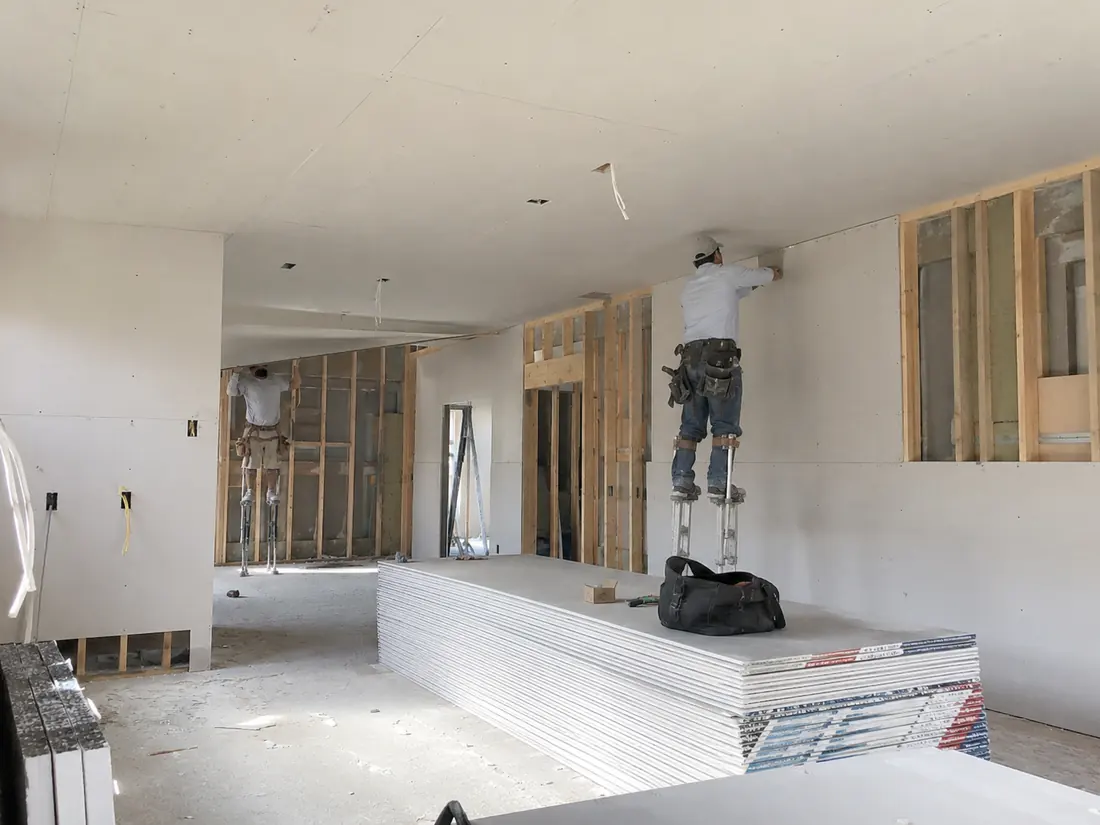
Half-inch is standard for walls. 5/8-inch is heavier, stiffer and more fire-resistant, and it is the standard specification for ceilings framed at 24 inches on centre. Quarter-inch exists for curved work and for laminating over existing surfaces.
Getting this wrong on a ceiling is the single most consequential board decision in residential work. Half-inch board on 24-inch centres is prone to sagging over time, particularly where a water-based texture was sprayed on and added weight while it was wet.
Core type
Standard core suits most rooms. Type X contains glass fibre for fire resistance and is required in rated assemblies. Type C performs better still. Where a fire rating is specified, the core type is not optional and cannot be substituted.
Facing
Standard board is paper-faced. Moisture-resistant board, often green, resists moisture better but is not waterproof. Mold-resistant board replaces the paper with a fiberglass mat or treated facing, removing the organic food source mold needs. Behind tile in a wet area, cement board rather than any drywall is the correct product.
Specialty boards
Sound-dampening board with a viscoelastic layer for acoustic separation, abuse-resistant board for high-traffic commercial corridors, and flexible board for curves. All cost more and all have narrow, specific uses.
What to specify instead of a brand
When you are getting quotes, the useful questions are not about brand at all.
- What thickness on the ceilings, and what is the joist spacing?
- What board is going in the bathrooms and the laundry?
- Is anything fire-rated, and if so which assembly is being built?
- What finish level, room by room?
A contractor who answers those four precisely is telling you more than one who names a premium brand. Our drywall installation in Shreveport quotes name board type by room for exactly this reason.
What about the alternatives to drywall?
Occasionally the question behind drywall versus Sheetrock is really whether to use gypsum board at all. A few alternatives come up in this region and each has a narrow use.
Plaster
What the historic housing in Highland and South Highlands was originally built with. Harder, more durable and considerably more expensive to install today because the skilled labor is scarce. Almost nobody specifies new plaster now, but plenty of local homes still have it, and patching drywall into it requires accounting for the thickness difference so the repair finishes flush with ninety-year-old trim.
Cement board
Not a drywall substitute so much as a tile substrate. It belongs directly behind tile in showers and tub surrounds, where it is unaffected by water and has no organic content for mold to feed on. It is not a finish surface.
PVC and composite panels
Sometimes proposed for garages, workshops and utility spaces. They are washable and unaffected by moisture, which has genuine appeal in an unconditioned building here. They look industrial, they cost more per square foot, and they do not accept texture or paint the way drywall does.
Plywood or OSB
Common in workshops where you want to fasten into the wall anywhere. It has no fire resistance comparable to gypsum, which matters on any assembly shared with living space, and it is a poor choice anywhere a rating is required.
For essentially all interior residential wall and ceiling surfaces, gypsum board remains the right answer. The decision that matters is which type of gypsum board, not whether to use it.
Why it comes up in Louisiana
Two of these distinctions matter more here than in a drier climate.
Facing. In a region this humid, ordinary paper-faced board behind a bathroom or laundry wall is a repair scheduled for a few years out. Mold-resistant board costs a little more per sheet and removes the food source entirely. There is more in best drywall for bathrooms in Louisiana.
Ceiling thickness. A great deal of regional housing was built with half-inch board on ceiling joists at 24 inches on centre. Where a heavy water-based texture was later sprayed onto it, the board absorbed that moisture and took a permanent set. The result is gentle scalloping between every joist, and no patch fixes it. See repair or replace a sagging ceiling.
The bottom line
Brand is the least important variable in this decision. Thickness, core type and facing are what determine whether a wall lasts, and they are what belong on a quote.
Shreveport Drywall Pro specifies board type room by room in writing, including where 5/8-inch and mold-resistant board are being used and why. That is a more useful answer than any brand name.
Not sure what board your job needs?
Tell us the room and what is behind the wall. We specify board type room by room in writing, which is the part that actually matters.
Or call (318) 666-5548.
FAQ
Common Questions
Is Sheetrock better than drywall?
The question does not quite work, because Sheetrock is a brand of drywall made by USG rather than a different product. Quality differences between reputable manufacturers are small. Thickness, core type and facing matter far more than brand.
What thickness drywall should I use?
Half-inch is standard for walls. Use 5/8-inch on ceilings where joists are 24 inches on centre, and wherever a fire rating requires it. Half-inch board on 24-inch ceiling spacing is a common cause of sagging.
What is the green drywall for?
Green board is moisture-resistant, intended for bathrooms, laundries and other damp areas. It resists moisture better than standard board but it is not waterproof, and it is not the correct product directly behind tile in a shower.
Do contractors here say drywall or Sheetrock?
Both, interchangeably. Sheetrock became genericised because the brand was dominant for decades, particularly in the South. Nobody means anything different by it.
Is gypsum board the same thing?
Yes. Gypsum board is the correct technical term and the one used in codes and standards documents. Drywall and Sheetrock are the everyday names for it.