Drywall Installation Guide
Do You Need a Licensed Contractor for Drywall Work in Louisiana?
Louisiana does not license drywall as a trade. It licenses by what the job costs, which catches people out in both directions.
Published September 2026 by Shreveport Drywall Pro

Quick answer
It depends on the price of the job, not on the fact that it is drywall. The Louisiana State Licensing Board for Contractors requires registration or licensing once a residential project reaches $7,500 including labor and materials, with a full residential license required at $50,000 and above. Commercial work triggers licensing at $50,000 for major and specialty classifications. Below those thresholds the state license is not triggered, though insurance and a written contract still matter.
The short answer
Louisiana licenses contractors by project value rather than by trade. There is no separate "drywall license" a homeowner should be asking to see.
According to the Louisiana State Licensing Board for Contractors, a residential project costing $7,500 or more including labor and materials falls under home improvement requirements, and a full residential license is required at $50,000 and above. On commercial work, licensing is triggered at $50,000 or more for major and specialty classifications.
Worth being precise about one thing, because plenty of pages get it wrong: the LSLBC does not publish drywall as its own named specialty classification the way it does electrical, mechanical and plumbing. Residential drywall work is generally captured under home improvement rather than a trade-specific license. Requirements change, so confirm current thresholds and classifications with the LSLBC directly rather than taking any contractor's word for it, including ours.
Where the lines actually fall
Three bands are worth holding in your head.
Under $7,500 residential
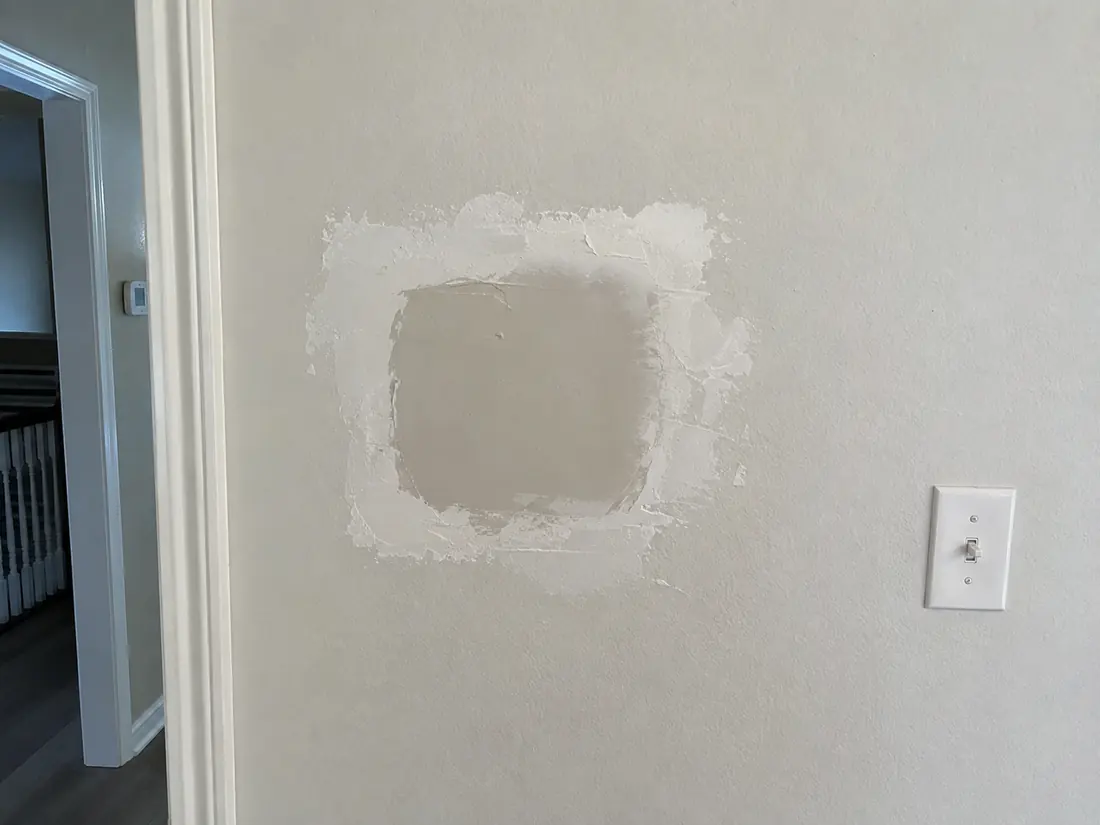
Most single-room repairs, patch work, ceiling repairs and texture matching land here. A state contractor licence is not triggered. That does not mean credentials are irrelevant, it means the state is not the thing verifying them, so liability insurance and a written scope carry the weight.
$7,500 to $50,000 residential
This is where Home Improvement Registration comes in. Whole-house drywall on a renovation, a large water damage rebuild, or drywall bundled into a bigger remodel will commonly cross $7,500 faster than homeowners expect once labor and materials are both counted.
$50,000 and above
A full residential licence is required at this level, and $50,000 is also the commercial trigger for major and specialty classifications. New construction and substantial commercial build-outs sit here.
The threshold counts the total project cost including materials, not the labor portion. That distinction is the one people get wrong, and it is the one that quietly moves a job from one band into the next.
An occupational licence is not a contractor licence
This is the most common misunderstanding in the whole subject, and it is worth separating cleanly.
A local occupational licence is a municipal registration to do business in a city or parish. A state contractor licence is issued by the LSLBC and speaks to the contractor meeting the state's requirements for work above the thresholds. Holding the first does not satisfy the second.
If someone shows you an occupational licence when you asked about contractor licensing, they have either misunderstood the question or they are hoping you will. Either way you now know which one you are looking at.
Insurance is the part that protects you on small jobs
On a $900 ceiling patch, no state licence is in play at all. What still matters is whether the person in your house carries general liability insurance, and whether anyone working on the job is covered for injury.
Drywall work involves ladders, ceiling work, dust and sometimes cutting into walls with unknown plumbing and wiring behind them. If an uninsured worker is hurt in your home, or a cut line floods a room, the question of who pays gets answered by insurance rather than by a licence number.
Ask for a certificate of insurance rather than a verbal assurance. A real one names the insurer, the policy number and the coverage dates, and you can call the insurer to confirm it is active.
How to actually verify someone
Four checks, none of which take long.
- Search the LSLBC licence lookup for the exact business name, and confirm the classification covers the work and the status is active.
- Ask for a certificate of insurance and confirm the dates are current.
- Get the scope in writing before any money changes hands, including board type, finish level and what surface preparation is included.
- Be cautious about large deposits. Materials for most residential drywall jobs are a modest share of the total, so a large up-front demand is worth questioning.
A written quote that names the finish level to Gypsum Association GA-214, states the board type room by room, and separates surface preparation from finishing tells you more about a contractor than any single credential does.
What should make you pause
None of these are proof of anything on their own. Two or three together are a pattern.
Cash only, with no written contract. A quote given over the phone for work nobody has looked at. Pressure to decide today. A price far below every other bid, which usually means something has been left out of scope rather than that someone found efficiency. Reluctance to give a business address or a licence number. Vague answers about who is actually doing the work.
On the other side, a contractor who tells you the job does not need doing, or that the crack you are worried about is a foundation question before it is a drywall question, is giving you the most useful signal available.
The bottom line
The short version is that Louisiana cares about the size of the job, not the name of the trade. Under $7,500 residential, verify insurance and get the scope in writing. Above it, verify registration or licensing with the LSLBC as well. Above $50,000, expect a full licence either way.
Shreveport Drywall Pro quotes in writing with the board type, finish level and preparation scope itemized, which is the document that makes any of these checks meaningful. If you are weighing a larger job, the drywall installation page sets out what a full scope normally includes, and the cost guide covers where smaller repairs typically land.
Want the license and insurance question answered in writing?
Ask for it before you book anyone, including us. A contractor who will not put credentials and scope in writing is telling you something useful.
Or call (318) 666-5548.
FAQ
Common Questions
Do you need a license to hang drywall in Louisiana?
Not as a trade in its own right. Louisiana licenses by project value, so a residential job reaching $7,500 including labor and materials falls under home improvement requirements and $50,000 and above requires a full residential license. Commercial work triggers licensing at $50,000. Below those thresholds the state license is not triggered. Confirm current rules with the Louisiana State Licensing Board for Contractors, since requirements change.
What is the difference between an occupational license and a contractor license?
An occupational license is a municipal registration to do business in a city or parish. A contractor license is issued by the Louisiana State Licensing Board for Contractors and applies to work above the state thresholds. Holding an occupational license does not satisfy the contractor licensing requirement, and the two are frequently confused.
Does the $7,500 threshold include materials?
Yes. The threshold counts the total cost of the project including both labor and materials. This is the detail that most often moves a job from one band into the next without anyone noticing, particularly on a whole-house or water damage rebuild where material quantities are large.
Should I hire an unlicensed contractor for a small drywall repair?
For a job well under the residential threshold, a state license is not the relevant check because it is not triggered. What is relevant is general liability insurance, a written scope, and a track record you can verify. Drywall work involves ladders, ceiling work and cutting into walls, so insurance is the protection that actually matters at that size.
How do I check if a Louisiana contractor is licensed?
Use the license lookup published by the Louisiana State Licensing Board for Contractors and search the exact business name. Confirm the status is active and that the classification covers the work you are having done. Separately ask for a certificate of insurance and confirm the policy dates are current with the insurer named on it.
Is a large deposit normal for drywall work?
Materials are usually a modest share of the total on residential drywall, since most of the cost is labor and finishing time. A large up-front demand is worth questioning and worth comparing against other quotes. A reasonable deposit tied to material purchase, with the balance on completion, is the more common structure.