Whole-Area Work
Drywall Removal & Replacement in Shreveport, LA
For the jobs past patching. Board out, framing checked while it is open, new board in and finished to match the rest of the room.
Drywall Removal and Replacement in Shreveport
This page is for one specific situation: the existing board has to come out. Not a hole, not a crack, not a stained corner, but a wall or a ceiling that has failed across enough of its area that patching it would be chasing the damage rather than fixing it.
Replacement is a different job from repair, and it is worth being blunt about which one you actually need, because the price difference is large in both directions. Paying for a full replacement when four patches would have done is money wasted. Patching a wall that needed replacing means paying twice, once for the patches and again when they telegraph through the paint six weeks later.
Most drywall problems are repairs. If yours is one of those, the honest answer is on the drywall repair page, and we would rather send you there than sell you a demolition.
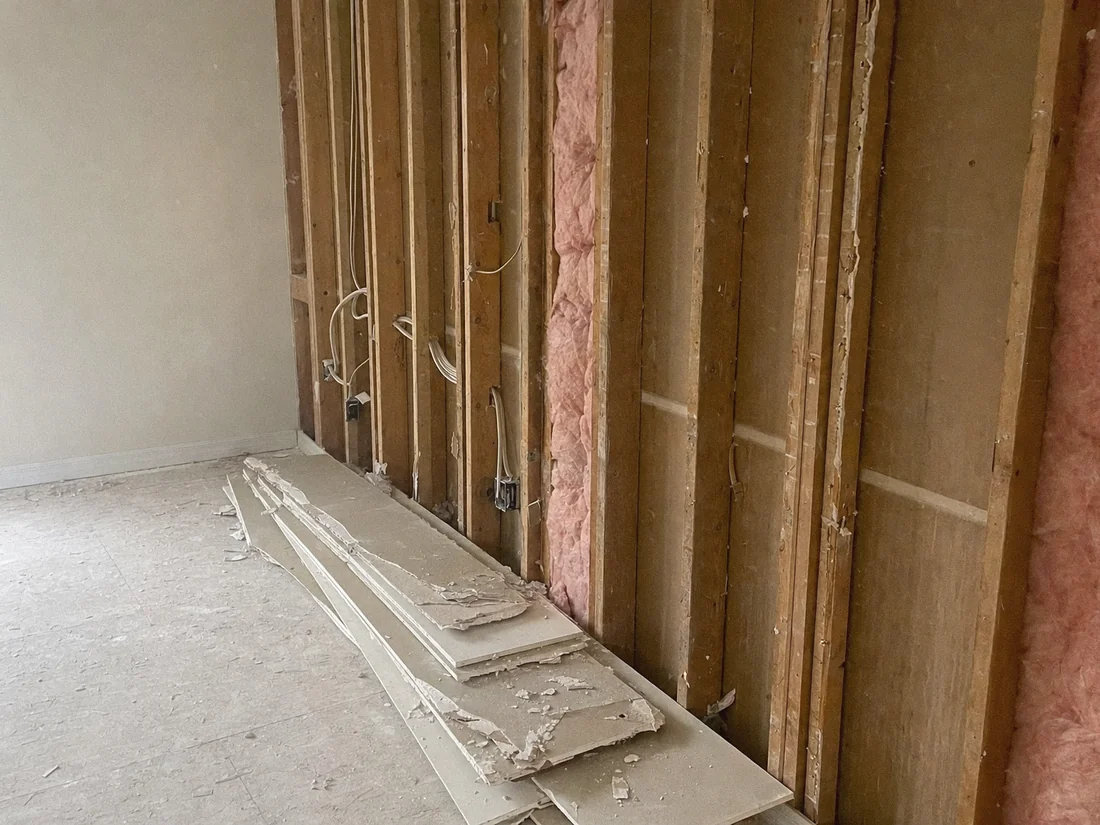
What's Included
- A straight answer on repair versus replacement before anything is quoted, including when the answer is that you do not need this service.
- Containment and protection set up before anything is opened. Removal is the dustiest work in the trade and old gypsum dust travels through a house.
- Controlled removal back to a sound edge on a framing member, so the new board has something to land on rather than being butted into open space.
- Debris removal and disposal, so you are not left with a pile of broken board in the driveway.
- A look at what is behind it while the wall is open. Framing condition, insulation, obvious moisture staining on the studs. This is the only moment any of it is visible, and we tell you what we find whether or not it is our work to fix.
- New board specified for the room, correct thickness for the framing spacing and moisture-resistant board where the room warrants it.
- Hung, taped and finished to the finish level the room needs, then feathered into the surrounding original surface.
- Texture matched to the existing walls, tested on a sample board first, because a perfectly flat replacement next to a textured wall reads as a repair from across the room.
When Replacement Is Actually the Right Call
Replacement earns its cost in a fairly narrow set of situations.
- Damage across a large share of one surface. Once patches start to outnumber the sound area, a new sheet is faster, cheaper and finishes better than a map of repairs.
- Board that has been wet and stayed wet. Gypsum that has softened or crumbled does not recover by drying. That work is covered on the water damage repair page, and the source has to be fixed first.
- Ceilings sagging because the board is wrong for the framing. Half-inch board on 24-inch centres sags over time, and replacing it with more of the same repeats the problem. See ceiling drywall repair.
- Remodels that open walls anyway. If plumbing, wiring or a layout change is already taking the wall apart, reboarding is the tail end of that work rather than a separate decision.
- Old repairs stacked on old repairs, where the surface has become a patchwork of different textures and levels.
- Board that has come loose from the framing across a run, popping fasteners repeatedly rather than in one spot.
- Smoke or odour absorbed into the board, which is a material problem rather than a surface one.
Our Process
Decide honestly whether you need this
We look at how much of the surface has actually failed relative to the whole. There is no fixed percentage that makes replacement correct, but when patch count climbs and the patches start to run into each other, replacement is usually both cheaper and better looking. If your job is a repair we will tell you it is a repair.
Protect the rest of the house
Containment, floor protection and a plan for getting debris out without carrying it through every room. Removal produces more dust than any other part of drywall work, and cleanup is far easier to prevent than to perform.
Remove back to sound material
Board comes off to a clean edge landing on a framing member. Fasteners come out rather than being hammered flat. We take out what has failed and leave what has not, because opening more wall than the job needs adds cost with no benefit.
Look at what is behind it
With the cavity open we check framing condition, insulation and any signs of past or present moisture. If we find something outside our scope, such as active moisture or damaged framing, you get told plainly and we do not close the wall over it.
Hang new board
Correct thickness for the framing spacing, moisture-resistant board where the room calls for it, fastened to schedule. Sheets are laid out to keep joints away from the places joints most often crack.
Tape, finish and match
Joints taped and coated, feathered wide into the surrounding surface, then the texture matched to the existing walls and tested on a sample first. The measure of a good replacement is that you cannot see where it stops.
Patch, Partial Replacement or Full Surface
Three tiers, and the honest one is usually the middle.
Patch it
Right when the damage is localised and the rest of the surface is sound. Faster, cheaper, less disruptive. Covered on drywall repair and, for smaller openings, patching and hole repair.
Replace a section
Cutting out and reboarding a defined area, typically from framing member to framing member or a full sheet. This is the most common form of replacement and it is often mistaken for a job that needs the whole room done. A single bad sheet in an otherwise sound wall is a section replacement.
Replace the whole surface
Warranted when a whole wall or ceiling has failed, when the board is wrong for the framing, or when the room is already open for other work. Once the old board is off, this is drywall installation, and it is priced and executed that way.
The decision that matters is not really replace versus patch. It is how much has to come out, and that is answerable by looking.
What Sends Shreveport Walls Past Repair
Two patterns account for most of the replacement work in this area, and both are worth understanding before you assume the board is the problem.
The first is water, which is the single most common reason drywall stops being repairable here. A slow roof leak or a supply line that has been weeping behind a wall softens gypsum well beyond the stain you can see, and the EPA notes that mold can begin growing on damp material within 24 to 48 hours. Board in that condition is replaced, not dried. The important part is sequence: the source has to be found and fixed first, because closing a wall over an active leak buries the evidence while the problem continues. Replacing drywall does not solve a leak or a mold problem, it comes after those are resolved by whoever is qualified to resolve them.
The second is undersized ceiling board. Half-inch board on joists spaced at 24 inches sags over time under its own weight, and a water-based texture sprayed on top adds weight while it is wet. That produces the gentle scalloping between joists you see in a lot of older ceilings around here. Replacing it with the same specification produces the same result again in a few years.
Humidity affects the finishing rather than the removal. Joint compound dries slowest in exactly the season when most of this work happens, and rushing coats on a large replacement is what produces cracking later.
What Affects the Price
Replacement is quoted by area after someone has looked, and the removal side is a real line item rather than a rounding error. Taking board off, getting debris out of the house and disposing of it takes time before a single new sheet goes up.
What moves the number: how much surface is coming out, ceiling versus wall, whether the room can be emptied or has to be worked around, access for getting debris out, the finish level required, and how difficult the existing texture is to match. Ceilings cost more than walls for the same area, every time.
You get a written quote separating removal and disposal from the new board and the finishing, so you can see what each half costs.
Not sure whether it needs patching or replacing?
That is the question worth answering before anyone quotes. Send photos of the whole wall rather than just the damage, and we will tell you which one it is.
Prefer to talk it through? Call (318) 666-5548.
Why Choose Us
Why Choose Us for Removal and Replacement
Shreveport Drywall Pro is a drywall specialist, not a general contractor who takes drywall on the side. Three things set the work apart.
We Will Tell You It Is a Repair
Replacement is the bigger invoice, which is exactly why the recommendation deserves scrutiny. We look at how much of the surface has genuinely failed and say so. Plenty of walls that get quoted for replacement need four patches and a skim, and we would rather do the smaller job than talk you into the larger one.
Repair versus replacement answered before quotingWe Tell You What Is Behind the Wall
Opening a wall is the only moment the framing, the insulation and any moisture history are visible. We look, and we tell you what is there whether or not it is our work to fix. Closing a wall over damaged framing or active moisture makes it someone else's expensive discovery later.
Cavity condition reported before the wall is closedWe Match Into What Is Already There
A replacement that is flat, clean and obviously newer than the wall beside it is a job half done. New board is feathered wide into the original surface and the texture is matched by application method, tested on a sample board first. The point is that you cannot find the edge afterwards.
Texture matched on a sample board before it goes on your wallFAQ
Drywall Removal & Replacement Questions
Should I repair or replace my drywall?
Repair when the damage is localised and most of the surface is sound. Replace when damage covers a large share of one surface, when the board has been wet and softened, when a ceiling is sagging because the board is undersized for the framing, or when the wall is open for other work anyway. There is no fixed percentage that decides it, but once patches start running into each other a new sheet is usually cheaper and finishes better.
How much does drywall replacement cost in Shreveport?
It is quoted by area after a look, with removal and disposal itemised separately from the new board and finishing, because taking the old board out and getting it off site is real labor before anything new goes up. Ceilings cost more than walls for the same area. Access, whether the room can be emptied, the finish level and the difficulty of matching the existing texture all move the number.
Do you remove and dispose of the old drywall?
Yes. Removal, debris handling and disposal are part of the scope and appear as their own line on the quote. You are not left with broken board stacked in the driveway.
Will replacing the drywall fix my water problem or my mold?
No, and it should not be attempted as a fix. Replacing drywall addresses the damaged material, not the cause. The moisture source has to be found and resolved first by whoever is qualified for that work, whether that is a roofer, a plumber or a remediation contractor. Closing a wall over an active leak hides the evidence while the problem continues underneath.
Can you match the texture on the rest of the room?
That is the part of the job we take most seriously, because it is what determines whether the replacement is visible. Knockdown, orange peel, skip trowel and smooth each need a different setup, and we test the match on a sample board before it goes anywhere near your wall. Matching into a smooth wall under strong side light is the hardest case and worth discussing up front.
How long does a full room replacement take?
The removal and hanging move quickly. Finishing sets the schedule, because compound has to dry fully between coats and most work needs three coats plus sanding. In a humid stretch that stretches out noticeably. Any schedule promising same-day coats on a full room is a schedule that produces cracking later.
Related Services
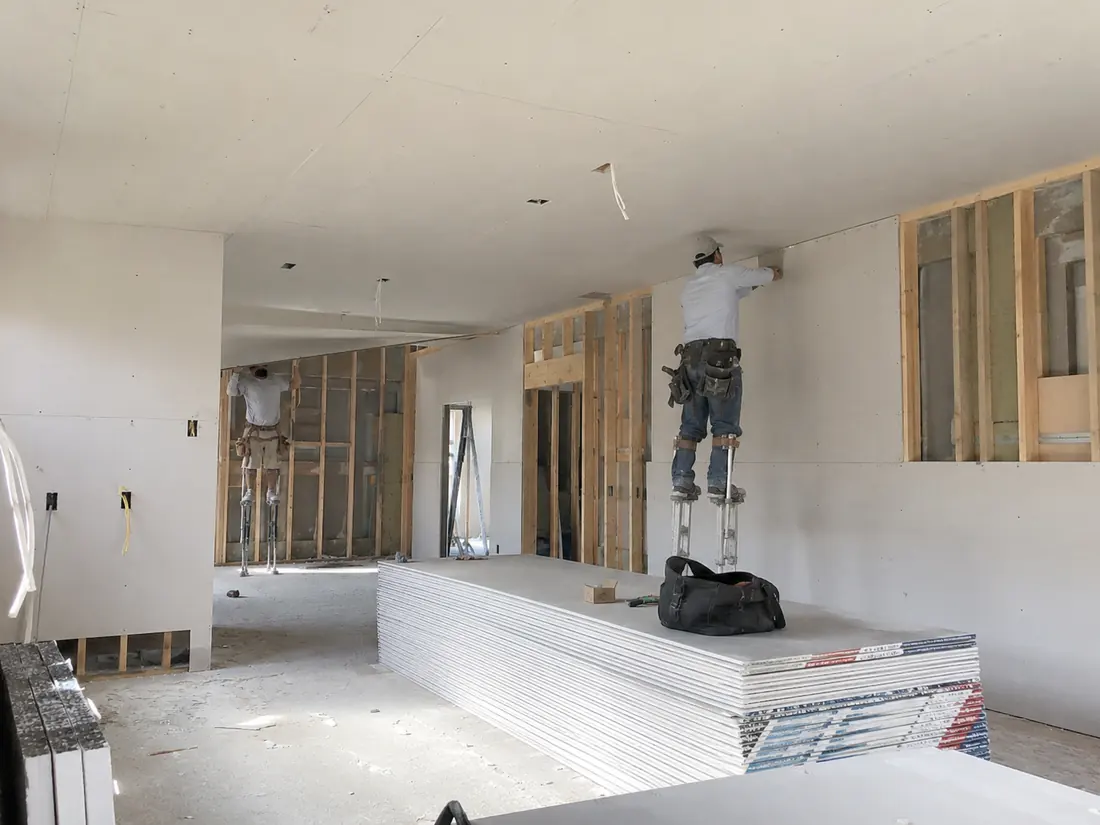
Drywall Installation
New board hung, taped and finished for additions, garage conversions, remodels and whole-home builds.
Learn more →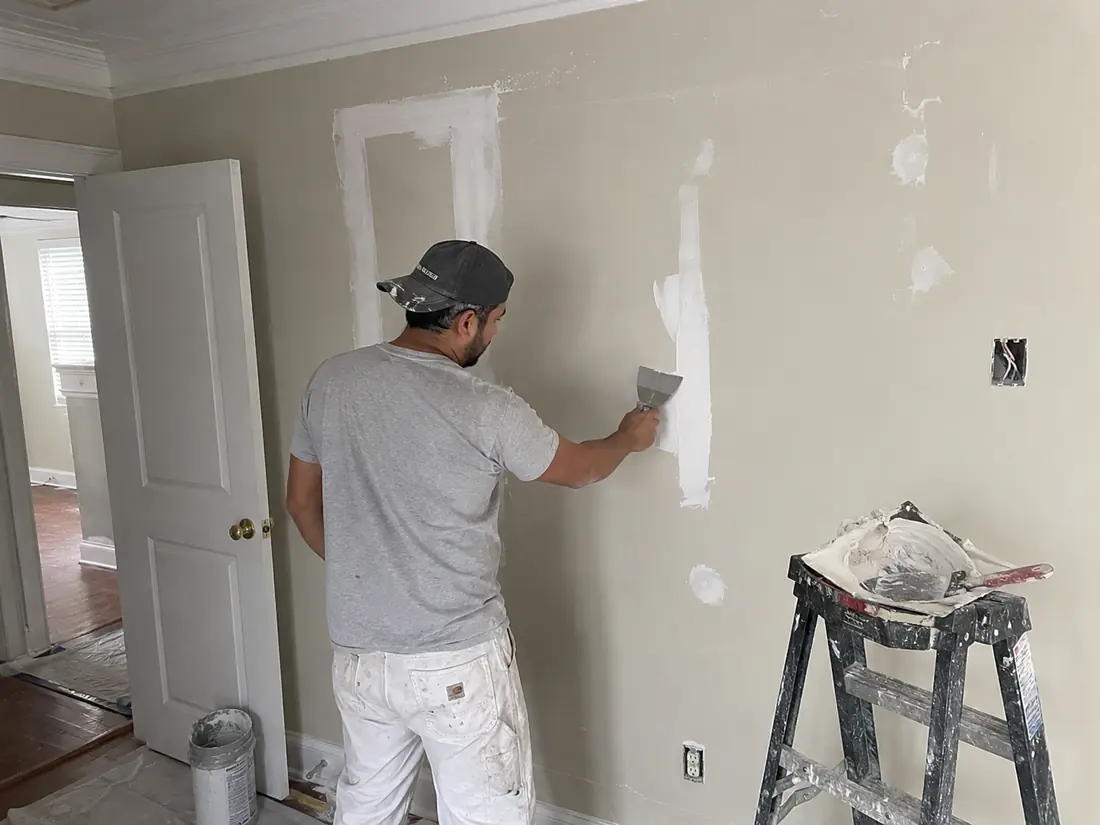
Drywall Repair
Holes, cracks, nail pops and settlement damage repaired and textured to match the surrounding wall.
Learn more →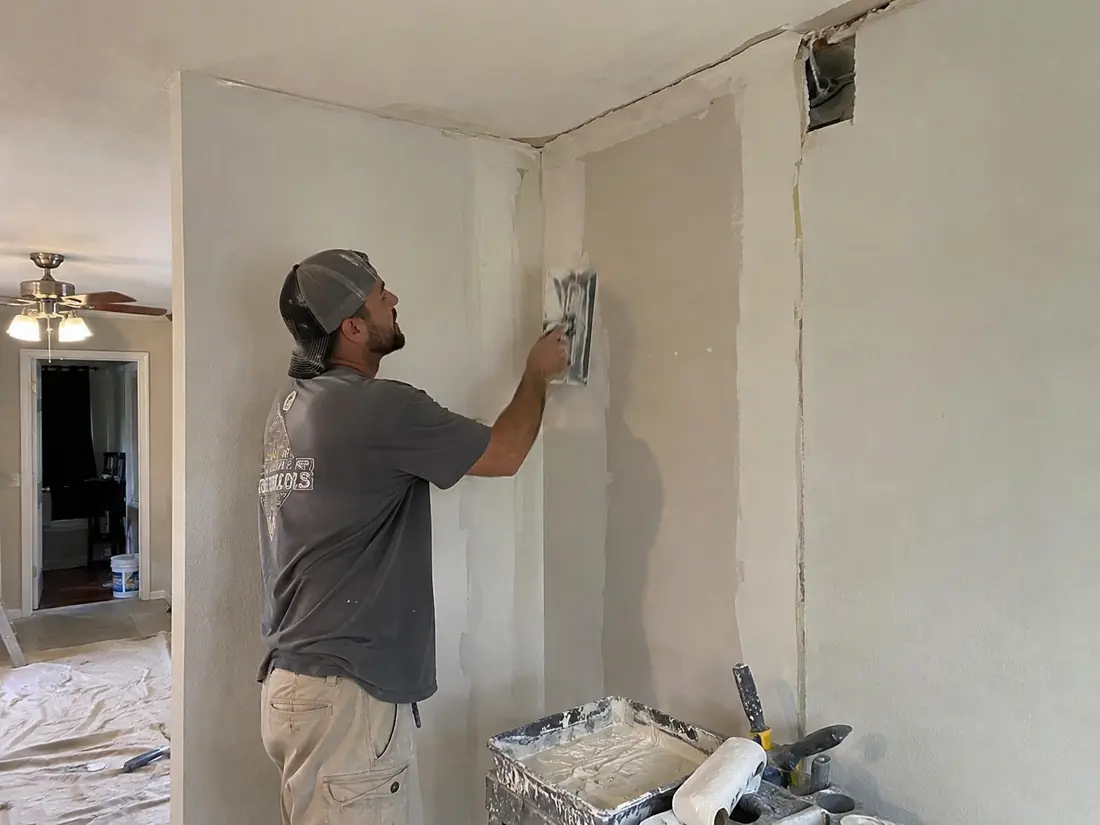
Water Damage Repair
Roof leaks, plumbing failures and storm damage. Wet board removed back to sound material, framing verified dry.
Learn more →Not what you were looking for? See all drywall services or learn more about us.
Ready to get started?
Free written estimate, itemized before anything begins. We respond within 2 business hours.
Get a Free Quoteor call (318) 666-5548