Installation
Soundproof & Acoustic Drywall in Shreveport, LA
Quieter walls come from the whole assembly, not from one product. Mass, insulation, decoupling and sealing, in that order of importance.
Soundproof and Acoustic Drywall in Shreveport
Most people asking about soundproof drywall are asking about one product, and that is the wrong unit of analysis. Sound reduction is a property of the whole wall assembly: how much mass it has, whether the two faces are mechanically connected, what is in the cavity, and whether the perimeter is sealed. Change one of those and you change the result. Change only the board and you usually change less than you hoped.
The honest version is that there is no such thing as a soundproof wall in a house. There are walls that transmit noticeably less sound, and the improvement is real and worth paying for when the assembly is built properly. Anyone promising silence is selling something.
What we do is build the assembly to a specification, correctly and sealed. What we do not do is acoustic engineering or testing, and we do not claim a specific rating for a wall we build. Ratings belong to laboratory-tested assemblies, and field results differ from laboratory results for reasons largely outside anyone's control on site.
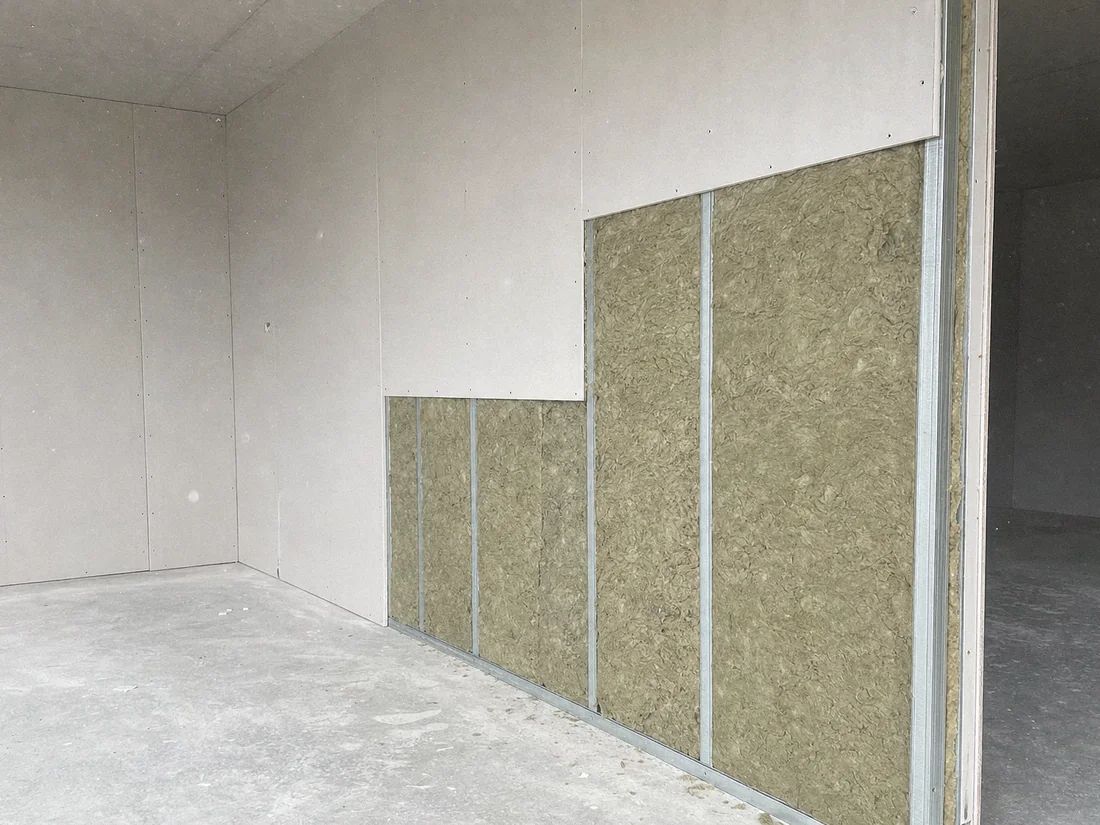
What's Included
- A conversation about what you are actually hearing first, because the fix depends on it. Voices and television are a different problem from footfall from above or a road outside.
- Added mass, usually a second layer of board, which is the most reliable and least glamorous improvement available.
- Cavity insulation, typically mineral wool, which absorbs energy inside the wall rather than letting the cavity behave like a drum.
- Decoupling where the assembly calls for it, using resilient channel or an independent stud arrangement so the two faces of the wall are not rigidly tied together.
- Damping compound between board layers where specified, which turns two layers into a more effective single element than their combined thickness suggests.
- Acoustic sealant at every perimeter edge and penetration. This is the step that gets skipped and the one that quietly undoes the rest, because sound moves through gaps far more readily than through board.
- Attention to the flanking paths: outlets back to back, shared ductwork, gaps under doors, and continuous ceiling cavities. A perfect wall with an open path around it is not quiet.
- Finished to a normal paint-ready standard, because an acoustic wall still has to look like a wall.
Where This Is Worth Doing
The improvement is most noticeable where the noise is airborne and the current wall is thin.
- Home offices, where calls in one room and life in the rest of the house collide. Probably the most common request now.
- Bedrooms, particularly against a living room, a stairwell or a shared wall.
- Media rooms, in both directions: keeping sound in as much as keeping it out.
- Shared walls in duplexes, townhouses and apartments, where the existing separation is often a single layer each side.
- Conference and meeting rooms, where the requirement is usually confidentiality rather than comfort.
- Offices against corridors, especially where the partition stops at a suspended ceiling and the cavity above is continuous.
- Music and practice rooms, which are the hardest case and the one where expectations most need managing early.
Where it works least well is low-frequency and impact noise. Footsteps from the floor above and bass through a structure travel as vibration through the building, and a wall treatment does comparatively little about either.
Our Process
Establish what you are hearing and from where
Airborne noise such as speech and television responds well to wall treatment. Impact noise such as footfall overhead, and low-frequency bass, respond much less. We would rather tell you that at the start than have you pay for a wall that does not solve your problem.
Agree the assembly
Which combination of extra mass, cavity insulation, decoupling and damping fits the room, the budget and the amount of floor space you can give up. Some options cost thickness rather than money, which matters in a small room.
Deal with the flanking paths
Back-to-back outlets, shared ducts, gaps under doors and continuous ceiling voids all carry sound around a wall. Treating the wall and ignoring these is the most common reason a job disappoints. On a partition stopping at a suspended ceiling, the cavity above is usually the real path.
Build the assembly properly
Insulation fitted to fill the cavity without being compressed, decoupling installed so it is not short-circuited by a stray screw, and board layers staggered so joints do not line up. Each of these is easy to get subtly wrong in a way that costs most of the benefit.
Seal everything
Acoustic sealant at the perimeter, around every box and at every penetration. This is unglamorous, it takes real time, and it is the difference between a wall that performs and a wall that has the right materials in it.
Tape, finish and hand over
Finished to a normal paint-ready standard. We will also tell you honestly what you should expect to still hear, because a wall that performs well is not a wall that performs perfectly.
What Actually Makes a Wall Quieter
Four mechanisms, roughly in order of reliability per dollar.
Mass
Heavier assemblies transmit less airborne sound. A second layer of standard board is the cheapest meaningful improvement available and the one most often skipped in favour of something more interesting.
Absorption
Insulation in the cavity absorbs energy that would otherwise resonate in the void. Mineral wool is the usual choice. An empty stud cavity behaves like a drum.
Decoupling
If both faces of a wall are screwed to the same studs, vibration crosses directly through the framing. Resilient channel or an independent stud arrangement breaks that path. It is effective and it is also the easiest thing to ruin, because a single screw landing in the wrong place reconnects what you paid to separate.
Damping and sealing
Damping compound between two board layers converts vibration to heat. Sealing closes the gaps, and gaps matter more than most people expect: a wall with an unsealed perimeter can give back much of what the rest of the assembly achieved.
On specialty boards
Purpose-made acoustic panels work, and they are one route to mass and damping in a single product. They are not magic, and in many rooms two layers of standard board with damping compound reaches a similar place for less. We will price both rather than assume the expensive one.
Acoustic Work in Shreveport Buildings
Two situations account for most of this work locally. The first is home offices, which became a permanent feature of a lot of houses rather than a temporary one, usually in a room that was never intended to be quiet and often separated from the rest of the house by a single layer of board each side of a stud wall. That is close to the least sound-resistant assembly in common use, which is also why the improvement from treating it is easy to notice.
The second is commercial: offices, conference rooms and medical or dental spaces where conversations should not carry. In fit-out work the specification usually arrives from the architect and our job is to build it exactly as drawn, since an acoustic assembly only performs as the tested design if it is built as the tested design. Those projects sit alongside the rest of the commercial drywall scope, and where partitions have to be framed as well that is metal stud framing.
One local note worth making: a partition that stops at a suspended ceiling rather than continuing to the deck usually has an open cavity running straight over the top of it. In a lot of older commercial space around here that is the actual sound path, and no amount of work on the wall below fixes it.
What Affects the Price
Priced by the assembly rather than by area alone, because the same wall can be built four ways at four prices. Adding a second layer of board to an existing wall is at the affordable end. A fully decoupled assembly with damping, new insulation and a rebuilt perimeter is a different scope.
What moves the number: how many of the four mechanisms the assembly uses, whether we are building new or treating an existing wall, ceiling involvement, how many outlets and penetrations need sealing, and how much of the flanking path work is in scope. Treating an existing wall from one side is usually cheaper than it sounds. Rebuilding to a full decoupled assembly usually costs more than people expect.
You get options priced separately, so you can see what each step buys before deciding how far to go.
Trying to make one room quieter?
Tell us what you can hear and where you are hearing it from. Some of these problems are worth solving with a wall and some genuinely are not, and that is worth knowing before you spend.
Prefer to talk it through? Call (318) 666-5548.
Why Choose Us
Why Choose Us for Acoustic Work
Shreveport Drywall Pro is a drywall specialist, not a general contractor who takes drywall on the side. Three things set the work apart.
We Build the Assembly, Not a Product
Sound reduction comes from mass, absorption, decoupling and sealing working together. Selling one specialty board as the answer is easier and usually underdelivers. We will price standard board with damping against a specialty panel and let you see the difference, rather than defaulting to whichever is more expensive.
Assembly options priced side by sideWe Do Not Quote Ratings We Cannot Stand Behind
Acoustic ratings belong to laboratory-tested assemblies, and field performance differs from laboratory performance for reasons largely outside anyone's control on a job site. We build to the specified assembly and we do not attach a number to a wall we built. We are not acoustic engineers and we do not do acoustic testing.
Built to the specified assembly, no invented ratingsWe Chase the Flanking Path
The most common reason acoustic work disappoints is that the wall got treated and the way around it did not. Back-to-back outlets, shared ductwork, the gap under a door, and a ceiling void running straight over the partition all carry sound past the wall you paid for. We look for those before quoting.
Flanking paths identified before the assembly is pricedFAQ
Soundproof & Acoustic Drywall Questions
Does soundproof drywall actually work?
It reduces sound transfer, and the reduction is real and noticeable when the wall is built as a complete assembly. It does not make a room silent, and nothing available in ordinary residential construction does. The larger the gap between what is there now and what you build, the more obvious the improvement, which is why treating a thin single-layer wall gives the most satisfying result.
What is the difference between soundproofing and acoustic panels?
Soundproofing reduces sound moving between rooms, and it is built into the wall. Acoustic panels are hung on the surface of a finished wall and control reflections and echo inside the room. They solve different problems and are frequently confused. Panels on the wall of a home office will not stop conversation carrying into the hallway.
Will this stop footsteps from the room above?
Largely no, and that is worth knowing before you spend. Footfall is impact noise travelling as vibration through the structure, and wall treatments do comparatively little about it. Low-frequency bass behaves similarly. Airborne noise such as speech and television is what wall assemblies address well.
Can you tell me the STC rating of the wall you build?
No, and you should be cautious of anyone who does for a wall built on site. Acoustic ratings are properties of laboratory-tested assemblies, and field results differ from laboratory results because of workmanship, flanking paths and building conditions. If your architect has specified a tested assembly we will build it exactly as specified, without substitution, which is the thing that gives it the best chance of performing as intended.
Can you soundproof an existing wall without tearing it apart?
Often yes, and it is usually the best value option. Adding a second layer of board with damping compound over the existing surface, then sealing the perimeter and the outlets properly, gets a meaningful improvement without opening the wall. You lose a small amount of room depth and you will need trim adjusted. Getting insulation into an empty cavity does mean opening at least one side.
How much does soundproofing a room cost?
It depends entirely on which assembly you choose, which is why we price the options separately. Adding mass and sealing an existing wall is at the affordable end. A fully decoupled assembly with new insulation, damping and a rebuilt perimeter is considerably more. Deciding how far to go is easier when you can see what each step costs and what it buys.
Related Services
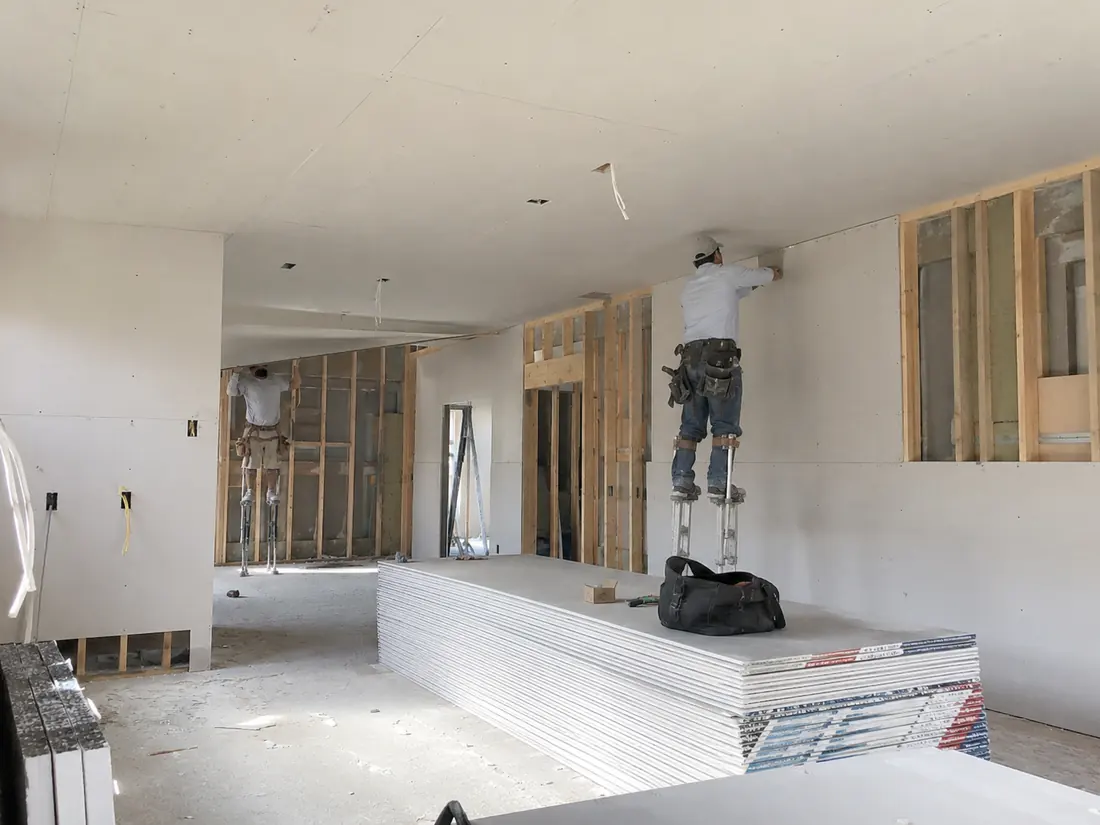
Drywall Installation
New board hung, taped and finished for additions, garage conversions, remodels and whole-home builds.
Learn more →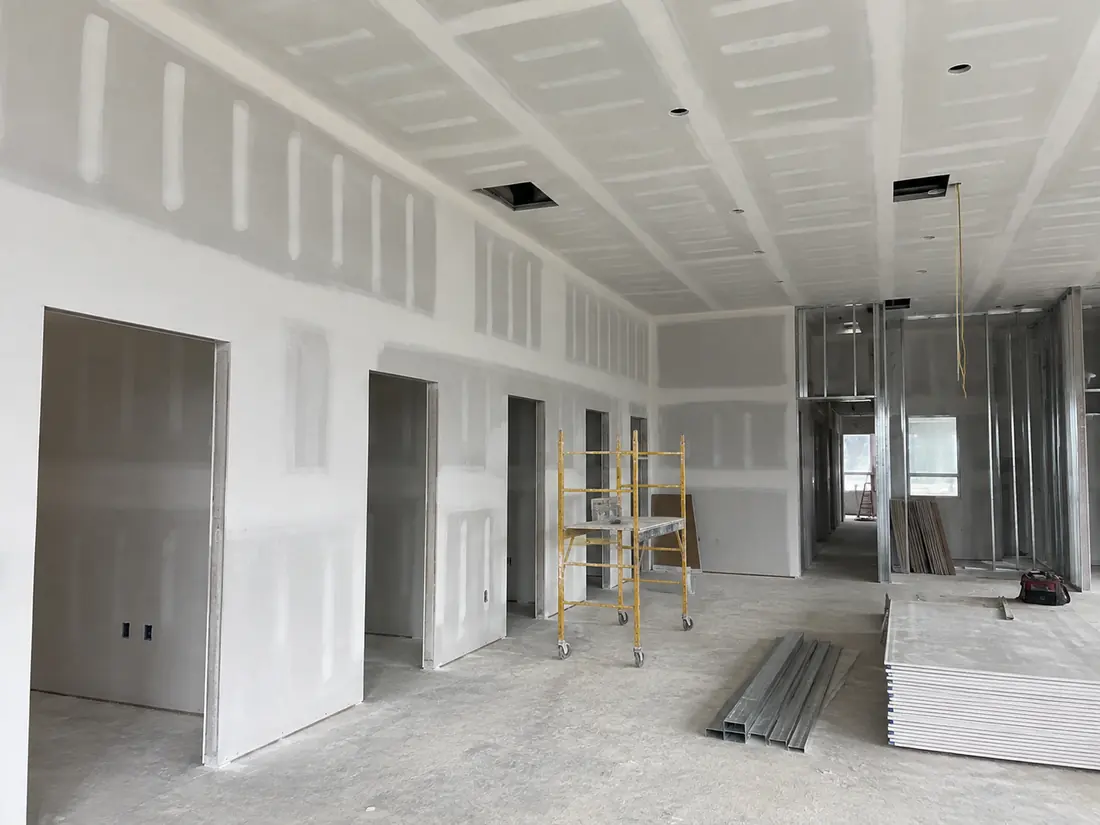
Commercial Drywall
Metal stud framing, fire-rated assemblies and tenant build-outs for offices, retail and light industrial space.
Learn more →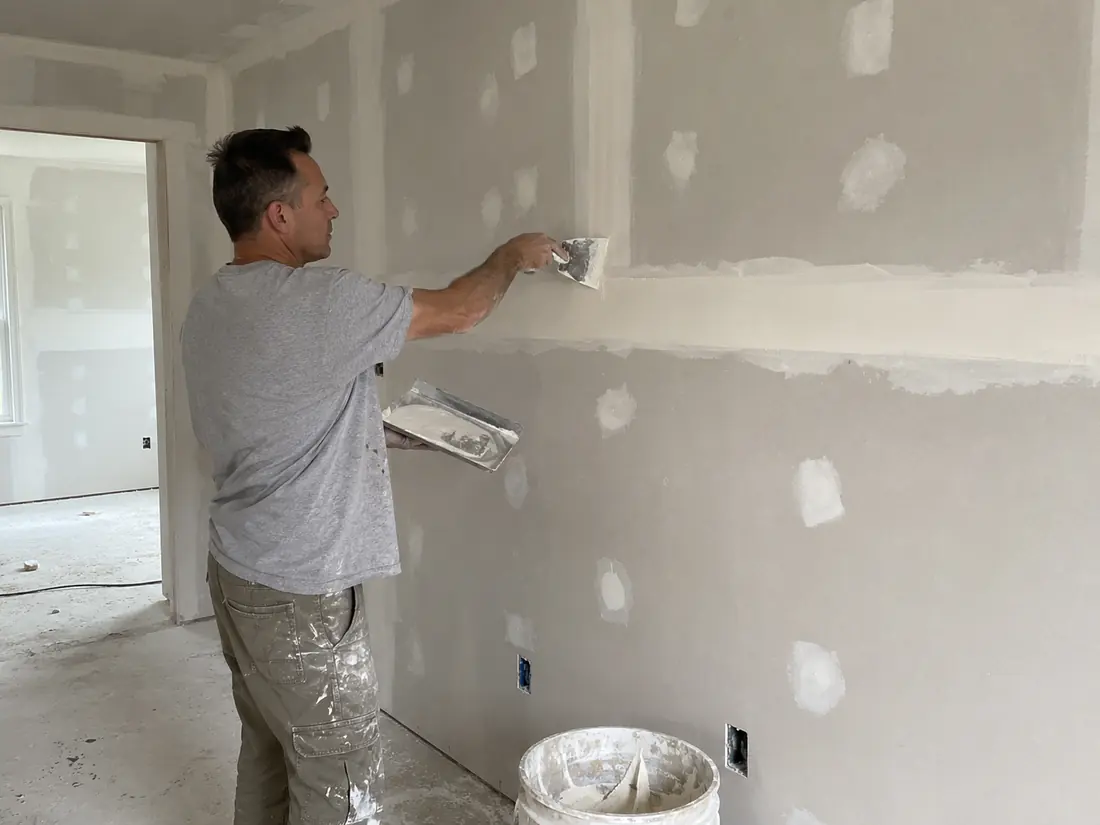
Taping & Finishing
Taping, mudding and sanding to Level 4 or Level 5, whether you hung the board yourself or another crew did.
Learn more →Not what you were looking for? See all drywall services or learn more about us.
Ready to get started?
Free written estimate, itemized before anything begins. We respond within 2 business hours.
Get a Free Quoteor call (318) 666-5548