Free written estimates · Serving Shreveport, Bossier City & Caddo Parish

Caddo & Bossier Parish

Drywall Contractor in Shreveport, LA

If you need a drywall contractor in Shreveport, you need one who can match the texture already on your walls. That is the difference between a repair you never notice and a patch you see every day.

  • Free written estimates, itemized before work starts
  • Knockdown, orange peel and skip trowel texture matching
  • Finished to Gypsum Association GA-214 standards
  • Dust containment and daily cleanup on every job

Get a Free Quote

Tell us what you need. We respond within 2 business hours.

No spam, no obligation. Or call (318) 666-5548.

  • Licensed & Insured
  • Free Written Quotes
  • 2-Hour Response
  • GA-214 Finish Standards
  • Texture Match Guarantee

What We Do

Our Drywall Services in Shreveport

Why Choose Us

Why Shreveport Homeowners Choose Us for Drywall

We Finish to a Published Standard, Not a Feeling

Drywall finish quality is defined, not subjective. The Gypsum Association's GA-214 document sets six levels of finish, from Level 0 through Level 5, and ASTM C840 governs how gypsum board is applied. We specify the finish level in writing on every quote, so you know before work starts whether you are getting a Level 4 under flat paint or a full Level 5 skim coat for gloss and critical lighting. Most contractors never put a number on it.

Gypsum Association GA-214 defines finish Levels 0–5

Texture Matching Tested Before It Touches Your Wall

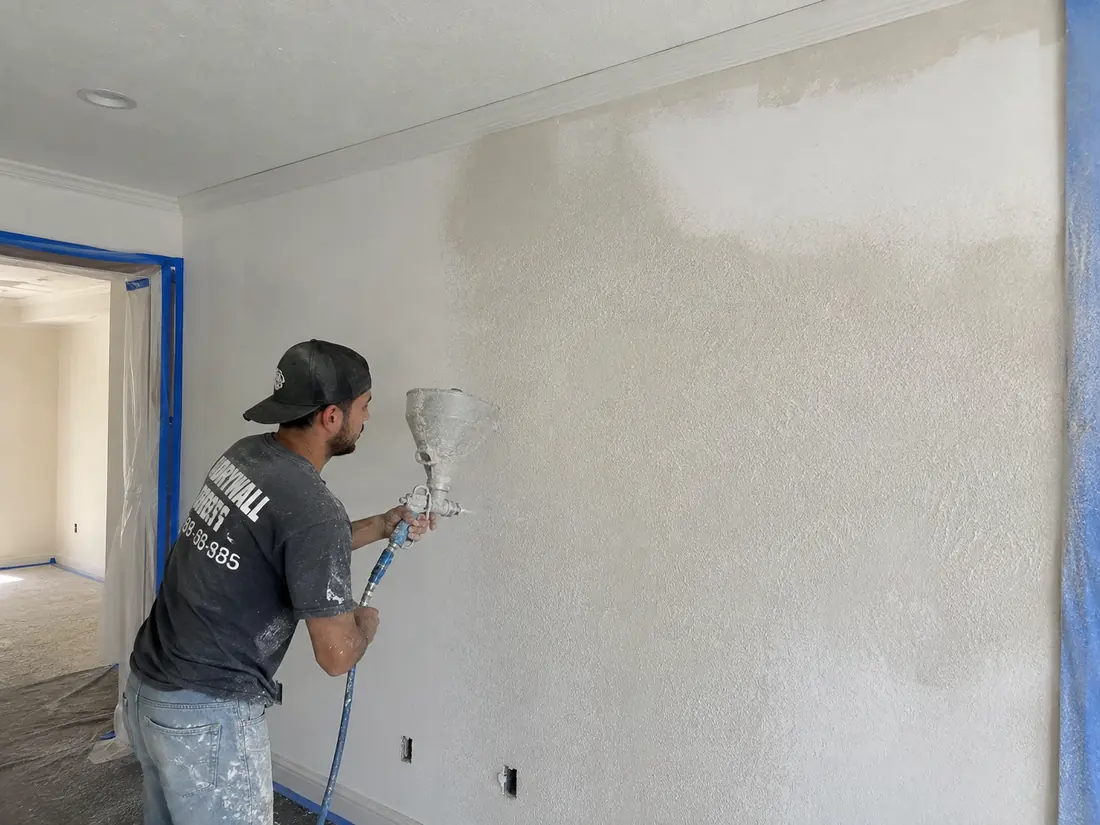
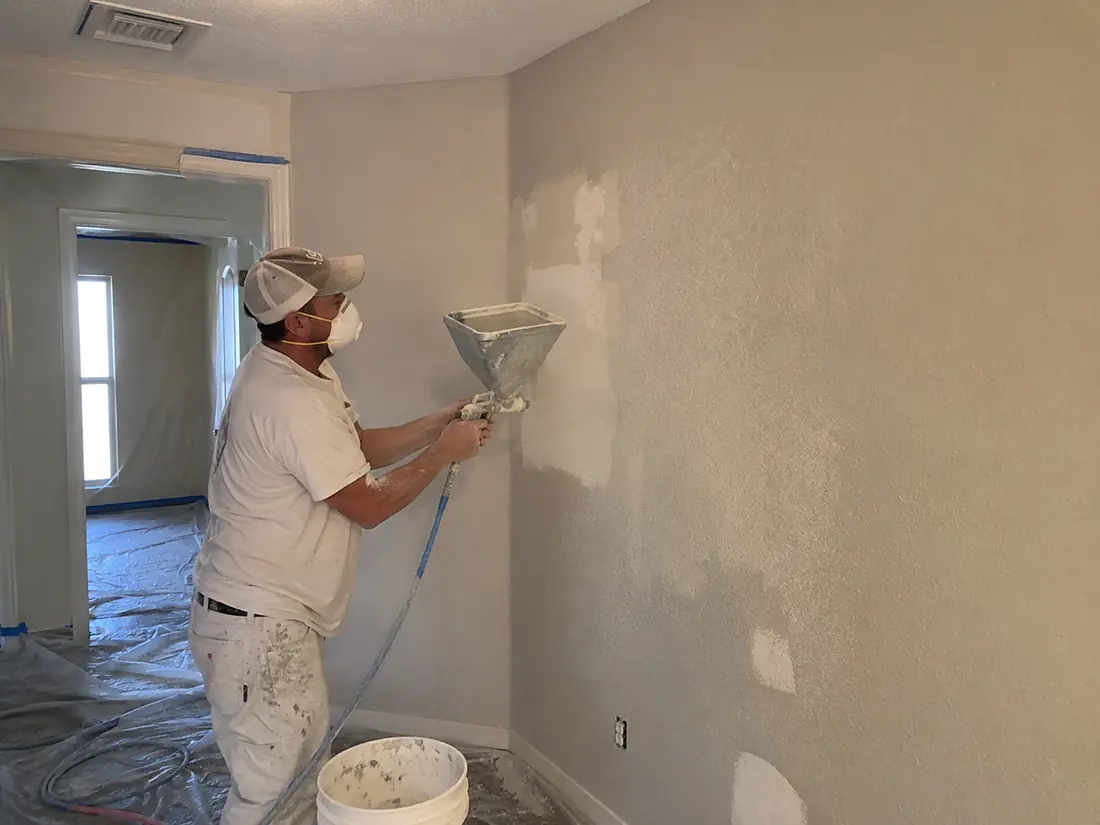
The most common sign of an amateur repair is not a weak patch. It is a patch that holds fine but reads as a different texture from three feet away. Knockdown, orange peel and skip trowel each need a specific compound consistency, nozzle, air pressure and timing. We spray a sample board and set it beside your wall before committing, then adjust. It costs us twenty minutes and saves you looking at a bad patch for a decade.

Texture matched on a sample board first, on every repair

We Build Around Shreveport's Humidity, Not Against It

Joint compound cures by releasing water into the air. In a Gulf South summer with high dew points, that takes materially longer than the label suggests, and crews who coat on a fixed schedule instead of on actual dry time cause the cracking and seam lines that show up months later. We adjust coat timing to conditions and use setting-type compound when a job needs to move faster than the air allows.

EPA recommends 30–50% indoor humidity to limit mold growth

Get Your Free Drywall Estimate. We Respond Within 2 Hours.

Send us the details and we will come back with an itemized written quote, including the finish level and the texture we will match. No pressure, no obligation, and the number we give you is the number you pay.

Prefer to talk it through? Call (318) 666-5548.

Request Your Quote

Takes about 30 seconds.

We respond within 2 business hours.

Common Problems

What Types of Drywall Damage Do We Fix?

Most calls we take in Shreveport fall into one of six categories. Knowing which one you have changes both the repair and whether the problem comes back.
Settlement and Foundation Cracks

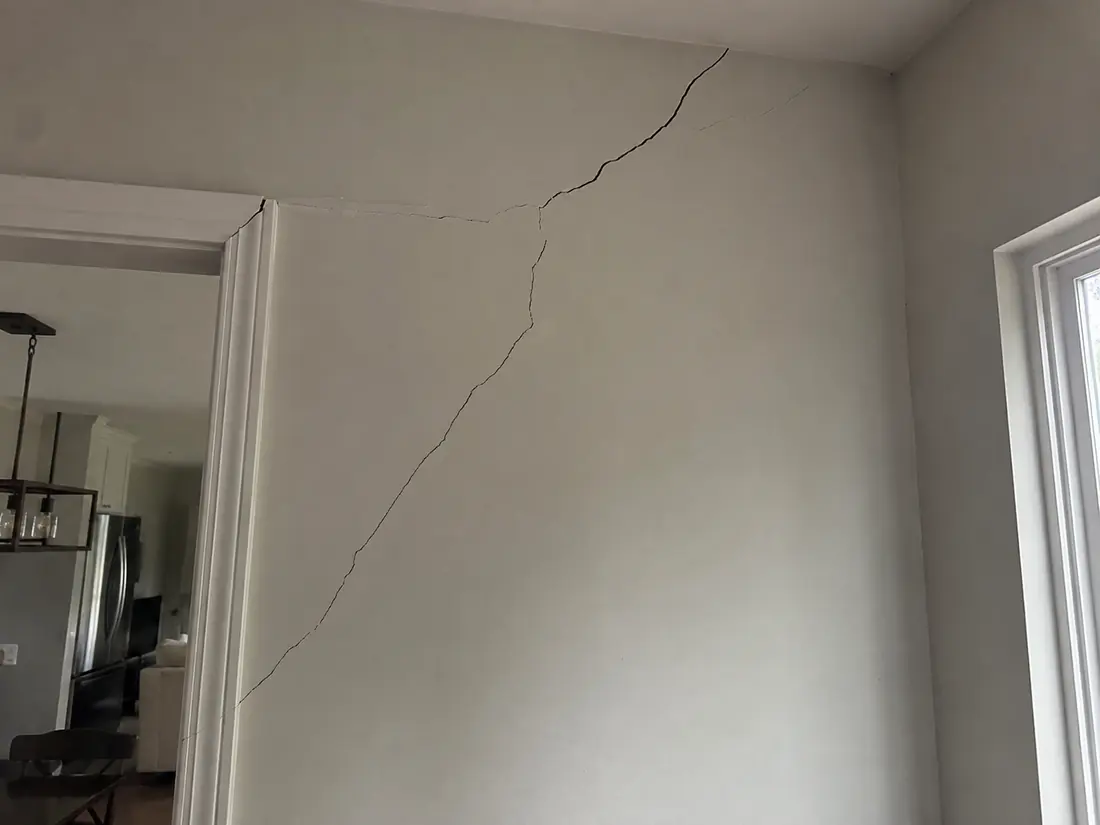
Diagonal cracks running from the upper corners of doors and windows are the signature of a house that is moving. Much of the Shreveport area sits on clay-rich soil that swells when saturated and shrinks during dry spells, flexing the frame and concentrating stress at openings. Patching alone treats the symptom. If a crack has reopened in the same spot more than once, the drywall is reporting a structural and drainage issue, and we will say so instead of selling the same repair twice.

Expansive clay soils are among the most widespread causes of foundation movement in the U.S.
Water Stains and Ceiling Leaks

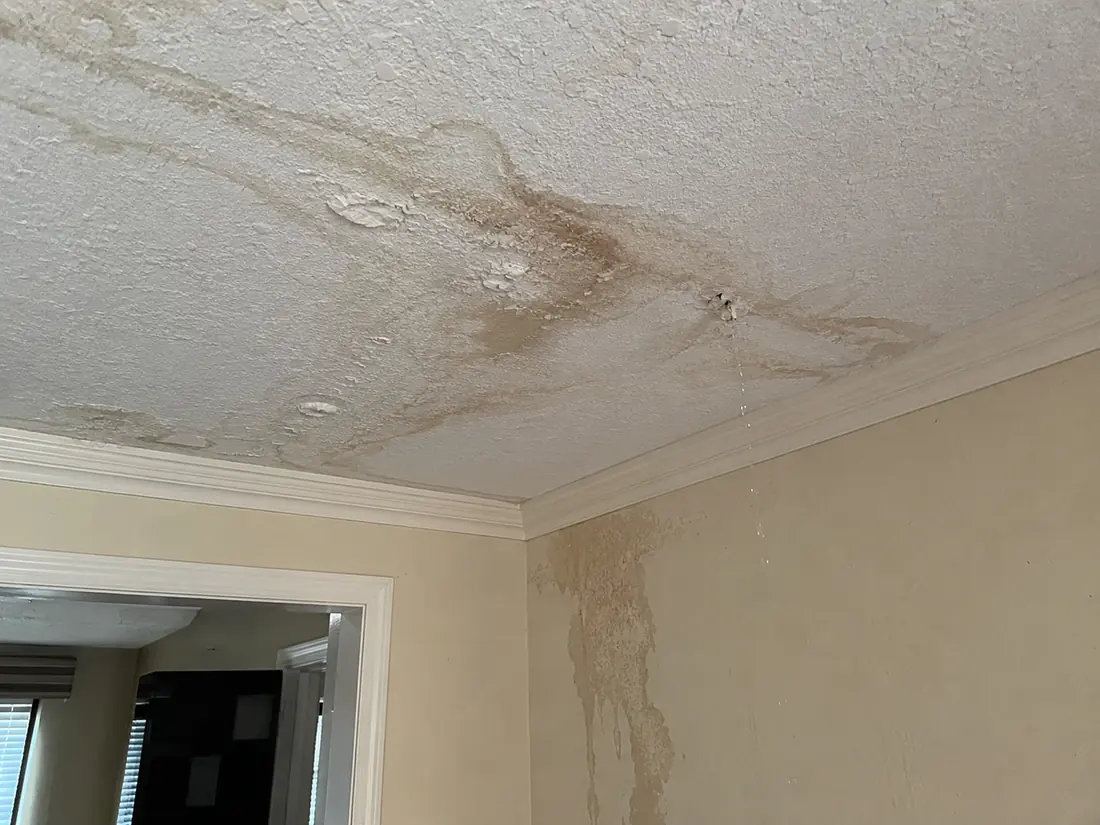
A brown ring on a ceiling means water has already passed through the board, and the stain is downhill from the actual leak, not underneath it. The EPA notes that mold can begin growing on damp materials within 24 to 48 hours, which makes wet drywall a time-sensitive problem rather than a cosmetic one. We locate and confirm the source is stopped, cut back to dry material, verify the framing and insulation behind it, and only then close the ceiling up.

EPA: mold can begin growing on damp material within 24–48 hours
Nail Pops and Fastener Failure

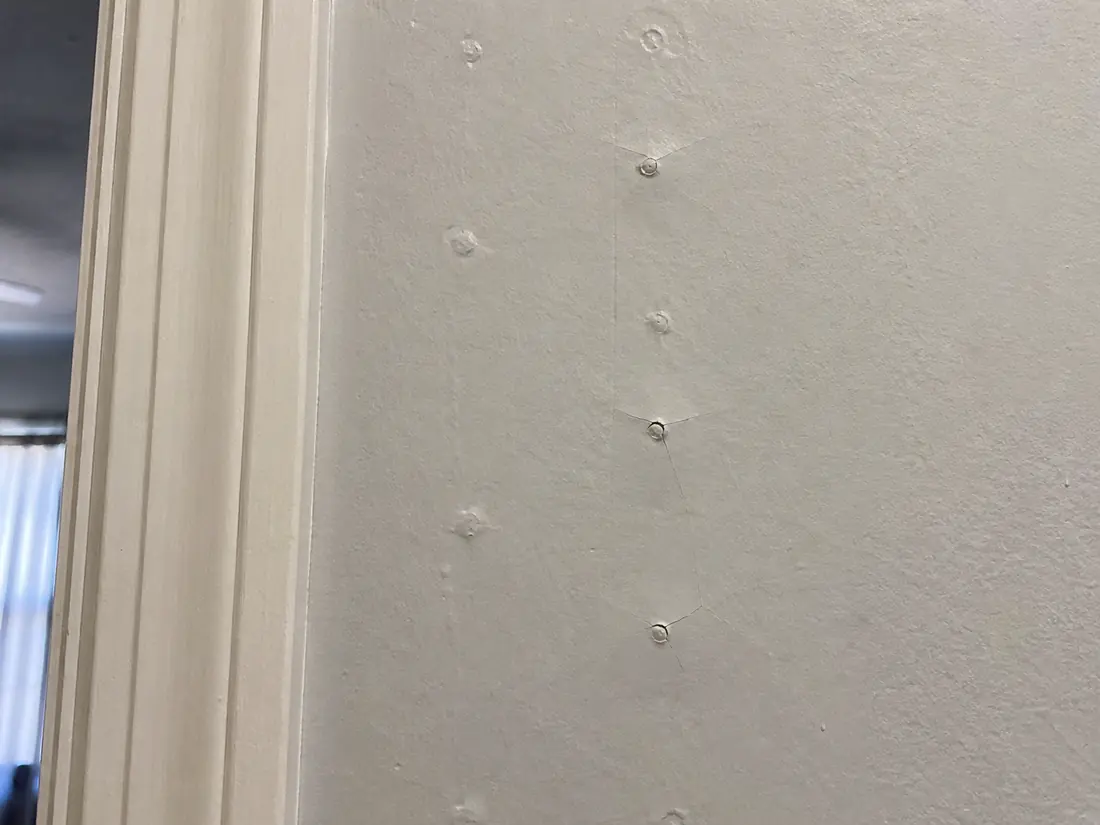
Small circular bumps or dimples in a line up a wall are fasteners backing out as framing lumber dries and shrinks. Simply re-driving the same nail almost always fails again. The durable fix is to drive a screw roughly an inch and a half away to re-anchor the board, remove or reset the failed fastener, then patch both. Homes built during a fast construction cycle, where lumber went up with higher moisture content, tend to show this within the first few years.

Framing lumber can shrink measurably as it dries to indoor equilibrium moisture
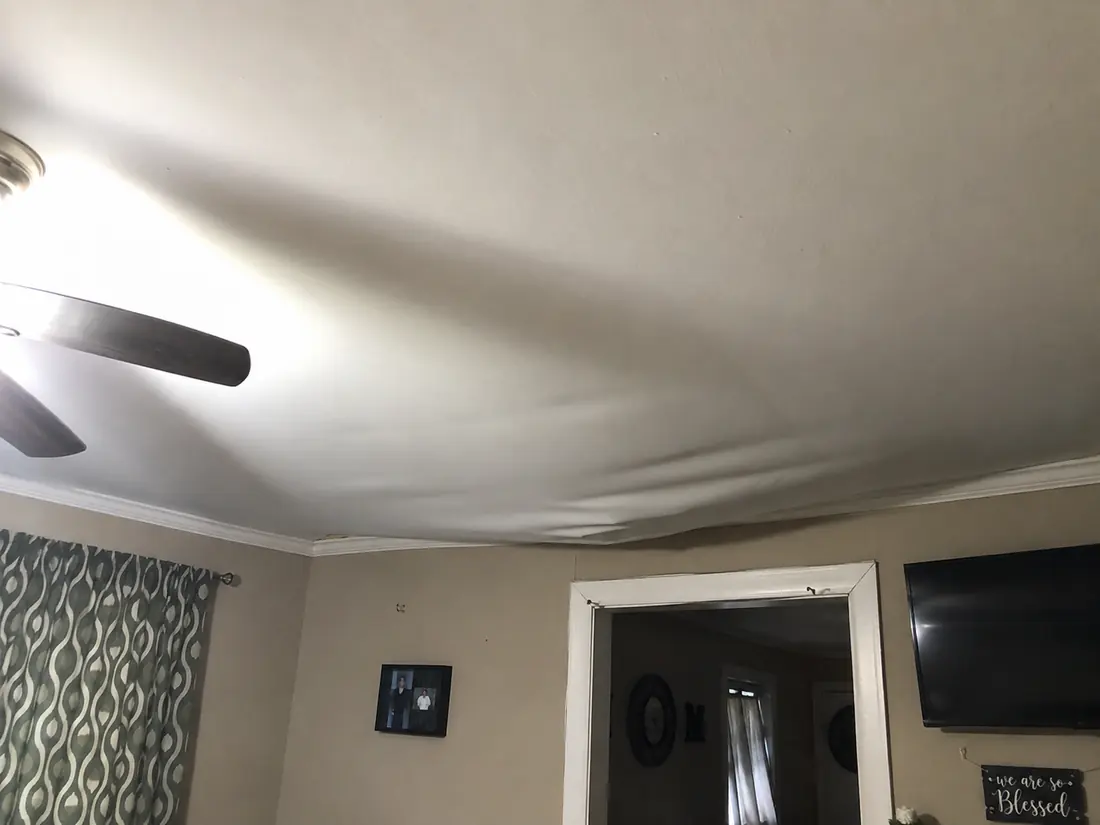
Sagging Ceilings

Ceilings sag between joists when the board is too thin for the framing spacing or has absorbed moisture. Half-inch board on joists spaced 24 inches on center is a common culprit, particularly if it was later sprayed with a water-based texture that added weight while it was wet. The correct specification is 5/8-inch board, or half-inch board rated specifically for ceiling spans. We check the framing spacing before quoting, because replacing sagging board with the same product repeats the failure.

5/8″ board is the standard specification for joists at 24″ on center
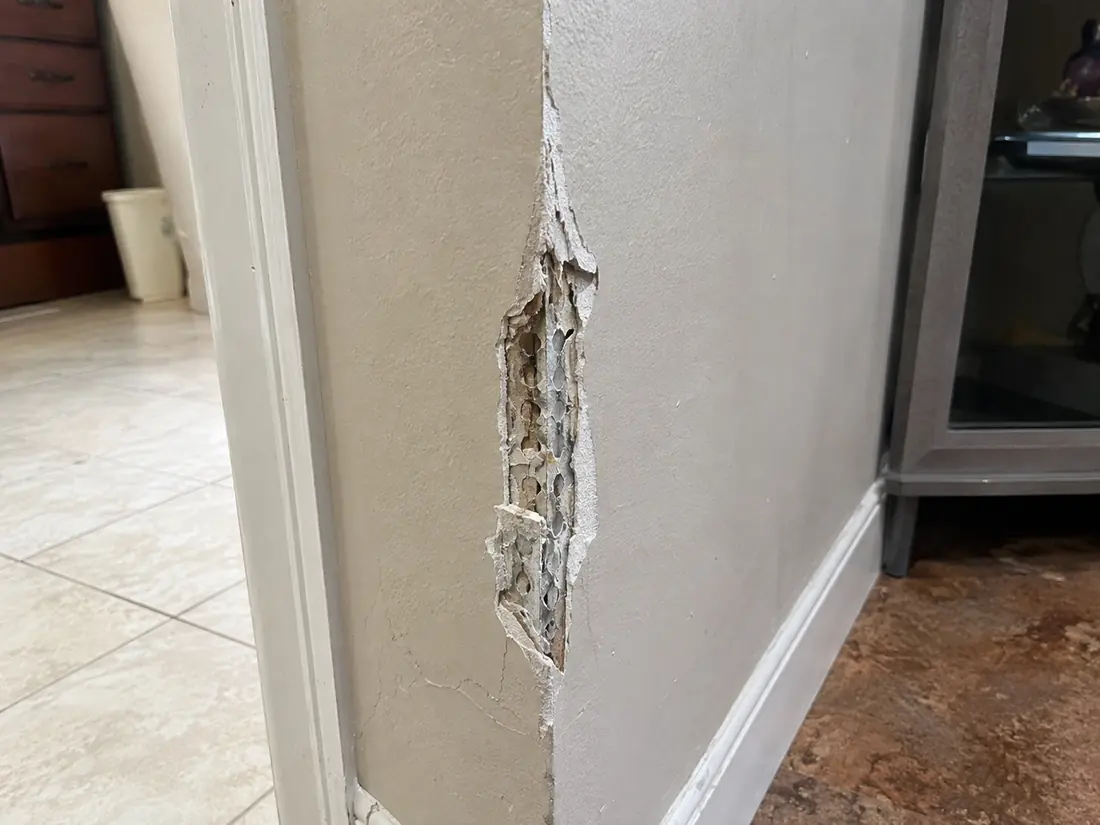
Corner Bead Damage

Outside corners take the most physical abuse in any house: furniture, vacuums, luggage, kids. Metal bead dents and holds the dent; vinyl bead cracks the compound around it. A proper repair removes the damaged bead section entirely rather than filling over it, because compound applied on top of a bent bead will crack along the same line within a season. In high-traffic hallways we recommend vinyl or paper-faced bead, which absorbs impact better than bare metal.

Corners in main traffic paths take the majority of residential wall impact damage
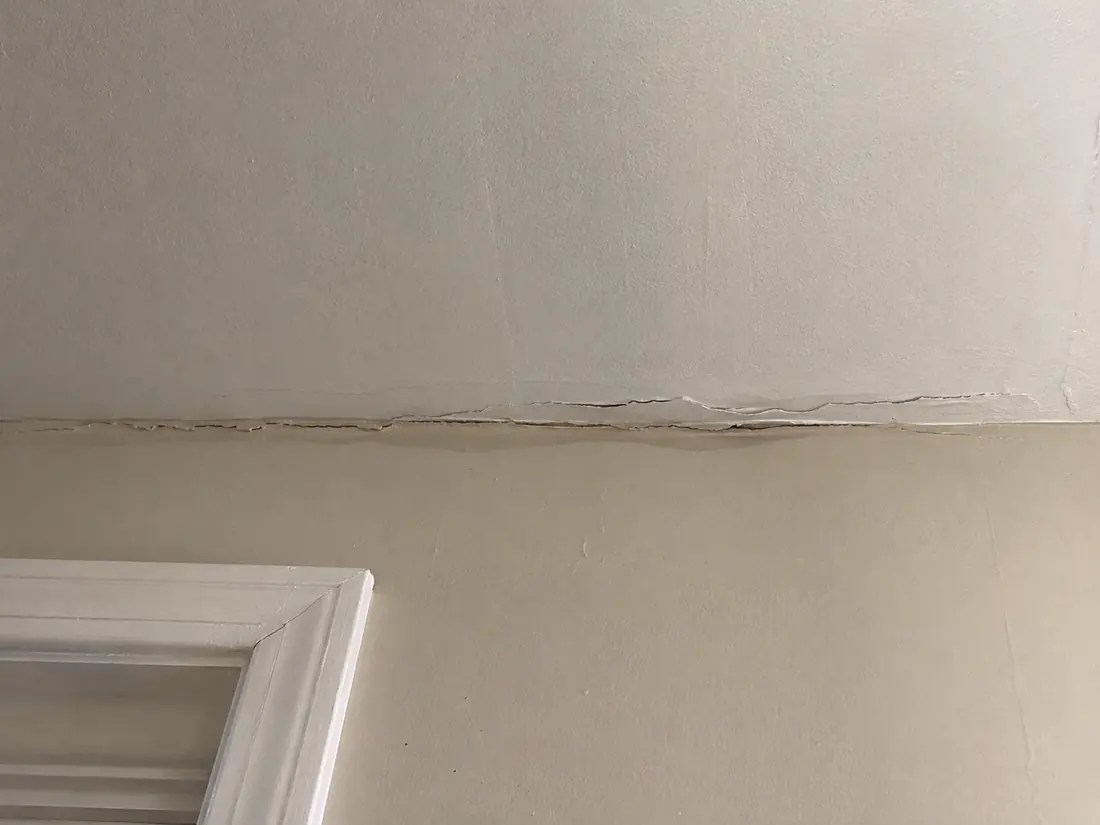
Seam Cracking and Tape Failure

A straight crack that follows a joint line means the tape underneath has released. That is usually a finishing problem rather than a structural one: compound applied too thick, coats stacked before the previous one dried, or tape bedded into insufficient mud. Humidity makes it worse, because a crew working to a fixed schedule instead of actual dry time traps moisture in the joint. The repair is to cut out the failed tape and rebed it, not to skim over the crack.

Joint compound requires full dry time between each of three typical coats
Service Categories

What Types of Drywall Services Do We Offer?

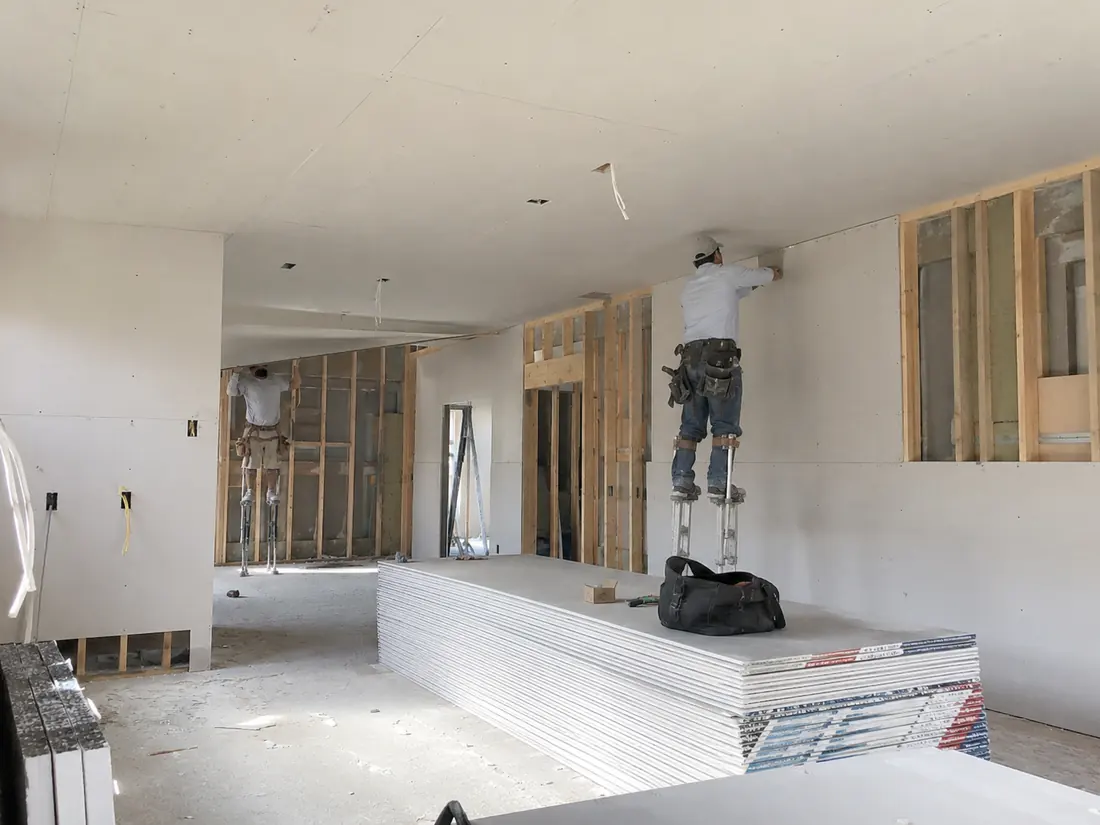
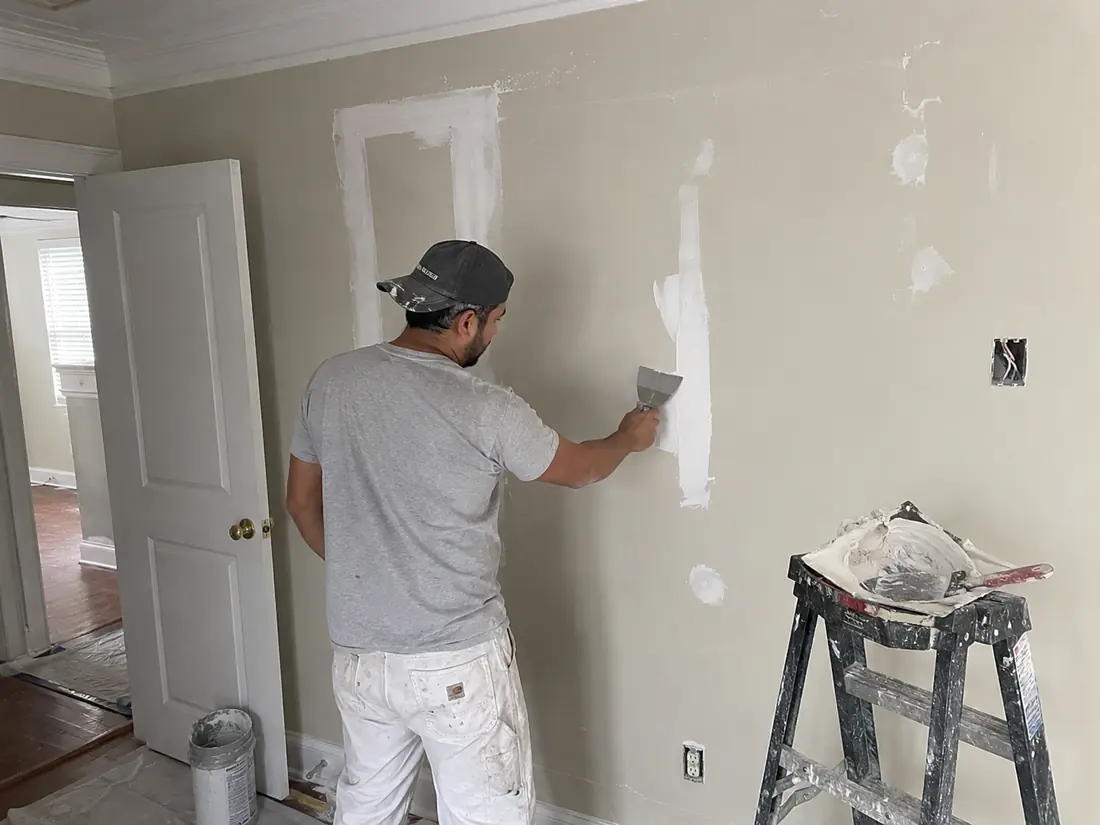
Drywall is not one trade. Hanging board, finishing it, texturing it and matching an existing finish are separate skills, and most jobs need more than one.

Hanging and Board Installation

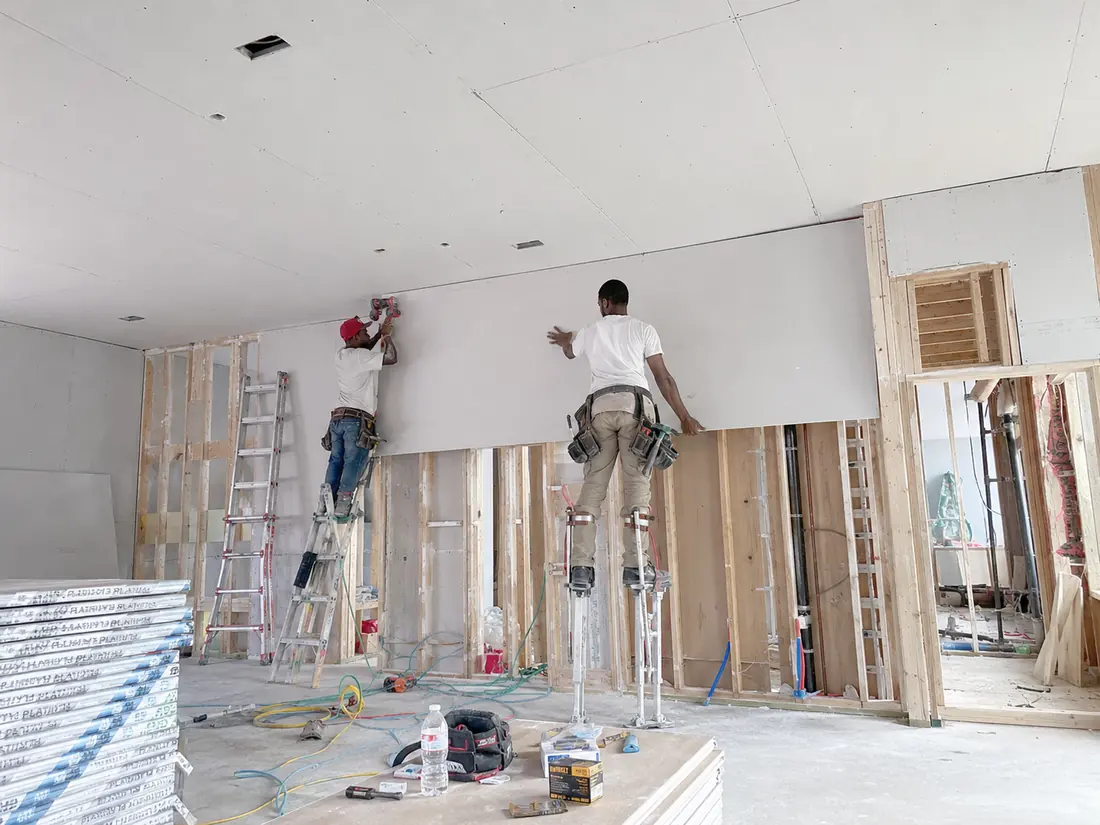
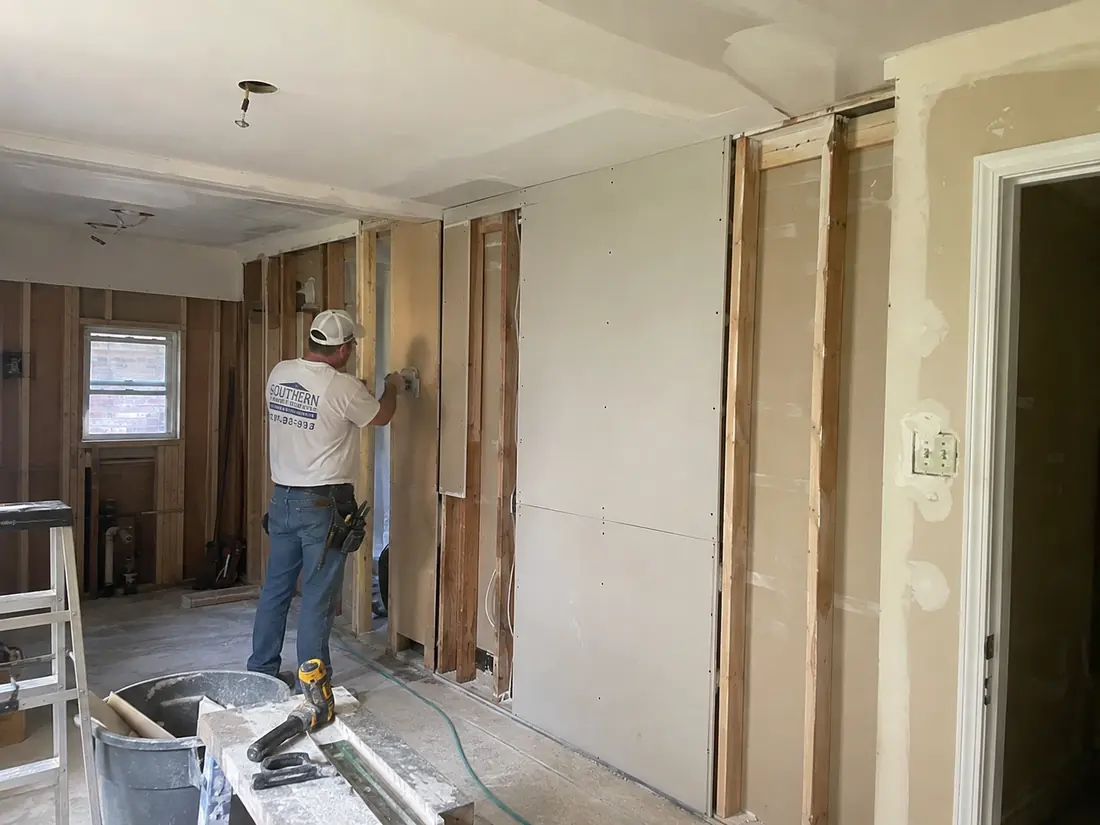
Board selection matters more than most homeowners expect. Standard half-inch board suits most walls; 5/8-inch Type X is used where fire rating or ceiling span requires it; moisture-resistant and mold-resistant board belongs in bathrooms, laundry rooms and any wall backing a wet area. In a climate as humid as ours, specifying ordinary board in a bathroom is a repair scheduled for a few years out. We size and orient sheets to minimize the number of butt joints, because butt joints are the hardest seams to hide.

5/8″ Type X board is the standard for fire-rated assemblies

Taping and Finishing

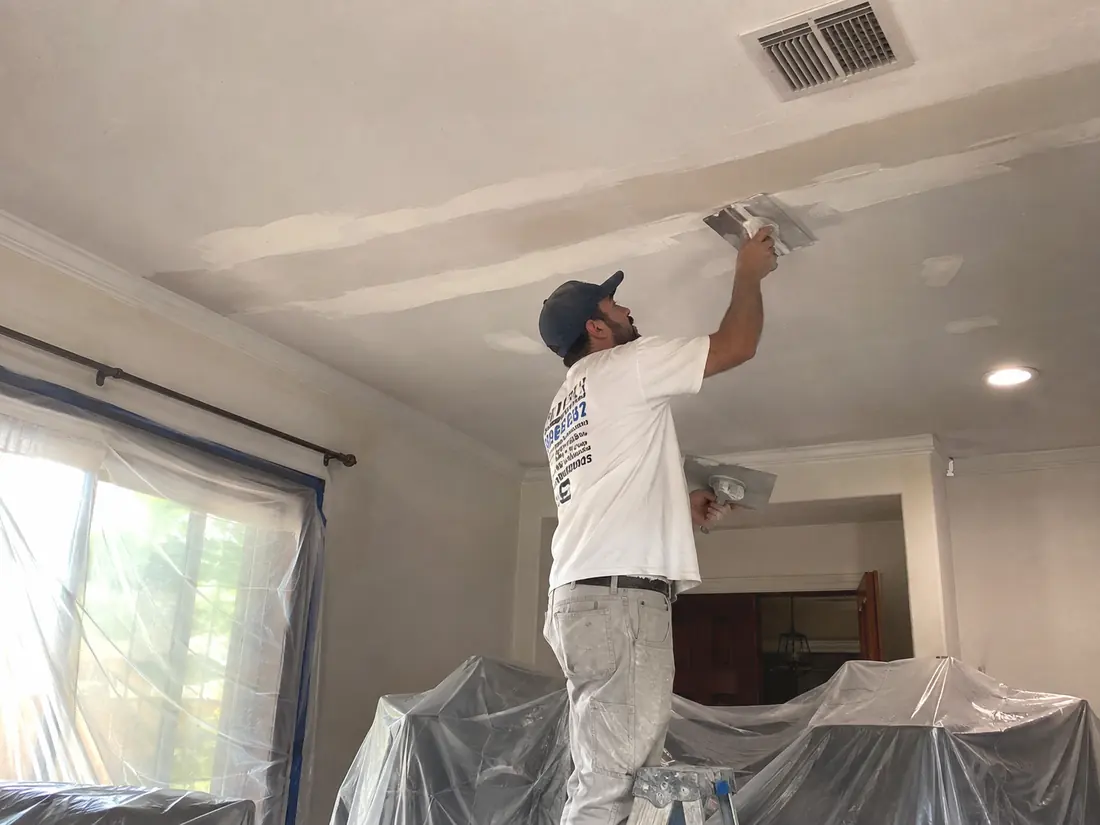
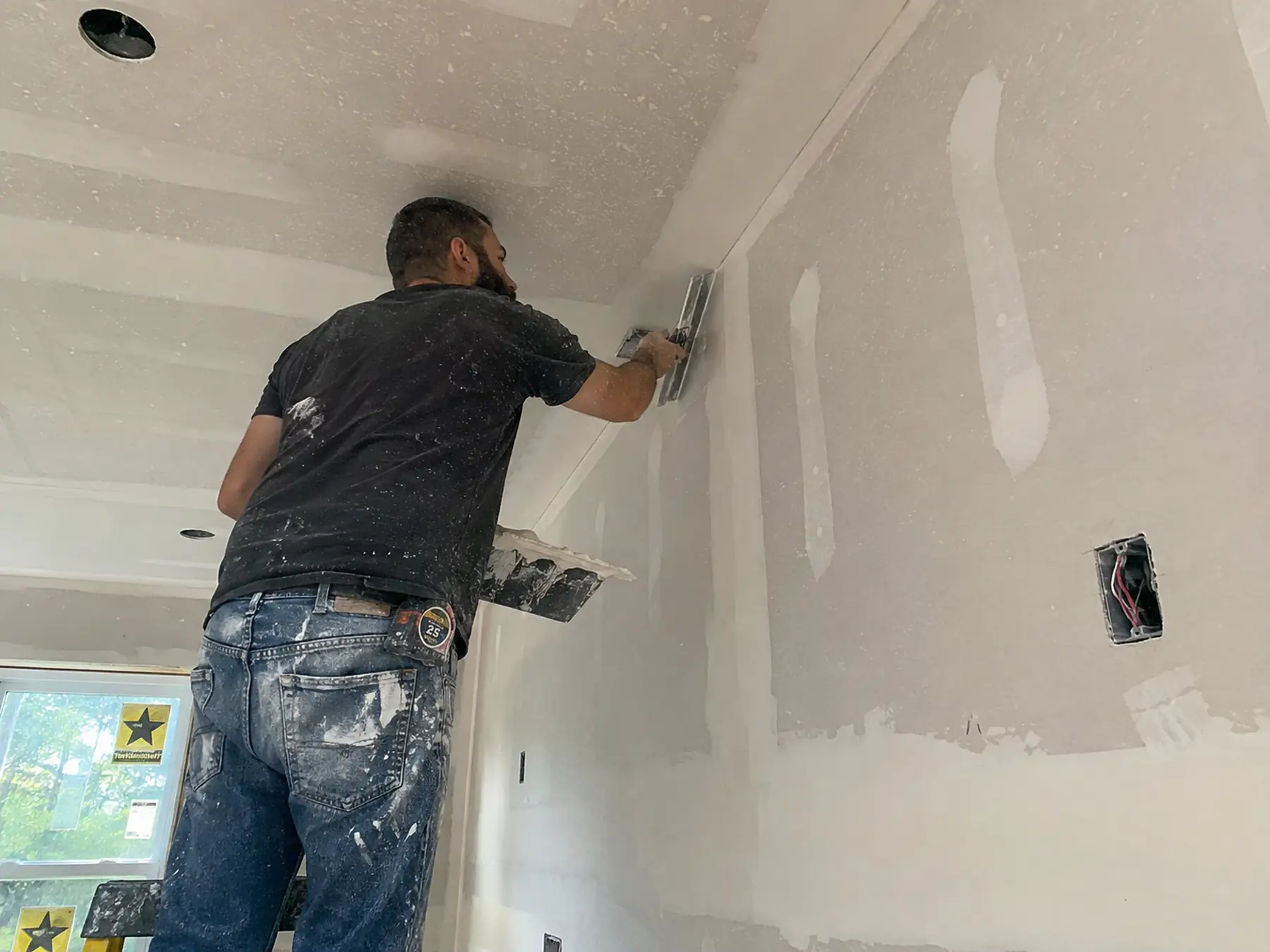
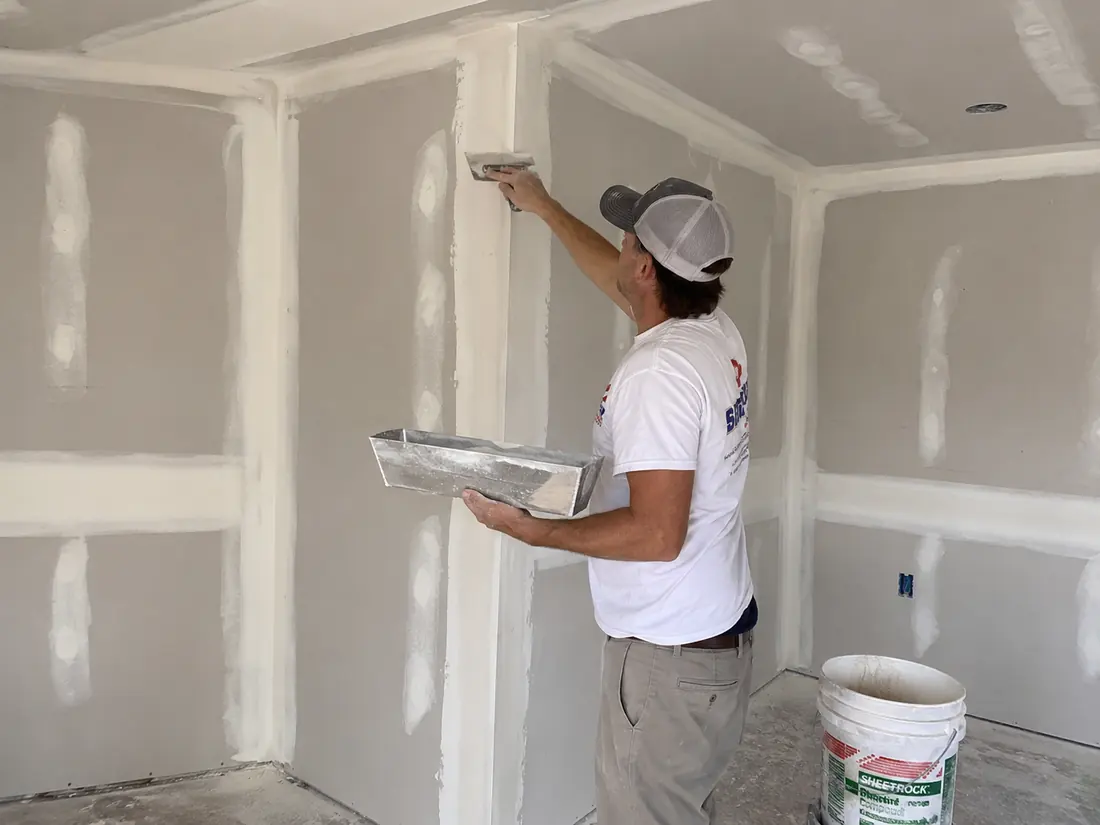
Finishing is where a job is won or lost visually. A typical wall gets tape bedded in compound, then two further coats feathered progressively wider, then sanding. The industry standard levels run 0 through 5, and the right level depends on your paint sheen and lighting rather than your budget. Flat paint hides a great deal; semi-gloss and raking light from a window hide nothing. We will tell you when Level 5 is genuinely worth the cost and when it is not.

Three coats plus sanding is standard for a Level 4 finish

Spray Texture and Matching

Knockdown, orange peel and skip trowel dominate the Shreveport housing stock, and each behaves differently. Orange peel is sprayed and left; knockdown is sprayed then flattened with a blade at a precise moment in the set; skip trowel is applied by hand. Matching an existing texture is harder than applying a new one, because you are matching another person's timing and pressure. Sample boards are not optional for this work.

Texturing typically runs $0.80–$2.00 per square foot regionally

Ceiling Work and Popcorn Removal

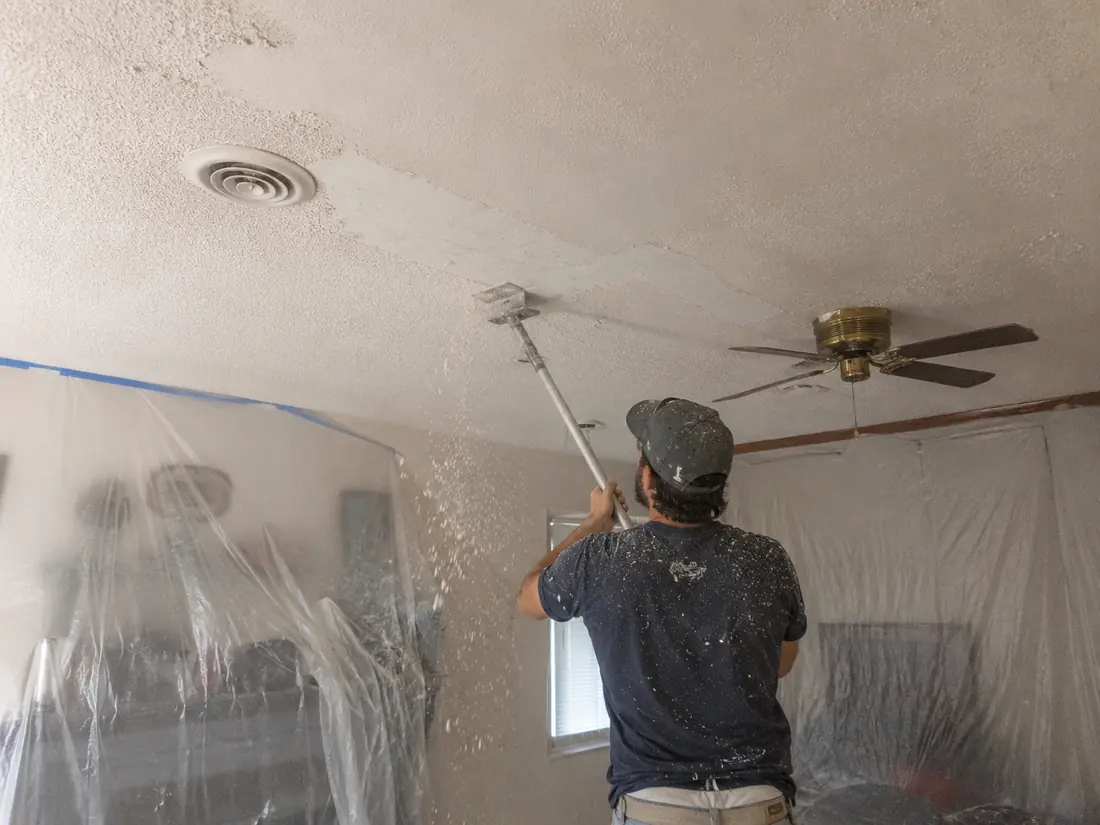
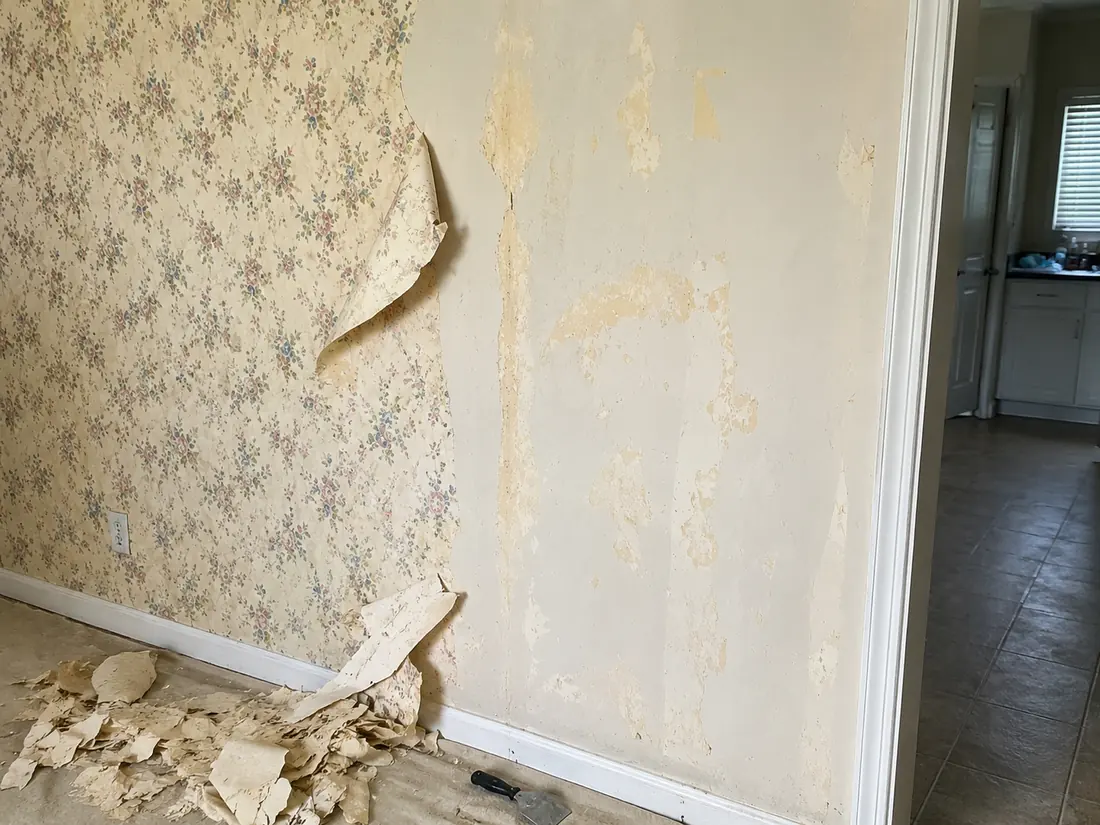
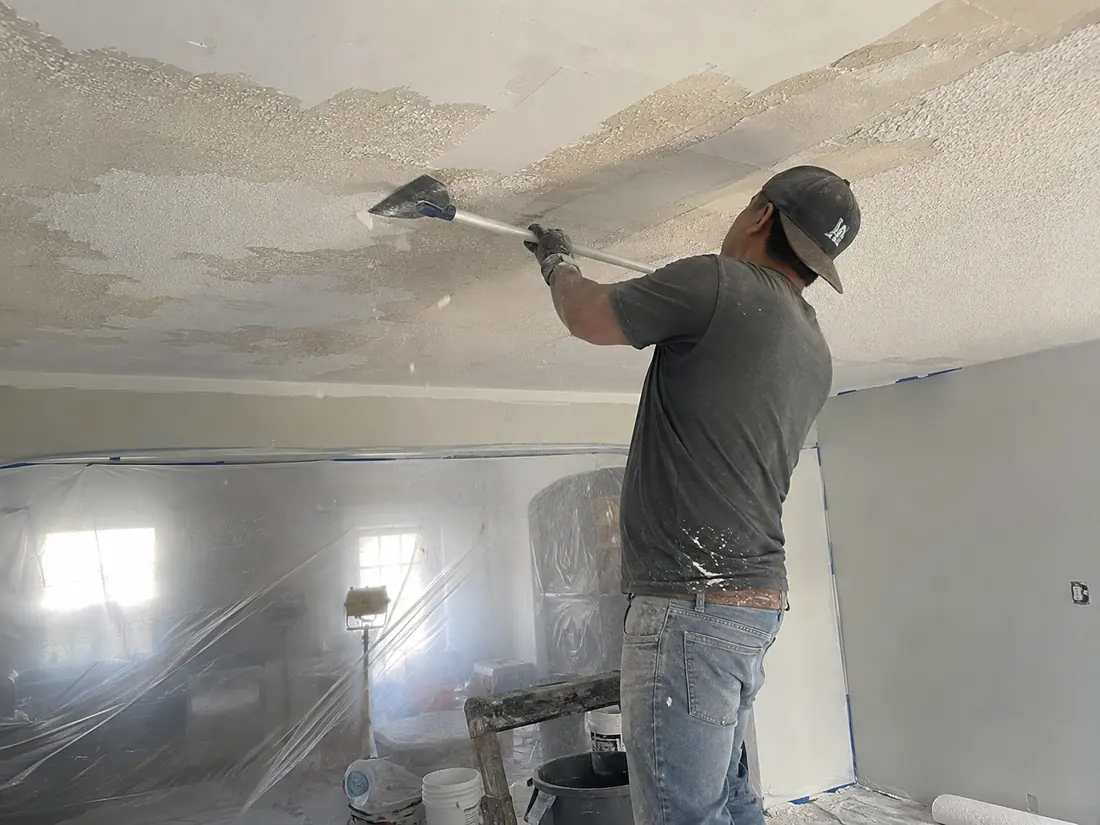
Removing a textured ceiling is a containment job before it is a drywall job. The ceiling is wetted, scraped, then skim-coated and refinished, and the debris is heavy and travels. If the home predates the early 1980s, the material should be lab-tested for asbestos first. The Consumer Product Safety Commission banned asbestos in patching compounds in 1977, but existing stock remained in legal use afterward, so build year alone is not proof of safety.

CPSC banned asbestos in patching compounds in 1977

Water and Storm Damage Rebuilds

Northwest Louisiana gets both severe thunderstorm activity and periods of heavy rainfall, and roof and window intrusion is a routine cause of interior damage here. This work is sequenced: stop the source, dry the cavity and verify it with a meter, replace insulation if it stayed wet, then rebuild and refinish. Skipping the verification step is the most common reason a water repair fails and has to be reopened months later.

Shreveport averages roughly 50 inches of rainfall annually

Commercial and Metal Stud Work

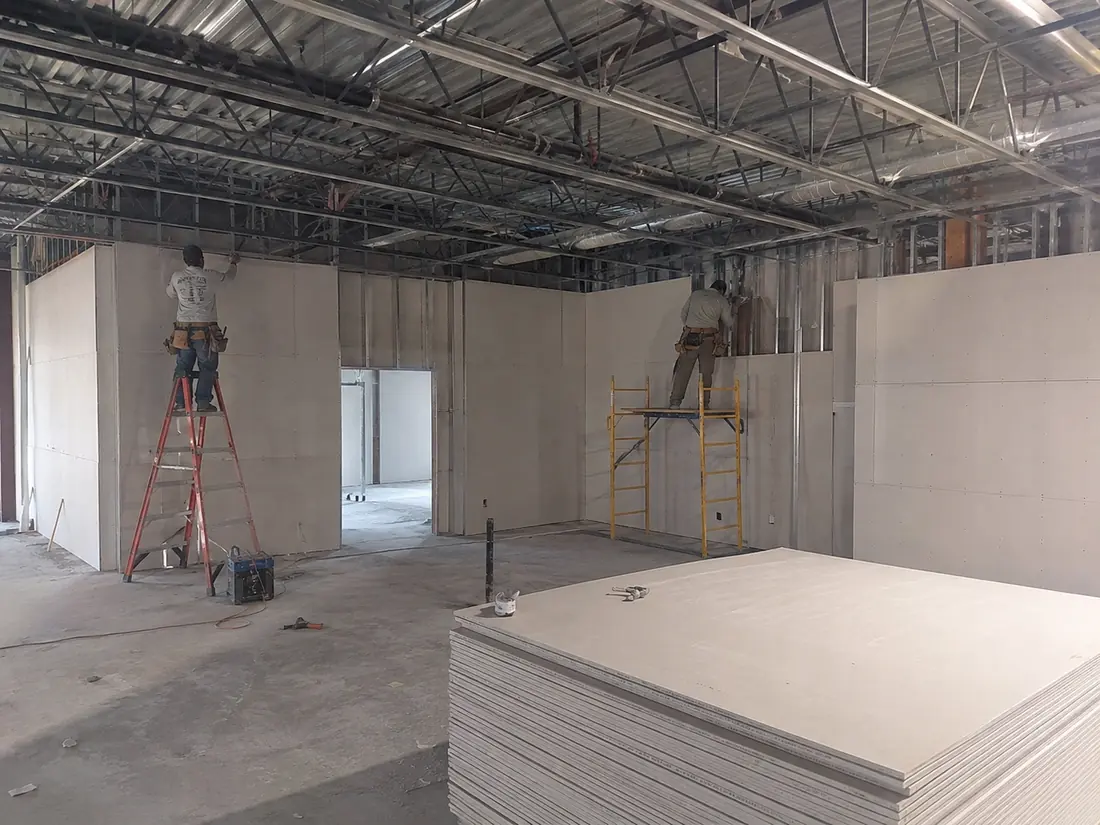
Commercial build-outs run on different rules than houses: metal stud framing, fire-rated wall and ceiling assemblies, demising walls between tenancies, and inspection requirements that residential work does not carry. Assemblies have to be built exactly as the rated detail specifies, because substituting board type or fastener spacing voids the rating. We work around occupied-tenant schedules, including nights and weekends when the space cannot be shut during business hours.

Fire-rated assemblies must match tested designs exactly to retain their rating

Straight Answers

What Drywall Work Costs in Shreveport

Most contractors will not publish numbers. We will, because the first thing you actually want to know is whether this is a $300 problem or a $3,000 one. These are regional ranges for planning purposes. Your written quote is the real number, and it does not change after we start.

Typical drywall pricing ranges in the Shreveport area
WorkTypical rangeWhat moves the price
Small patch or hole repair$150–$400Number of spots, texture match difficulty
Room-sized drywall repair$200–$750Ceiling vs wall, extent of damage
New drywall installation$1.50–$2.50 / sq ftCeiling height, board type, finish level
Texture application$0.80–$2.00 / sq ftTexture style, matching existing work
Popcorn ceiling removal$1.50–$3.50 / sq ftAsbestos testing, ceiling height, refinish level
Level 5 skim coat upgradeAdded cost over Level 4Square footage, lighting conditions

Ranges reflect regional averages reported by home-services cost surveys and are shown for planning only. Every job is quoted in writing after we see the actual conditions.

About Us

Drywall Is All We Do

Most companies that will hang drywall for you in Shreveport are painters, remodelers or general handymen who take drywall as part of a larger job. That is fine for straightforward work. It is not fine when you need an eighteen-year-old knockdown texture matched, a sagging ceiling diagnosed properly, or a fire-rated commercial assembly built to the tested detail. We do drywall, all day, which is why we can tell you what finish level your paint actually needs and why your corner keeps cracking.

More About Us

Service Area

Serving Shreveport and Northwest Louisiana

We work throughout Caddo and Bossier Parish, from the historic housing stock in Highland and South Highlands to newer construction out toward Benton and Haughton. If you are not sure whether you are in our area, call and ask.

  • Shreveport
  • Bossier City
  • Haughton
  • Benton
  • Keithville
  • Stonewall
  • Blanchard
  • Greenwood

FAQ

Drywall Questions Shreveport Homeowners Ask

How much does drywall repair cost in Shreveport?

Most single-room drywall repairs in the Shreveport area fall between $200 and $750, depending on the size of the damage, the ceiling height, and whether the existing texture has to be matched. Small patches such as doorknob holes or nail pops sit at the low end. Large areas of water-damaged board, ceiling work, or repairs that require matching an existing knockdown or orange peel texture sit higher. We give written quotes before any work starts so the number does not move.

How long does drywall work take?

A small patch is usually a single visit. A full room of new drywall typically runs three to five days, because joint compound has to dry between coats and most jobs need three coats plus sanding. Humidity extends that. During a humid Shreveport summer, compound can take noticeably longer to dry than the same job in January, and rushing coats is the single most common cause of cracking later.

Can you match my existing wall texture?

Yes. Texture matching is a large part of repair work. Knockdown, orange peel, skip trowel and smooth finishes each need a different spray setup and technique. We test the match on a sample board before touching your wall, because the most common sign of an amateur repair is a patch that is structurally fine but visibly different in texture from the wall around it.

Do I need to worry about asbestos in my popcorn ceiling?

Possibly, if your home was built before the early 1980s. The U.S. Consumer Product Safety Commission banned asbestos in patching compounds in 1977, but existing stock was legally used for years afterward. Any popcorn ceiling from that era should be tested by a certified lab before removal. Testing is inexpensive and is the only way to know. We do not scrape a ceiling of unknown age without a test result.

What is the difference between a Level 4 and Level 5 drywall finish?

These are defined by the Gypsum Association in GA-214. A Level 4 finish has joint compound applied over tape and fasteners, sanded smooth, and is appropriate under flat paint or light texture. A Level 5 adds a thin skim coat across the entire surface. Level 5 matters when walls will carry gloss or semi-gloss paint, or where strong side lighting from a window or sconce would otherwise reveal every joint. Most Shreveport homes are finished to Level 4 and that is usually the right call.

Why do cracks keep coming back at my door and window corners?

Recurring cracks at the upper corners of doors and windows usually mean the house is still moving, not that the previous repair was bad. Much of the Shreveport area sits on clay-rich soil that expands when it takes on water and shrinks in a dry spell, which flexes the frame. Patching the drywall alone treats the symptom. If a crack has returned more than once in the same place, the foundation and drainage need to be looked at first, and we will tell you that rather than sell you the same repair twice.

Do you handle water-damaged drywall?

Yes, and the first step is finding and stopping the water source. Cutting out wet board while a leak is still active guarantees the repair fails. The EPA notes that mold can begin growing on damp material within 24 to 48 hours, so wet drywall is a time-sensitive problem. We remove affected board back to sound material, confirm the framing and insulation behind it are dry, and only then rebuild.

Do you offer free estimates?

Yes. Estimates are free and provided in writing, with the scope, materials, finish level and price itemized. We do not give a verbal number and adjust it later. For most residential jobs we can quote from photos and measurements, and for larger or ceiling work we come out and look in person.

Ready to get that wall fixed?

Free written estimate, itemized before anything starts. We respond within 2 business hours.

Get a Free Quote

or call (318) 666-5548