Drywall Installation Guide
How Much Does Drywall Installation Cost in Shreveport in 2026?
Installation quotes vary more than they should, mostly because two contractors are quoting different finish levels and only one of them said so.
Published August 2026 by Shreveport Drywall Pro
Quick answer
Fully installed drywall runs $1.60 to $3.75 per square foot hung, taped and finished to Level 4. Hanging alone is $0.85 to $1.90; taping and mudding adds $0.35 to $1.10. Texture is usually quoted separately at $0.80 to $2.00 per square foot.
The headline numbers
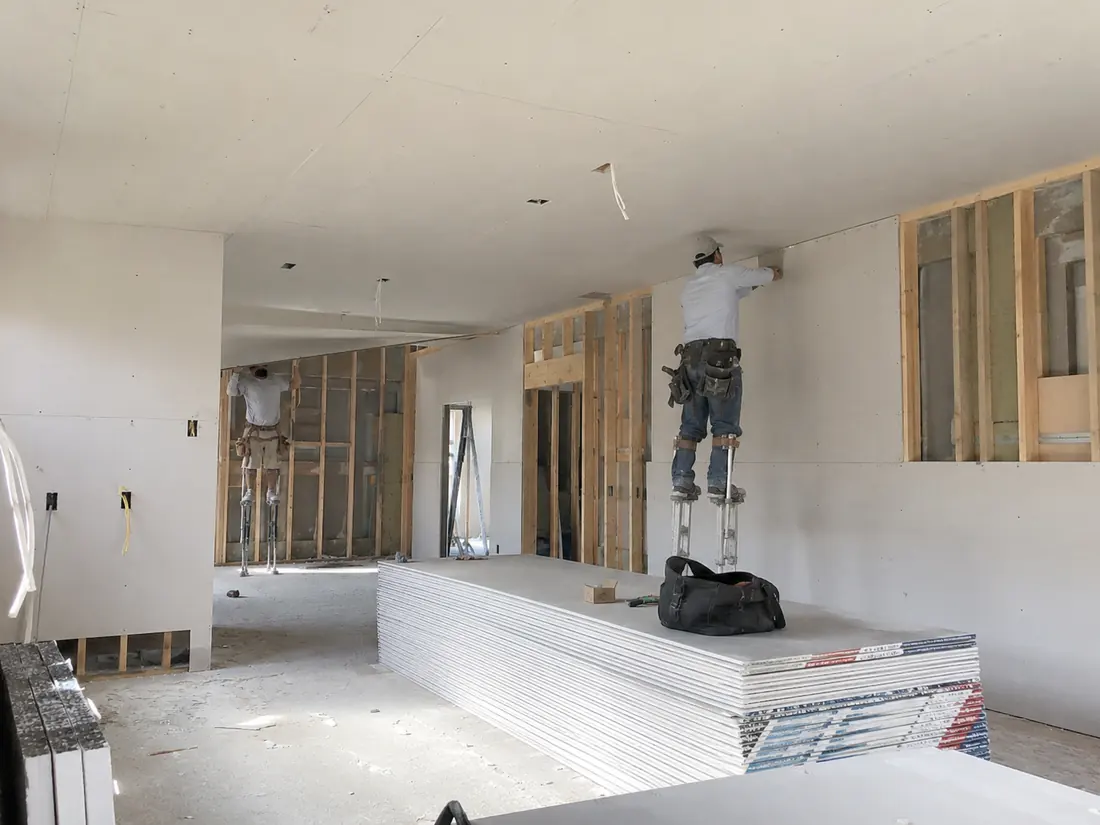
For 2026, national cost surveys put fully installed drywall, meaning hung, taped and finished to a standard Level 4, at roughly $1.60 to $3.75 per square foot of board. Several put the basic installed cost around $2.26 to $2.69 per square foot.
Broken into its parts, which is how contractors actually price it:
| Phase | Per sq ft | What it covers |
|---|---|---|
| Hang only | $0.85 to $1.90 | Board delivered, cut and fastened. No finishing at all |
| Tape and mud | $0.35 to $1.10 | Tape bedded, coats applied, sanded |
| Full install to Level 4 | $1.60 to $3.75 | Everything above, paint-ready |
| Texture, applied after | $0.80 to $2.00 | Orange peel, knockdown or skip trowel |
Note that hang-only quotes look attractive and are not comparable to a finished price. If one bid is dramatically lower than the others, check whether it includes finishing.
What moves the number
Finish level, which is the big one
The Gypsum Association defines drywall finish in levels 0 through 5 in its GA-214 document. A Level 4 is standard residential and correct under flat paint or a light texture. A Level 5 adds a thin skim coat across every surface and costs meaningfully more in both material and labor.
Most bids do not name a level. That single omission makes comparison impossible, because a cheap Level 3 and a fair Level 4 look identical on paper and completely different on your wall. See Level 4 vs Level 5 for which one your rooms actually need.
Board type by room
Standard half-inch board suits most walls. Moisture-resistant board belongs on any wall backing a tub, shower or laundry. 5/8-inch Type X is required in fire-rated assemblies and is the correct specification for ceilings framed at 24 inches on centre. Each step up costs more per sheet.
Ceiling height and access
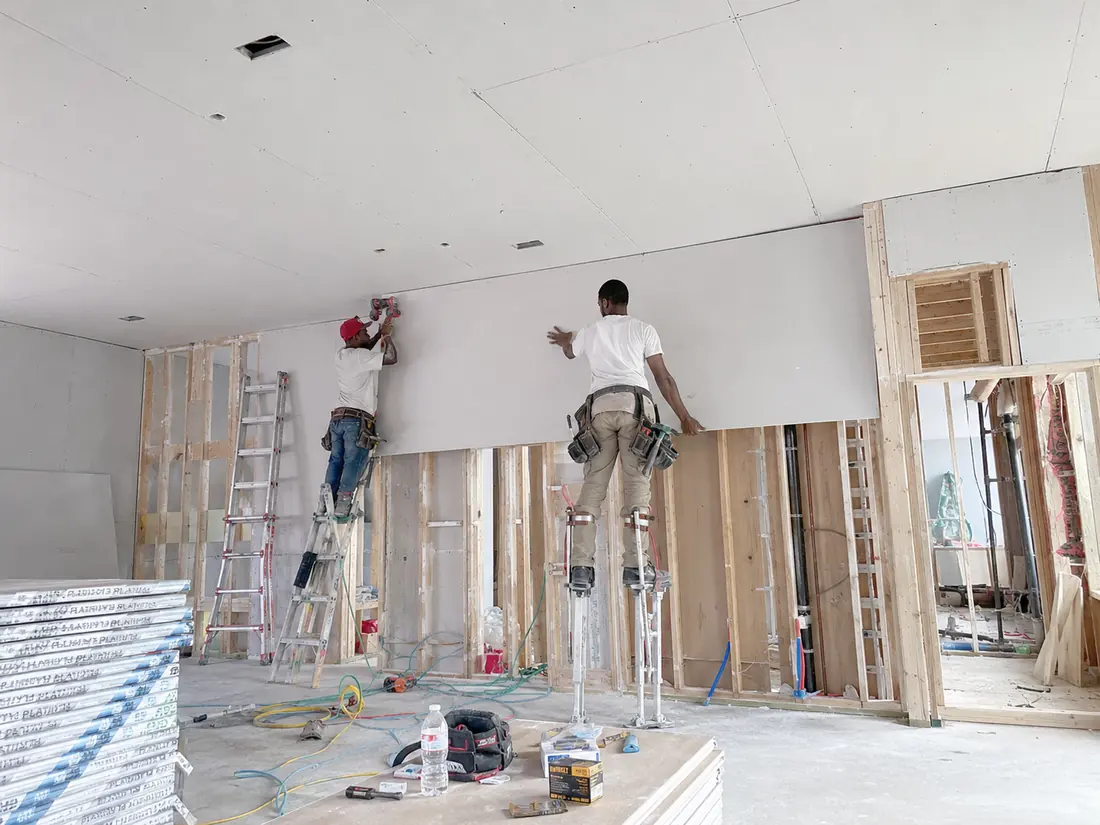
Anything above standard height needs staging and slows every phase. Vaulted ceilings, stairwells and double-height entries all add cost that a per-square-foot figure does not capture.
Layout complexity
Corner count drives finishing labor more than flat area does. Soffits, tray ceilings, archways and niches all add linear feet of corner bead. This is why custom homes come in above a simple square-foot estimate, and a bid that matches the rule of thumb on a complex plan has probably not been read against the drawings.
Framing condition
Board hung on framing that is out of plane will never look flat no matter how good the finishing is. Shimming and correcting framing is real work and should appear as its own line rather than being buried.
The garage conversion question
Garage conversions are one of the more common installation jobs in this area, and they carry a requirement ordinary rooms do not.
Any wall or ceiling assembly shared between the former garage and the house may need to be fire-rated. A fire rating belongs to a complete tested system, so the board type, thickness, layer count, fastener type and fastener spacing all have to match the tested design. Substituting any component voids the rating even if the substitute seems equivalent.
This is a code question rather than a preference, and it is the thing that fails inspection. It also affects the price, so a garage conversion quote that does not mention rated assemblies is worth questioning.
Shreveport-specific factors
Humidity affects the schedule, and schedule is cost. Compound cures by giving up water to the air, and for much of the year that air is already carrying a heavy load. A crew working to a fixed schedule regardless of conditions will coat over a joint that is still damp, and that shows up months later as hairline cracking and visible banding. Building in real dry time is not padding, and where a deadline genuinely cannot move, setting-type compound costs more in labor.
Board storage matters here too. Gypsum board left flat on a slab or leaning against an exterior wall in a humid house picks up moisture before it is ever hung.
Older neighbourhoods carry a thickness problem. In Highland and South Highlands, original plaster is often thicker than half-inch drywall, so a straight swap leaves new walls sitting behind existing casings and baseboards. Furring those walls out to land flush is additional labor that a square-foot quote will not include unless somebody looked.
How to compare bids properly
If the job is a commercial build-out rather than a house, the comparison works differently again, because the assembly rather than the area sets the price. See what commercial drywall costs for how those bids break down.
Ask every bidder for four things in writing:
- The finish level, room by room. If they will not name one, that tells you something.
- Board type by room, including where moisture-resistant or 5/8-inch Type X is being used.
- Whether texture is included or quoted separately.
- What happens if framing needs correcting, and how that is priced.
With those four answers, bids become genuinely comparable. Without them you are comparing numbers that describe different jobs. Our drywall installation in Shreveport page sets out how we specify each of these.
The bottom line
Installation bids are hard to compare because most of them describe different jobs without saying so. Finish level, board type by room, and whether texture is included account for nearly all the spread.
Shreveport Drywall Pro names all three in writing as a matter of course, which makes our quote comparable against anyone else's and makes it obvious when a cheaper bid is quoting hang-only.
Comparing installation bids?
Ask each contractor to state the finish level and board type in writing. Send us your square footage or plans and we will quote it that way as a matter of course.
Or call (318) 666-5548.
FAQ
Common Questions
How much does it cost to drywall a room?
For a standard bedroom, expect roughly $1.60 to $3.75 per square foot of board hung, taped and finished to Level 4, plus texture at $0.80 to $2.00 per square foot if you want it. Ceiling height, board type and layout complexity all move that.
Is it cheaper to hang drywall myself and have it finished?
It can be, and it is a common split. Hanging is genuinely DIY-friendly while finishing is the skilled part. Have someone look at the hanging before finishing starts, since over-driven fasteners and wide gaps are cheap to fix then and expensive once buried.
Why is one quote so much lower than the others?
Usually it is hang-only rather than finished, or it is quoting a lower finish level without saying so. Ask each bidder to state the finish level in writing and the difference normally explains itself.
Does drywall cost more in a garage conversion?
Often yes, because walls and ceilings shared with living space may require fire-rated assemblies. That dictates board type, thickness, layer count and fastener spacing, all of which cost more than a standard partition.
Should I pay extra for Level 5?
Only in specific rooms. Level 5 earns its cost under satin or semi-gloss paint, under dark saturated colours, and where a wall takes strong side light from large windows. Under flat paint in a normally lit room, Level 4 is correct.