Drywall Repair Guide
How Much Does Drywall Repair Cost in Shreveport, LA?
Most Shreveport homeowners want one number. The honest answer is a range, and the thing that moves it is rarely the size of the hole.
Published August 2026 by Shreveport Drywall Pro
Quick answer
Most single-room drywall repairs in Shreveport run $200 to $750. Small holes sit at $100 to $250, medium holes at $200 to $500, and ceiling work at the top of the range. The biggest cost driver is not hole size, it is whether an existing texture has to be matched.
The short answer
For a single-room repair in the Shreveport area, expect $200 to $750. Small patches sit at the low end. Ceiling work, water-damaged board and repairs that need an existing texture matched sit at the top.
Nationally, home services cost surveys published in 2026 put the average drywall repair at roughly $612, with a full range of about $150 to $2,000. Those figures line up with what we see locally, which is why we publish them rather than pretending there is a single flat rate.
If you want to skip the estimating and get an actual figure, our drywall repair in Shreveport page explains what is included and how we quote.
Cost by damage type
Damage type predicts price better than square footage does, because different damage needs different work behind the wall.
| Damage | Typical range | Why |
|---|---|---|
| Small hole under 4 inches (doorknob, anchor) | $100 to $250 | Fills or takes a small patch, minimal backing |
| Medium hole, 4 to 12 inches | $200 to $500 | Needs a cut patch, backing and three coats |
| Large hole over 12 inches | $50 to $75 per sq ft | Framing may need blocking added |
| Crack repair, per run | $150 to $400 | Tape has to be cut out and rebedded, not filled |
| Nail pops, per group | $100 to $300 | Each fastener re-anchored, not re-driven |
| Ceiling repair, room sized | $400 to $750+ | Overhead work, less forgiving finish |
| Water-damaged section | Quoted after inspection | Extent is unknown until board comes off |
General per square foot figures of $2 to $6 circulate widely, and they are useful for budgeting a large area. They are close to meaningless for a single doorknob hole, where setup, containment and cleanup dominate the cost rather than the repair itself.
Five things that move the price more than hole size
1. Ceiling or wall
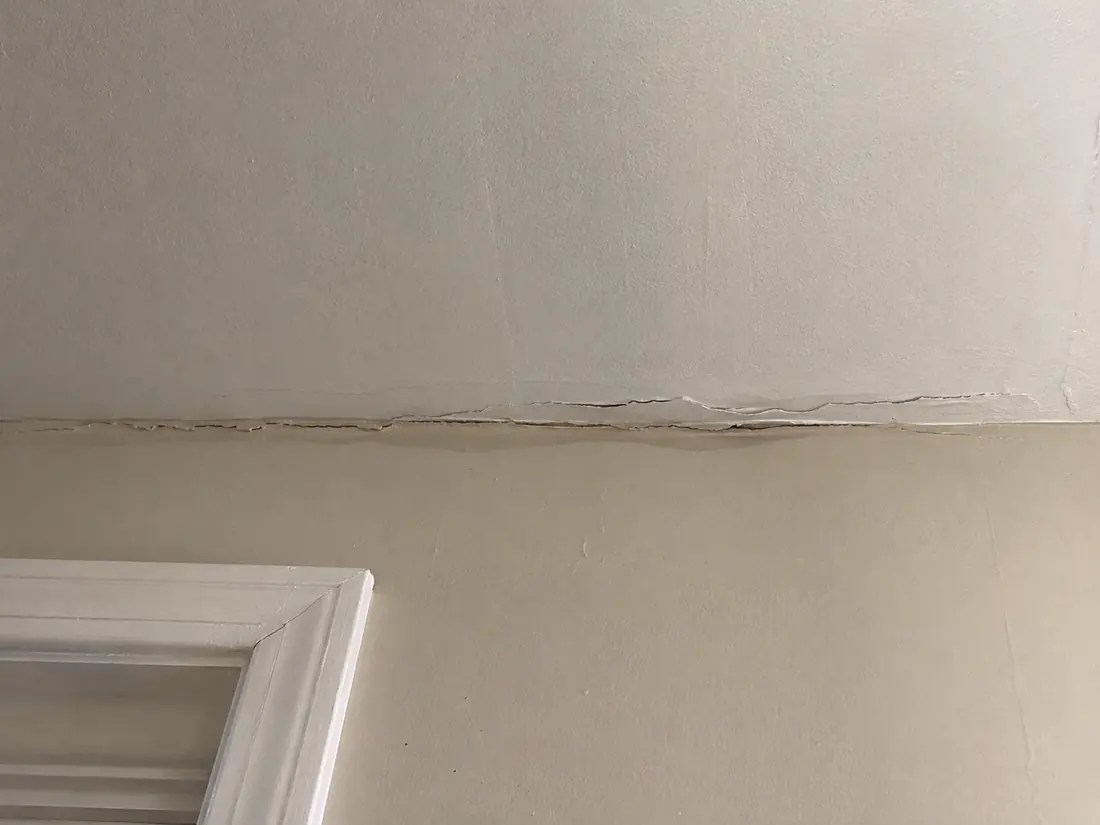
A ceiling repair costs more than the identical repair on a wall, every time. The work is overhead, it is slower, and the finish has to survive raking light from every window and fixture in the room. Walls are far more forgiving. If your repair is on a ceiling, see ceiling drywall repair, where the diagnosis matters as much as the patch.
2. Texture matching
A smooth wall is straightforward. Matching an aged knockdown that somebody sprayed in 1998 takes test passes on a sample board and real skill. This is the single most common reason two quotes for the same hole differ by a hundred dollars, and it is the difference between a repair you never notice and a patch you see every day.
3. Number of separate locations
Five small holes in one room costs far less than five holes across five rooms. Each location carries its own setup, containment and cleanup. If you have a list, batch it into one visit.
4. Access
High ceilings, stairwells and tight spaces need staging and slow every phase down.
5. Finish level
The Gypsum Association defines drywall finish in levels in its GA-214 document. A Level 5 skim adds material and labor over a standard Level 4. Most repairs do not need Level 5, and we will say so. See Level 4 vs Level 5 for when the upgrade is genuinely worth paying for.
What is specific to Shreveport
Two local conditions push repair costs around here in ways a national average cannot capture.
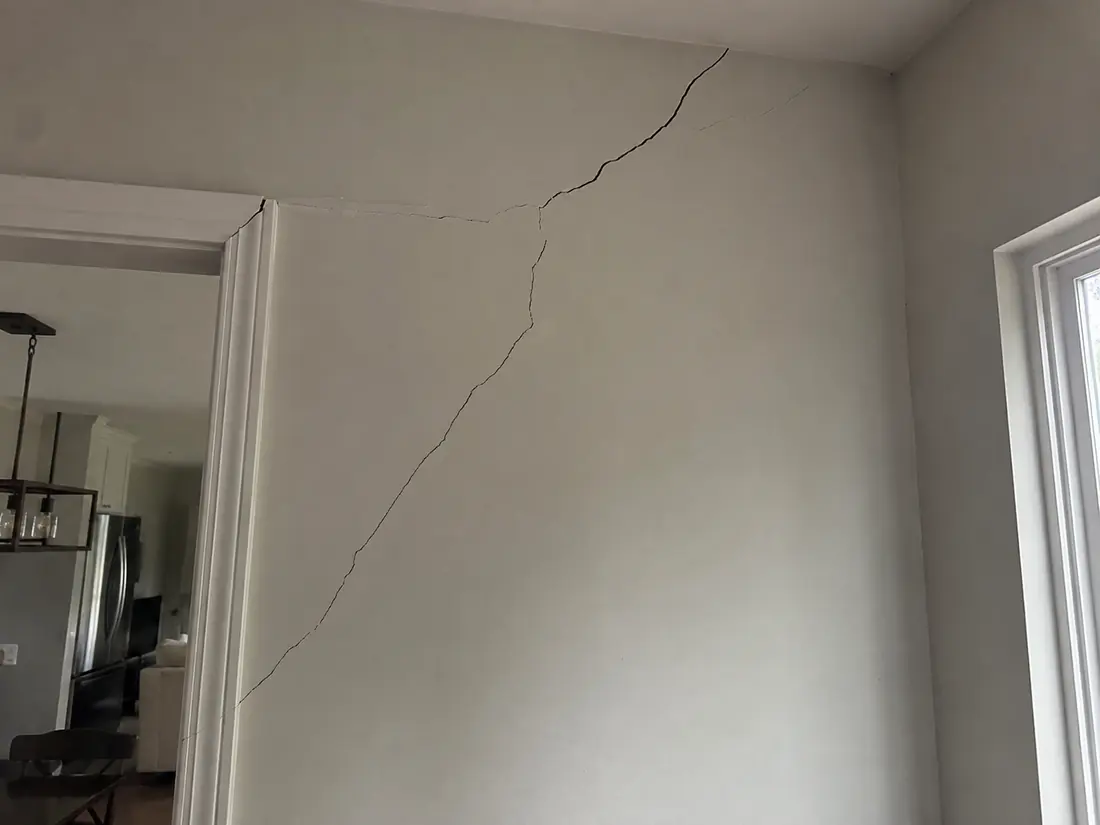
Clay soil. Much of Caddo and Bossier Parish sits on clay-rich ground that swells when it takes on water and shrinks in a dry spell. That movement concentrates at the upper corners of doors and windows. If your crack is there and it has been repaired before, you are not buying a drywall repair, you are buying the same repair a second time. That is covered in why drywall cracks keep coming back.
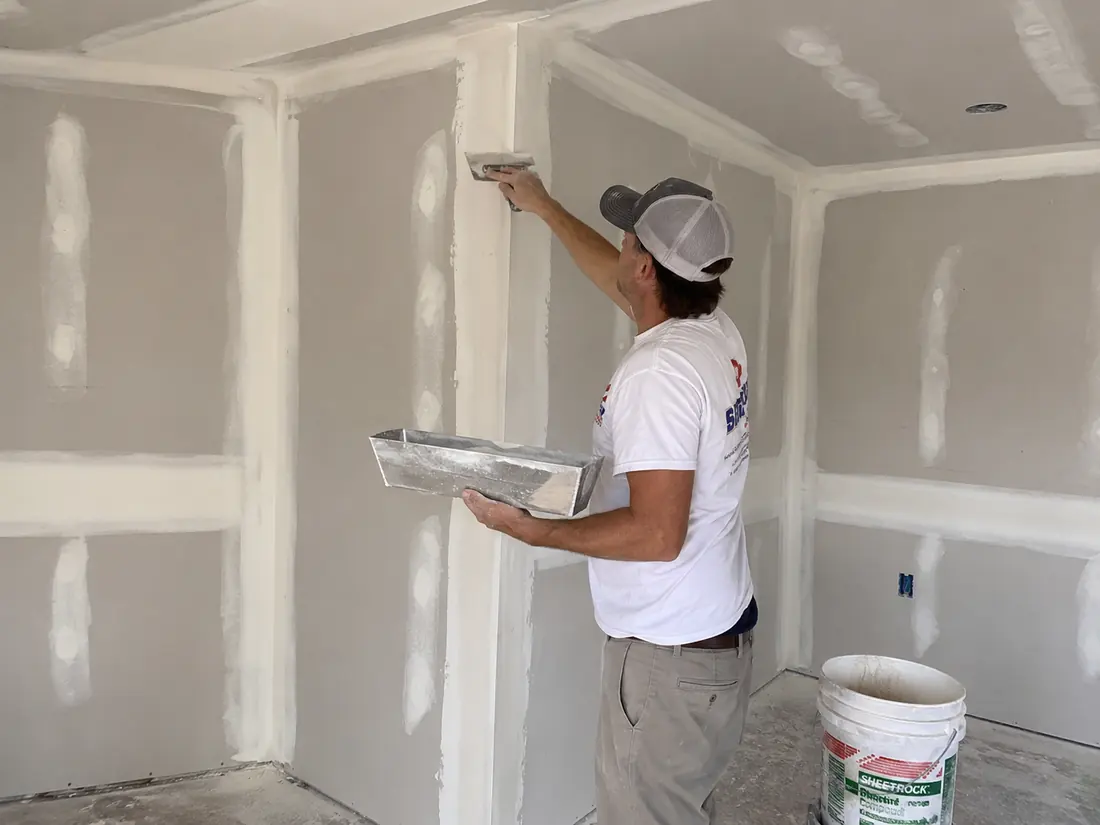
Humidity. Joint compound cures by giving up water to the air. In a Gulf South summer that takes materially longer than the bag suggests. A crew working to a fixed schedule rather than actual dry time will stack a coat onto a joint that is not ready, and that joint cracks months later. Proper dry time is why a three-coat repair spans days rather than hours, and it is not padding.
In the older housing around Highland and South Highlands you may also have plaster rather than drywall. Patching drywall into plaster is not like for like: plaster is usually thicker, so the patch has to be shimmed to finish flush with casings that have not moved in ninety years. That adds labor.
When DIY makes sense and when it does not
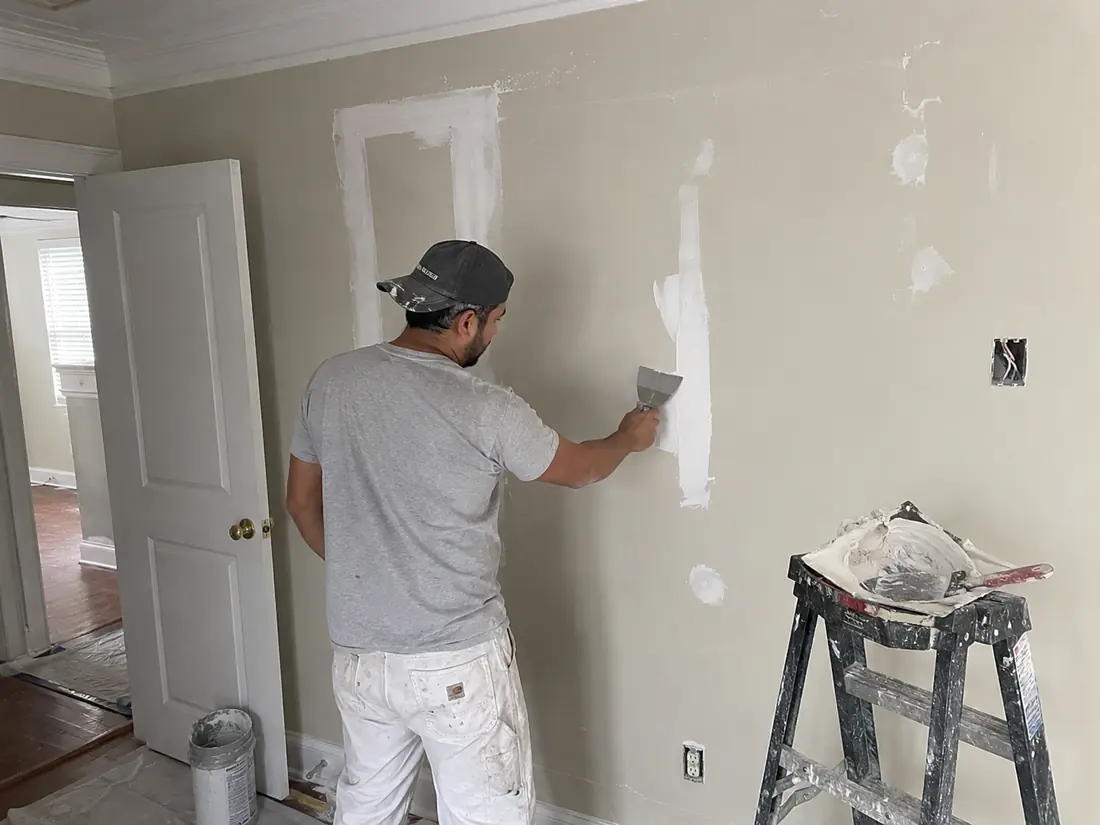
A small hole with a hardware store patch kit is a reasonable weekend job. The materials in those kits are fine. The reason DIY patches usually look wrong is technique rather than product: compound gets applied thick in one pass and sanded flat, leaving a visible raised disc. Three thin coats feathered wide with the same kit produces a completely different result.
Call somebody when any of these are true:
- The wall is textured and you cannot match it
- The damage is on a ceiling
- The board is soft, stained or smells musty, which means water
- The same crack has come back after a previous repair
- The opening is large enough to need backing behind it
That last one is worth emphasising. Most failed patches we are called to redo are surface mesh patches used on openings too large for them. They rely on tape spanning a void, so the outline cracks as the house moves seasonally.
When a repair is not worth doing
One thing worth checking before you book anyone, whatever the size of the job: whether the work crosses Louisiana's licensing thresholds, and whether the contractor carries current liability insurance. We set out where those thresholds fall and how to verify someone.
Sometimes the honest answer is that patching is the wrong purchase.
If a wall has five or more separate patches close together, replacing the board from stud to stud usually costs less than five near-matched repairs and gives you a flatter wall with fewer seams. If a ceiling is scalloping between every joist, that is undersized board rather than damage, and patching does not fix it. And if a crack keeps returning in the same place, the money belongs in drainage or foundation work first.
We will tell you when that is the case, even though it means quoting less work.
The bottom line
Ranges are useful for budgeting and useless for deciding. The number that matters is the one on a written quote, after somebody has looked at the texture you actually have and the light the wall actually gets.
Shreveport Drywall Pro quotes in writing with the finish level and the texture named, and the figure does not move once work starts. If the honest answer is that your money belongs in drainage or foundation work before any drywall, we say that too.
Want a real number instead of a range?
Send a photo of the damage and a close-up of the surrounding texture. We can quote most repairs without a site visit, in writing, itemized before anything starts.
Or call (318) 666-5548.
FAQ
Common Questions
How much does it cost to fix a hole in drywall?
A small hole under 4 inches typically runs $100 to $250 professionally, and a 4 to 12 inch hole runs $200 to $500 because it needs a cut patch, backing and multiple compound coats rather than a simple fill. The number of separate locations affects the total more than the size of any one hole.
Why do drywall repair quotes vary so much?
Usually texture matching and finish level. Two contractors quoting the same hole can differ by a hundred dollars or more depending on whether they intend to sample-match your existing texture and what finish level they are working to. Ask both to state the finish level in writing and the comparison becomes meaningful.
Is drywall repair cheaper than replacement?
For isolated damage, yes, considerably. For a wall carrying several patches close together, replacing the full sheet is often cheaper than multiple repairs and leaves fewer seams to crack later. We quote both when it is a genuine toss-up.
Do you charge a minimum for small repairs?
We do not carry a minimum-day charge on residential patching. That said, setup, travel and cleanup dominate the cost of a small job, so batching several repairs into one visit is much better value than separate call-outs.
How much does drywall repair cost per square foot?
Regionally $2 to $6 per square foot for straightforward work, though small repairs price by the job rather than by area because the fixed costs outweigh the material. Large holes over about 12 inches are often quoted at $50 to $75 per square foot.