Drywall Repair Guide
Drywall Cracks in Shreveport Homes: When Should You Worry?
Most drywall cracks are harmless. A few are the house telling you something expensive. The difference is in the pattern, not the width.
Published August 2026 by Shreveport Drywall Pro
Quick answer
Most drywall cracks are cosmetic. Worry when a crack is wider than a quarter inch, when one side sits proud of the other, when nearby doors or windows have started sticking, or when it keeps returning after repair. Straight cracks along a seam are failed tape. Diagonal cracks from door corners are movement.
Read the pattern, not the width
Homeowners tend to judge a crack by how wide it is. That is the wrong variable. A hairline crack running diagonally out of a door corner tells you more than a wider crack sitting along a seam, because the direction reveals what is causing it.
There are four patterns worth recognising, and they mean very different things.
The four patterns and what each means
Straight cracks along a joint line
A crack that follows a seam, usually vertical or horizontal and suspiciously straight, means the tape underneath has released. This is a finishing failure rather than a structural one. It is extremely common in houses fifteen years and older, because two decades of seasonal humidity cycling works on a joint that was bedded slightly thin. Not urgent. The repair is to cut the failed tape out and rebed it, not to skim over the line.
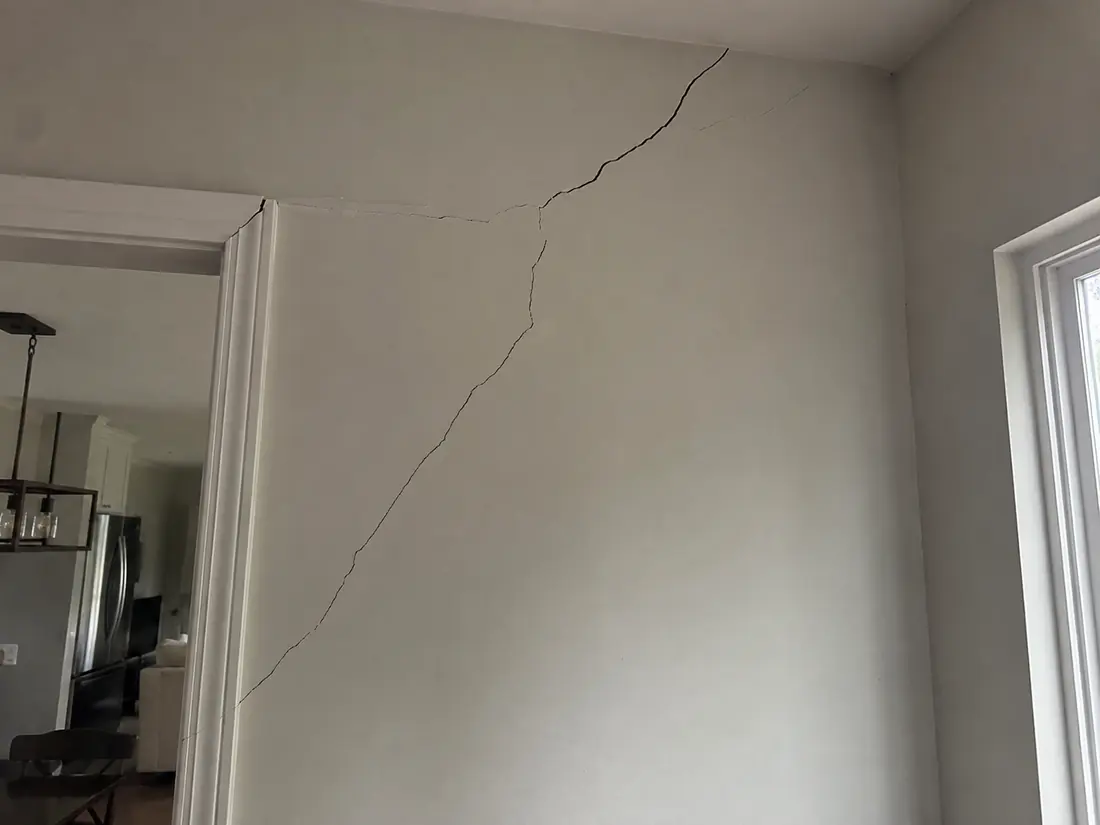
Diagonal cracks from door and window corners
The signature of structural movement. Openings are the weakest points in a wall, so stress concentrates at their upper corners and the crack runs away at roughly 45 degrees. In this region that usually means the clay soil under the house is swelling and shrinking with the seasons. One crack that appeared once and has stayed put is generally fine. A crack that reopens after being repaired is not.
Spiderweb or map cracking
Fine cracks radiating in several directions from a central point. On drywall this usually points at a compound problem, applied too thick or dried too fast. On plaster in an older Highland or South Highlands home it is more often age. Cosmetic in both cases.
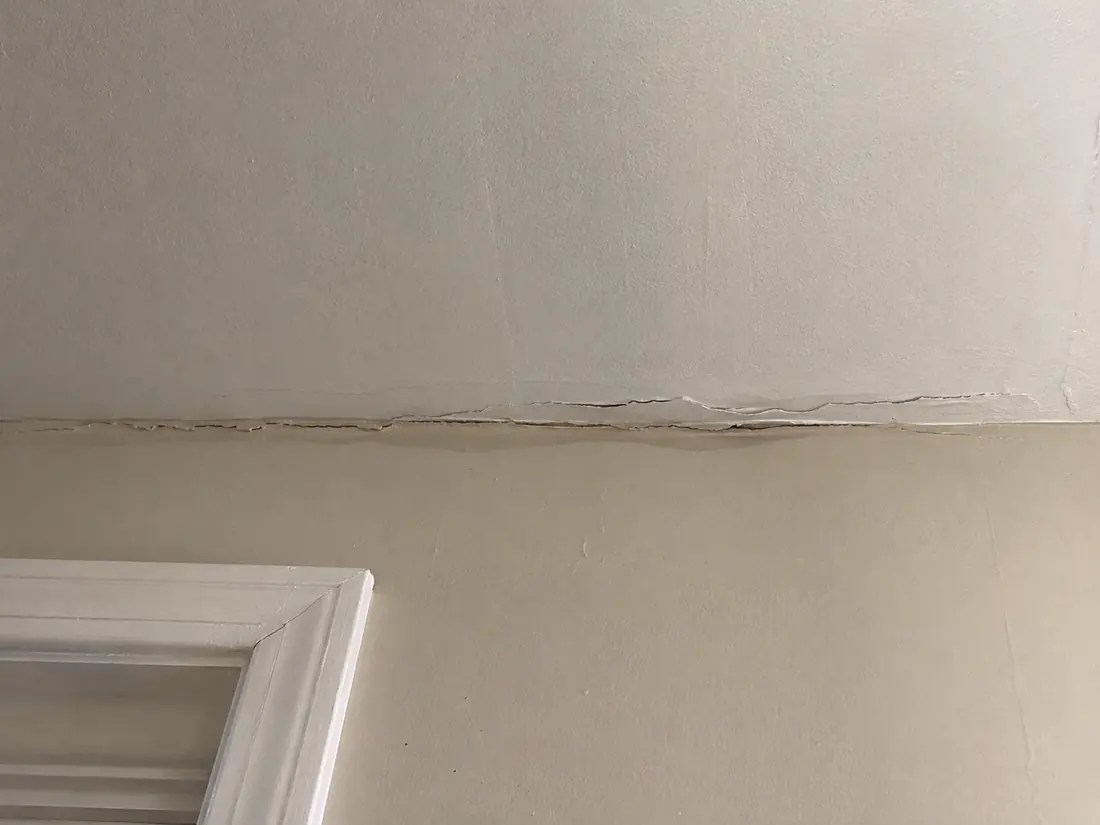
Horizontal cracks at ceiling and wall junctions
Frequently truss uplift, where roof trusses flex seasonally with attic moisture and temperature, lifting the ceiling away from interior walls. It often appears in winter and closes up in summer. Annoying, generally not dangerous, and best handled with a corner detail that allows the movement rather than a rigid patch that fights it.
When to worry now
Most cracks can wait for a convenient moment. These cannot.
- A crack wider than about a quarter inch, especially if one side sits proud of the other. Displacement means movement, not shrinkage.
- Doors and windows that have started sticking in the same part of the house as the crack. That is the frame racking, and it is a structural signal.
- Cracks accompanied by sloping or bouncing floors.
- A crack that is visibly growing over weeks rather than years. Pencil the ends and date them, then check in a month.
- Any crack with staining, softness or a musty smell. That is water, and water is time-sensitive. The EPA notes mold can begin growing on damp material within 24 to 48 hours. See water damage drywall repair.
If two or more of those are true together, talk to a structural engineer or foundation contractor before you spend anything on drywall. Patching first is money spent twice.
Why Shreveport homes crack the way they do
Large parts of Caddo and Bossier Parish sit on clay-rich soil. Clay is unusual among soils in how much it changes volume with moisture: it swells when saturated and shrinks as it dries. A slab or pier foundation sitting on that ground moves with it, and the movement transfers into the frame above.
That produces a seasonal rhythm many local homeowners will recognise. Cracks open in late summer after a dry stretch, then partly close after sustained rain. If your cracks come and go with the weather, that is the mechanism, and it is why drainage matters as much as anything structural. Gutters that discharge next to the foundation and beds that hold water against the slab both make it worse.
Housing age matters too. Newer construction out toward Benton, Haughton and Stonewall cracks for a completely different reason: first-cycle settlement as a new house beds onto its site and its framing lumber dries to indoor moisture content. That is normal, it is not a defect, and it mostly stops within the first couple of years.
Fixing a crack so it stays fixed
Filling a crack with compound and painting over it is what most people try first, and it is why most cracks come back. Compound has no tensile strength across a moving joint.
A durable repair depends on the cause. Failed tape gets cut out and rebedded with fresh tape in a full bed of compound. Structural cracks need the movement addressed first, and only then a repair. Truss uplift is best handled by allowing the movement at the corner rather than trying to lock it down.
Whichever applies, the finish work is the same three-coat sequence with real dry time between coats, then texture matched on a sample board before it touches your wall. Our drywall repair in Shreveport page walks through the full sequence.
The bottom line
Most cracks in a Shreveport home are the house breathing with the seasons. A few are worth acting on quickly. The pattern tells you which, and width alone does not.
If you are unsure, send a photo showing the crack and the nearest door or window. Shreveport Drywall Pro will tell you what we think it is, including when the answer is a structural engineer rather than a drywall contractor.
Not sure what your crack is telling you?
Send a photo showing the crack and the door or window nearest to it. We will tell you what we think it is, including when the answer is that you need a foundation contractor rather than us.
Or call (318) 666-5548.
FAQ
Common Questions
Are drywall cracks normal in a new house?
Yes. A newly built house settles onto its site and its framing lumber shrinks as it dries to indoor moisture content, and both concentrate stress at door and window corners. It is normal and not a sign of poor construction. Most of it stops within the first couple of years.
When is a drywall crack structural?
Look for width over about a quarter inch, displacement where one side sits proud of the other, doors or windows sticking nearby, or sloping floors. Any two of those together warrant a structural engineer before you spend money on drywall.
Why do my cracks open and close with the seasons?
That is the clay soil common across this region. Clay swells when it takes on water and shrinks in a dry spell, and the foundation moves with it. Cracks that open in late summer and partly close after sustained rain are following that cycle.
Can I just fill a crack with caulk?
For a crack at a trim junction, yes, flexible caulk is appropriate. For a crack in the middle of a drywall surface, no. Caulk stays flexible and will not sand flat or take texture, so the repair will always be visible.
Should I repair cracks before selling my house?
Usually yes for cosmetic cracks, since they read as neglect to a buyer. Be aware that patching a structural crack without addressing the cause can be a disclosure issue, and an inspector will often spot a fresh patch over a moving joint anyway.