Drywall Repair Guide
Why Do Drywall Cracks Keep Coming Back in Louisiana Homes?
If you have patched the same crack twice, the patch was never the problem. Something under or around the house is still moving.
Published August 2026 by Shreveport Drywall Pro
Quick answer
Because something is still moving, not because the repair was bad. In this region that is usually clay soil swelling and shrinking with moisture under the foundation. Compound and tape cannot bridge a joint that keeps shifting. Fix drainage first, monitor for a season, then repair.
The honest answer first
A crack that reopens in the same place is almost never a workmanship failure. Compound and tape have essentially no ability to resist a joint that keeps moving. You can execute a textbook repair and it will still fail if the two sides of the crack continue to shift relative to each other.
So the useful question is not how to patch it better. It is what is moving, and can that be stopped.
Cause one: expansive clay soil
This is the dominant cause across Caddo, Bossier and DeSoto Parish. Clay-rich soils change volume substantially with moisture content. They swell when they take on water and shrink as they dry out, and a foundation sitting on that ground rides the movement.
Northwest Louisiana provides ideal conditions for the cycle: roughly 50 inches of rain a year delivered unevenly, with wet stretches followed by hot dry spells. The soil under your slab is rarely at a stable moisture content for long.
The tell is seasonality. If your cracks widen in late summer and partly close after sustained rain, you are watching soil moisture rather than a failing house. The good news is that much of this is manageable without structural work, because the variable you can influence is how evenly the soil around the foundation stays moist.
What actually helps
- Gutters and downspouts discharging well away from the foundation. A downspout dumping beside the slab creates a wet zone against one corner while the rest of the perimeter dries. Differential movement is worse than uniform movement.
- Grading that falls away from the house. Beds that trap water against the slab do the same thing in reverse.
- Consistent watering in drought. Counterintuitive, but soaker hoses run around the perimeter during a long dry spell keep the soil from shrinking away unevenly.
- Managing large trees near the foundation. A mature tree draws a great deal of moisture from the soil on its side of the house.
The other causes worth ruling out
Truss uplift
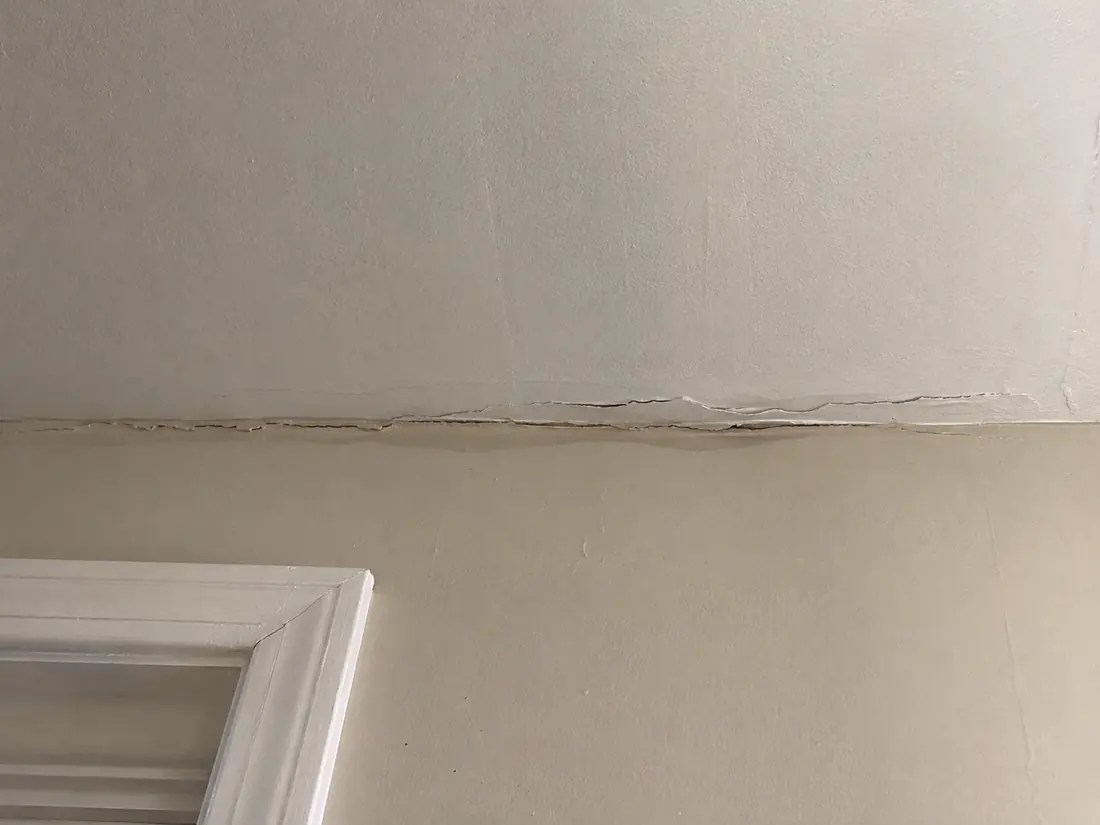
Roof trusses flex seasonally as attic moisture and temperature change, lifting the ceiling away from interior partition walls in winter and settling back in summer. It produces a horizontal crack at the ceiling and wall junction that appears and disappears on a yearly cycle. Fighting it with a rigid patch never works. The correct approach is a corner detail that allows the movement, or crown moulding fixed to the ceiling only so it floats over the joint.
Framing that never finished drying
Lumber installed at high moisture content keeps shrinking for a few years after the house is finished. This is the usual explanation in newer construction out toward Benton, Haughton and Stonewall. It genuinely does settle down, so repairing mid-cycle means repairing twice. When a house is very new we will often recommend waiting rather than taking the work.
Plumbing leaks under the slab
A slow leak beneath a slab saturates the soil in one localised area and produces movement that looks exactly like seasonal clay behaviour, except it does not follow the weather. If cracking is worsening steadily with no seasonal rhythm, and especially if your water bill has crept up, this is worth ruling out before anything else.
The repair method itself
Occasionally it really is the repair. Compound smeared over a crack without cutting out and rebedding the failed tape will crack along the same line within a season, because the underlying joint was never restored. That is a genuine workmanship issue and it is fixable.
The right sequence
When a crack has come back more than once, the order matters more than the technique.
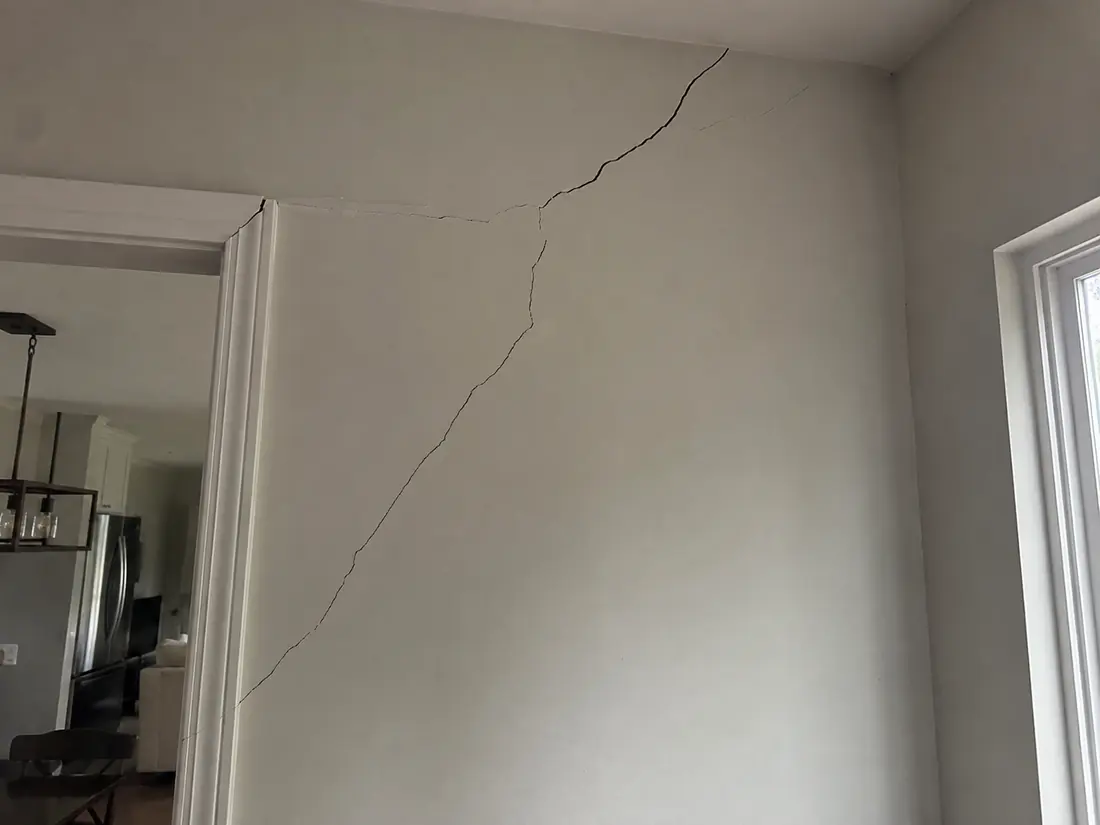
- Identify the pattern. Diagonal from an opening points at movement. Straight along a seam points at tape. Horizontal at the ceiling line points at truss uplift.
- Monitor before you spend. Pencil the ends of the crack and date them. Check monthly for a season. A crack that moves with the weather behaves differently from one that grows steadily.
- Fix drainage first. It is the cheapest intervention with the largest effect on clay movement, and it is often the only one needed.
- Get a structural opinion if there is displacement, sticking doors or sloping floors.
- Then repair the drywall, once the cause is addressed or has stabilised.
Doing step five first is the expensive mistake, and it is the one we are called about most. When we quote drywall repair in Shreveport on a recurring crack, we say plainly if we think the cause is still active.
The bottom line
A crack that returns is not a failed repair. It is an unaddressed cause, and in this region the cause is usually moisture moving through clay soil under the foundation.
Fix drainage first, monitor for a season, then repair. That order costs less than the reverse. Shreveport Drywall Pro will say plainly when we think a cause is still active, even though it means quoting less work today.
Patched it twice already?
Tell us where the crack is and how often it has come back. We will tell you honestly whether this is a drywall job or whether your money belongs somewhere else first.
Or call (318) 666-5548.
FAQ
Common Questions
Why does the same crack come back every year?
Because something is still moving. Compound and tape cannot resist a joint that shifts seasonally. In this region that is usually clay soil swelling and shrinking with moisture, and the crack follows the weather. Address drainage and soil moisture before repairing again.
Will a better patch stop the crack returning?
No, if the cause is active movement. A properly rebedded joint is more durable than a smear of compound, but nothing bridges a joint that keeps moving. The repair is the last step, not the first.
Does watering my foundation actually help?
In a long drought, yes. Soaker hoses run around the perimeter keep clay soil from shrinking away unevenly under one part of the slab. Uneven movement causes more cracking than uniform movement does.
How do I know if it is a slab leak?
The tell is that the cracking worsens steadily without following the weather, often with a rising water bill, damp flooring or a warm spot on the slab. That is a plumber's diagnosis, not a drywall one, and it is worth ruling out before repairing.
Is it worth repairing a crack that will come back?
Sometimes, for a house sale or an event, as long as you know it is cosmetic and temporary. We will tell you when that is the situation rather than implying the repair is permanent.