Drywall Repair Guide
What Causes Nail Pops in Drywall?
Those small round bumps in a line up your wall are not the nails working loose. They are the wood shrinking away from them.
Published August 2026 by Shreveport Drywall Pro
Quick answer
Framing lumber shrinking as it dries to indoor moisture content, which pushes the fastener head forward through the compound. The wood moves, not the nail. That is why re-driving the same fastener always fails, and why the durable fix is a new screw an inch and a half away into fresh timber.
What a nail pop actually is
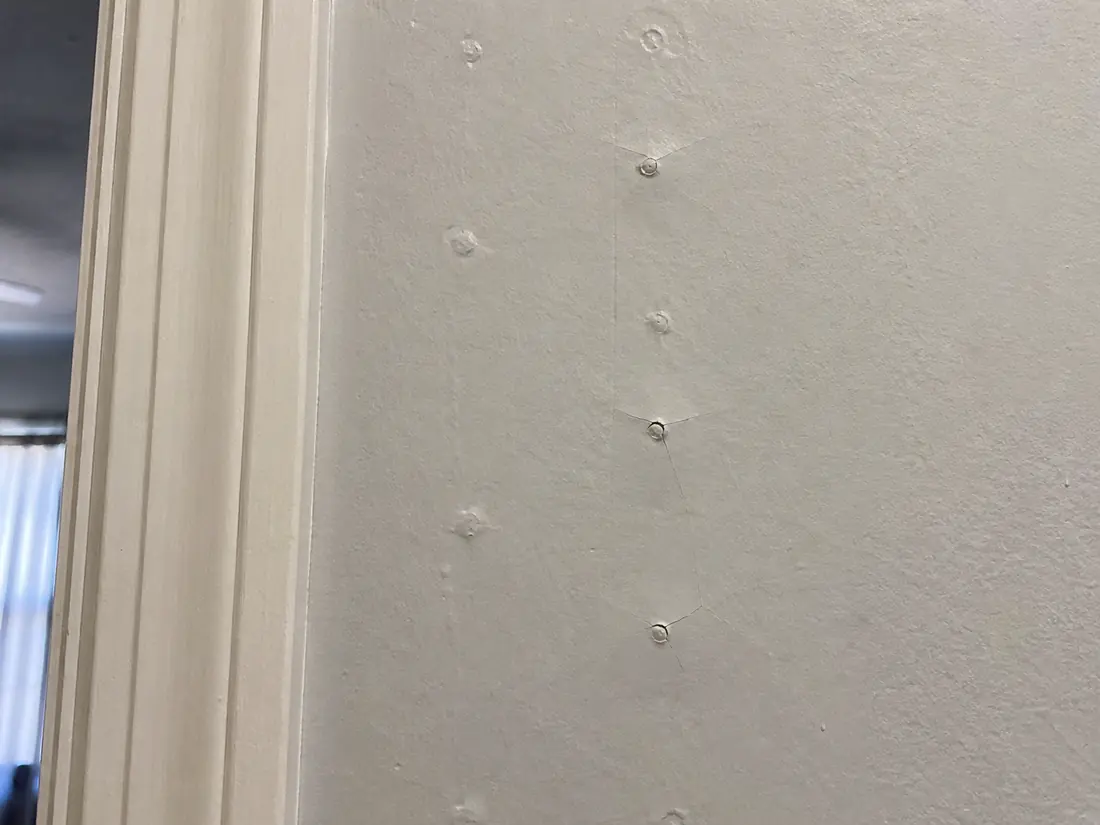
A nail pop is a small circular bump, dimple or crack in the paint surface where a fastener sits. They typically appear in vertical lines following a stud, or in rows across a ceiling following the joists.
The name is misleading. The fastener is not usually working its way out of the wood. What happens is the opposite: the wood shrinks away from the drywall, and as it does, the fastener head is pushed forward through the compound covering it.
Why it happens
Lumber drying out
This is the main cause. Framing lumber is installed at a much higher moisture content than it will eventually reach indoors. As a house is closed in, heated and cooled, that timber dries to equilibrium and shrinks measurably across its width. The drywall stays where it is, so the fastener head ends up proud of the board surface.
It is why nail pops are strongly associated with newer houses. In the subdivisions going up around Haughton, Benton and Stonewall, this appears in the first two or three years and then largely stops. It is normal and it is not a construction defect.
Nails rather than screws
Nails hold by friction along the shank. Screws hold by thread engagement. When timber shrinks and swells seasonally, a nail loses grip far more readily. Modern practice favours screws for this reason, but plenty of older housing was nailed, and those homes see more pops.
Fasteners driven wrong
A fastener driven too deep breaks the paper facing, which is what actually carries the holding strength in drywall. Once the paper is torn the fastener is barely holding at all. Driven too shallow and it sits proud from day one. Both show up as pops.
Missed framing
A fastener that missed the stud and is gripping only drywall will work loose almost immediately. These tend to appear as isolated pops rather than a neat line.
Structural movement
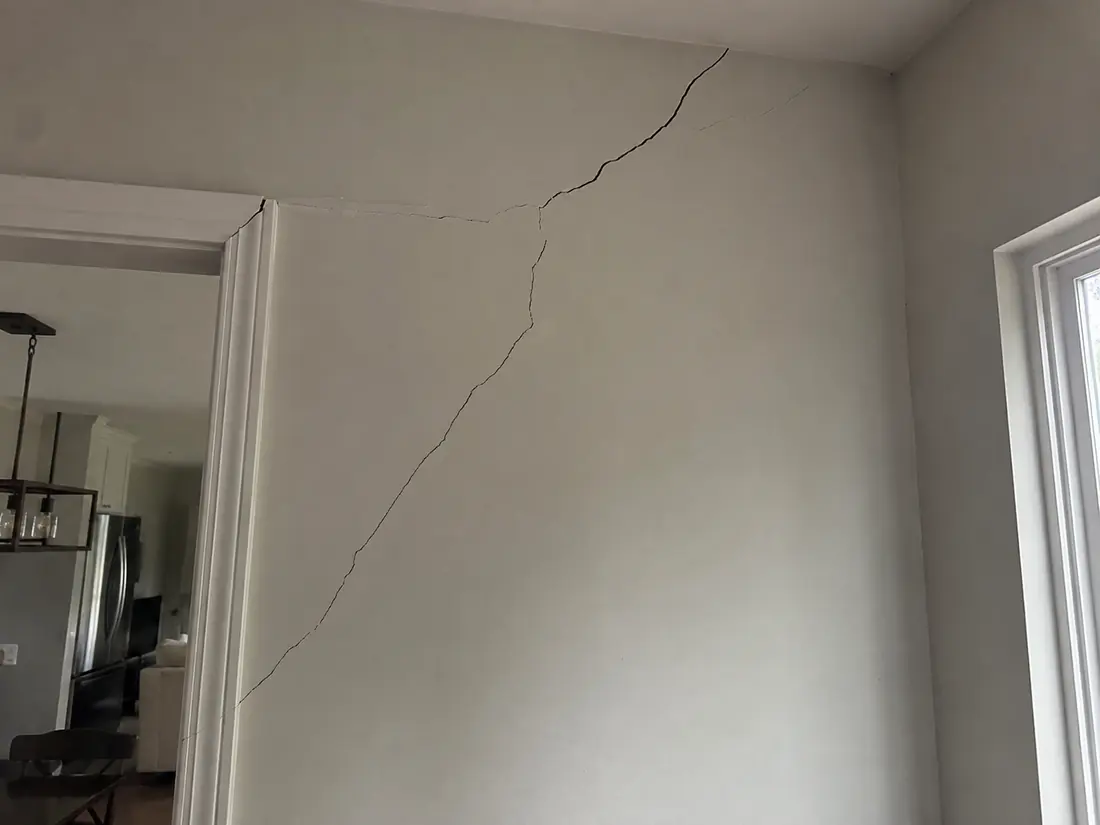
Less common, but worth ruling out. If pops appear alongside diagonal cracks at door and window corners, the cause may be the clay soil movement common in this region rather than lumber shrinkage. That is covered in why cracks keep coming back.
Why re-driving the nail never works
The instinctive repair is to hammer the nail back in and dab compound over it. It fails, usually within a season, and the reason is straightforward.
The fastener has already lost its grip in that hole. The hole is now slightly enlarged and, in a nailed installation, the shank has worn its channel. Driving it back into the same hole restores none of the holding power. The wood will continue its seasonal movement and the fastener will come forward again.
Worse, hammering it back in often crushes the drywall core around the head, which enlarges the area needing repair and gives the next attempt even less to hold onto.
The repair that holds
- Drive a new screw about an inch and a half away, into fresh, undisturbed timber. This is the step that actually re-secures the board. Set it so it dimples the paper without breaking through.
- Deal with the original fastener. Remove it if it will come out cleanly, or set it below the surface if it will not. Leaving it proud guarantees it shows through.
- Coat both locations across three thin passes, feathered wide. Two coats will usually leave a visible low spot once everything shrinks.
- Sand, then match the texture on a sample board before touching the wall.
- Prime so the repair does not flash through the topcoat.
Done properly, a nail pop repair is permanent, because the new screw is in timber that has already done most of its shrinking.
Are they worth fixing?
Nail pops are cosmetic in almost every case. They do not weaken the wall meaningfully and they are not a sign of a failing house.
The practical argument for fixing them is timing and batching. Because each pop takes only minutes but every visit carries setup and cleanup, the cost per pop drops sharply when they are done together. Walk the whole house, mark every one with a pencil circle, and have them all done in one go rather than calling three times.
Two moments make particularly good sense: before repainting, since the wall is being disturbed anyway, and before the end of a builder warranty period if your home is new enough that the builder may cover it. If the pops come alongside cracking, treat it as one job and see drywall repair in Shreveport. Our drywall patching and hole repair service takes exactly this kind of batched list, and we do not carry a minimum-day charge on it.
The bottom line
Nail pops are cosmetic, predictable and permanent to fix, provided the repair anchors into fresh timber rather than re-driving a fastener that has already lost its grip.
They are also the cheapest thing to batch. Walk the house, mark every one, and have them done in a single visit. Shreveport Drywall Pro carries no minimum-day charge on residential patching, so a list of twenty costs far less than four separate call-outs.
Got a wall full of nail pops?
These are quick to fix properly and quicker to fix badly. Send a photo and we will quote the lot in one visit, re-anchored rather than re-driven.
Or call (318) 666-5548.
FAQ
Common Questions
Are nail pops a structural problem?
Almost never. They are usually framing lumber shrinking as it dries to indoor moisture content, which is normal in the first few years of a house. They only warrant concern when they appear alongside diagonal cracks at door corners or sticking doors, which point at movement instead.
Why did my nail pops come back after being repaired?
Because the original fastener was re-driven rather than a new one being set nearby. The old hole has lost its grip, so the fastener works forward again. The durable fix is a new screw an inch and a half away into fresh timber.
Are nail pops normal in a new house?
Yes, very. Framing lumber installed at high moisture content shrinks as the house is heated and cooled, pushing fastener heads through the compound. It typically appears in the first two or three years and then largely stops.
Can I fix nail pops myself?
Yes, this is one of the more DIY-friendly repairs, provided you set a new screw nearby rather than re-driving the old fastener, and you use three thin coats rather than one thick one. Texture matching is the part that usually defeats a DIY attempt.
Should I wait until the house stops moving?
If your home is under about two years old, waiting is often sensible because more will appear. If you are approaching the end of a builder warranty, raise them with the builder before that date rather than after.