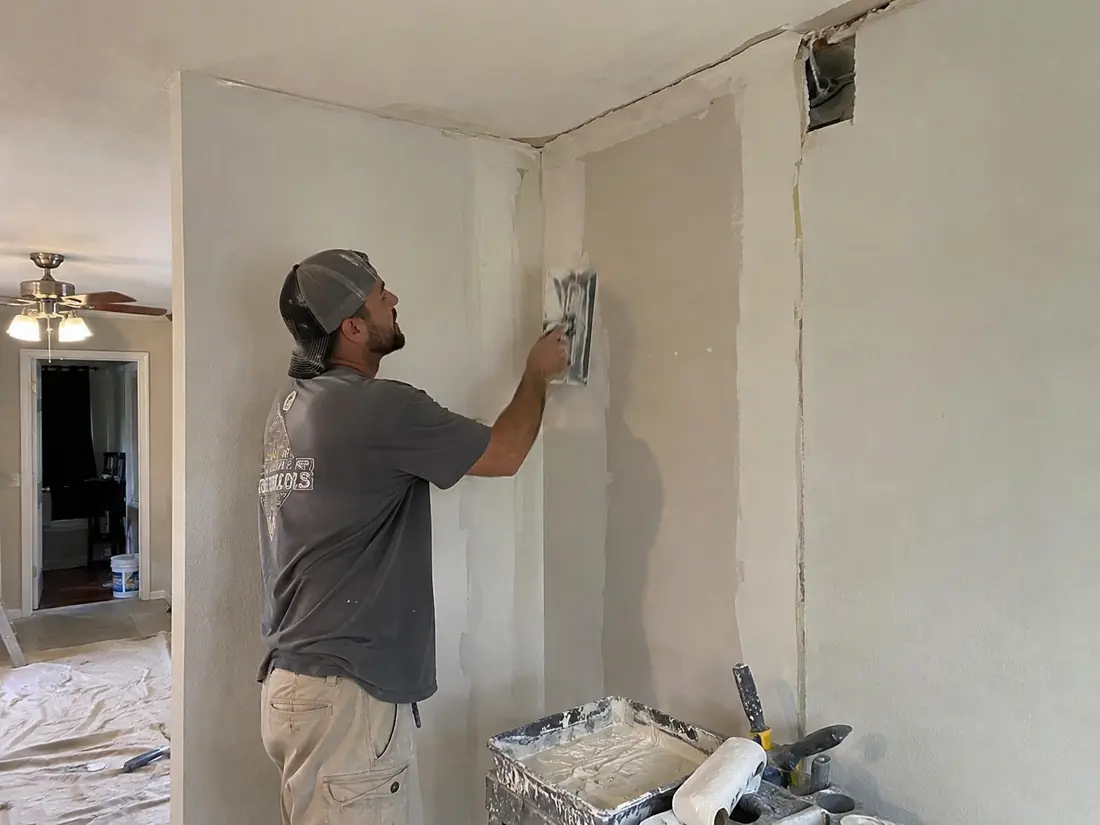
Water Damage Drywall Repair Guide
Water-Damaged Drywall: Repair or Replace?
Drywall that has been genuinely soaked does not recover when it dries. The useful question is how far the water actually travelled.
Published August 2026 by Shreveport Drywall Pro
Quick answer
Replace it if the board is soft, spongy or visibly sagging. Gypsum loses its core strength once saturated and does not recover on drying. Board that stayed firm may be salvageable. Either way, cut to the moisture line measured with a meter, not to the visible stain, which is always smaller than the damage.
Does wet drywall recover?
Not once it has been genuinely saturated. Gypsum board is a compressed mineral core between two paper faces. When it soaks, the core loses its structural integrity and the paper facing delaminates from it. Neither of those reverses when the board dries out. You get a sheet that looks acceptable and has lost most of its strength and its ability to hold a fastener.
Board that was only damp at the edge of an event is a different story and may well be fine. The difference matters financially, and it is not something you can judge by eye.
The practical test is pressure. Press gently with a thumb. Board that gives, feels spongy or leaves an impression has lost its core and needs to come out. Board that stays firm is likely salvageable. A moisture meter turns that judgement into a number.
Why the stain line lies
This is the single most important thing to understand about water damage, and it is where most failed repairs originate.
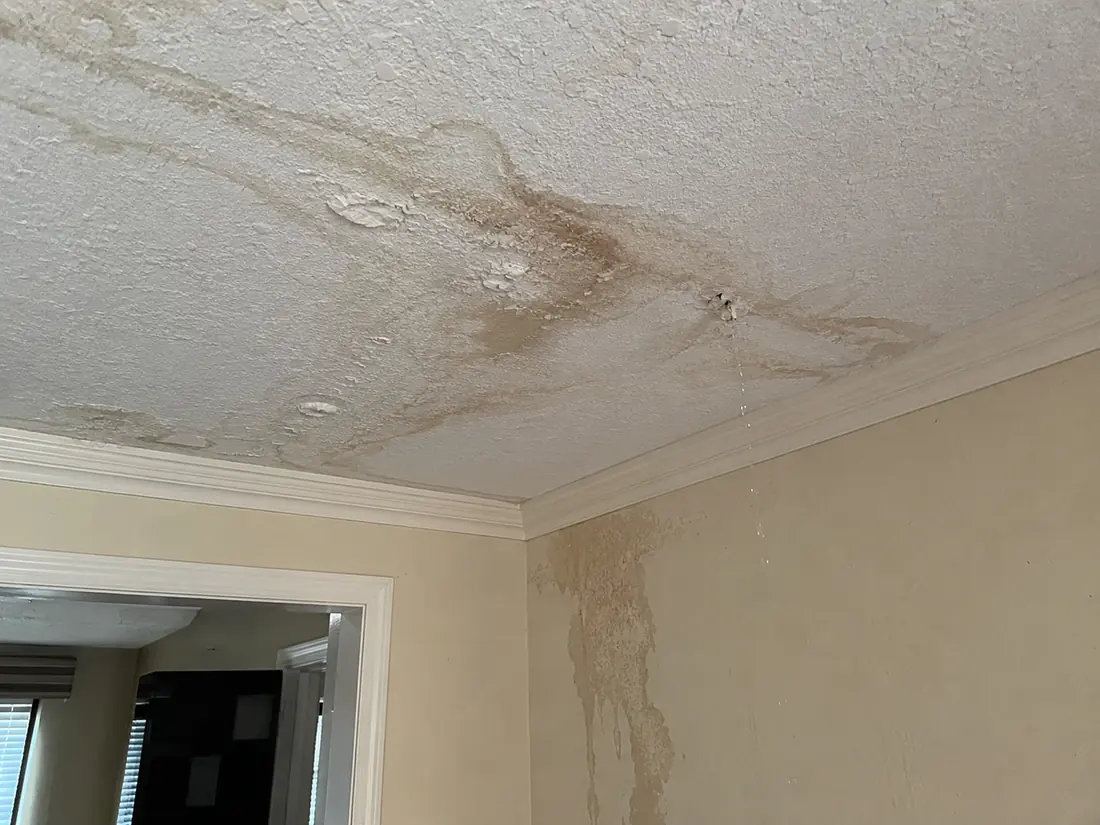
The visible stain marks where water sat long enough to leave a deposit. It does not mark where water reached. Water travels along framing, wicks through insulation and follows the path of least resistance, often well beyond anything you can see. On a ceiling, the stain is frequently downhill from the actual entry point rather than beneath it.
Cutting to the stain line is faster and cheaper and it seals damp material inside your wall. That is why the repair comes back. A moisture meter maps the actual boundary, and on damage that has been running a while the gap between the two can be substantial.
The sequence that matters
Water damage repair is one of the few jobs where doing the steps out of order guarantees failure.
- Stop the source and confirm it. Nothing else happens first. Cutting out wet board while a leak is still active is money spent on a repair that will fail.
- Map the moisture with a meter, not by eye.
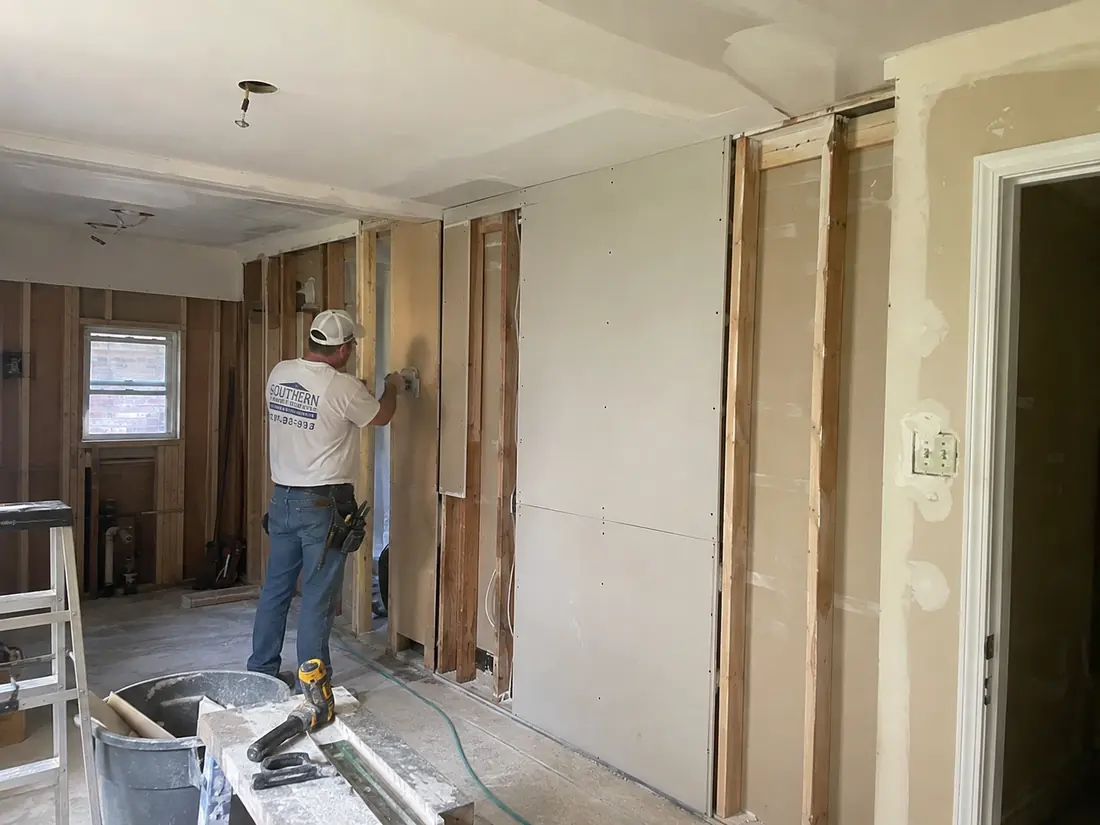
- Remove wet board and wet insulation. Saturated fiberglass batt loses much of its performance and holds moisture against framing long after everything else has dried. It gets replaced, not dried in place.
- Dry the cavity and verify it with readings on framing and sheathing. This is the step that gets skipped under time pressure and it is the step that decides whether the repair holds.
- Rebuild, using mold-resistant board where the location warrants it.
- Stain-block and prime before painting, because water stains bleed through ordinary paint indefinitely.
Our water damage drywall repair page walks through how we document each stage, which also matters if you are claiming on insurance.
The mold question
The EPA notes that mold can begin growing on damp materials within 24 to 48 hours. That is the reason water damage is time-sensitive rather than something to schedule around your calendar.
Paper-faced drywall is a particularly good substrate for it, because the paper is organic and the cavity behind is dark and still. Mold growing inside a wall is often detectable by smell well before anything is visible, which is why a persistent musty odour with no obvious source deserves investigation rather than an air freshener.
If growth is extensive, that is a remediation job rather than a drywall job, and the two should not be confused. We remove affected board and verify the cavity dry. We are not a remediation contractor and will say so when the scope crosses that line.
Should the replacement be mold-resistant board?
In a location that has already taken water once, usually yes.
Mold-resistant board replaces the paper facing with a fiberglass mat or a treated facing, removing the organic food source. It costs more per sheet. In a bathroom, a laundry room or an exterior wall in this climate, that difference is small against the cost of doing the work twice.
Note that moisture-resistant and mold-resistant are not the same thing, and neither is waterproof. Behind tile in a wet area, cement board rather than any drywall is the correct product. There is more on this in best drywall for bathrooms in Louisiana.
Water damage in Northwest Louisiana
Shreveport averages roughly 50 inches of rain a year, much of it arriving in intense thunderstorm activity rather than steady drizzle. Wind-driven rain behaves very differently from vertical rainfall: it finds flashing details, window head trim and roof penetrations that shed ordinary rain without difficulty. A roof in good condition can still admit water in the right storm from the right direction.
The region also has genuine flood history. The Red River crested above 37 feet in June 2015, the highest in roughly 70 years, and more than 20 inches of rain fell across the area in March 2016. A great deal of drywall was replaced quickly in that period. The repairs that failed are generally the ones closed up before the cavity behind them was verified dry, and some of those walls are still holding the consequences.
The third cause is one that gets misdiagnosed constantly: attic condensation. With a long cooling season, warm humid attic air meeting cool ceiling surfaces and poorly insulated duct lines condenses and drips onto the board below. There is no roof defect to find. If a roofer has been out twice and found nothing while the staining continues, this is very likely what you have.
The bottom line
Gypsum does not recover from saturation, and the stain never marks the true edge of the damage. Those two facts decide most of what happens next.
Shreveport Drywall Pro maps the moisture boundary with a meter, removes to that line rather than the stain line, and verifies the cavity dry with readings before any new board goes on. That verification is invisible in the finished result and it is the whole difference between a repair that holds and one you pay for twice.
Do not close the wall until it is verified dry.
Send photos of the staining and tell us what happened. We will tell you what we are likely looking at and what the repair sequence needs to be so you are not paying for it twice.
Or call (318) 666-5548.
FAQ
Common Questions
Can water-damaged drywall be dried out and saved?
Only if it was damp rather than saturated. Once gypsum board soaks through, the core loses strength and the paper facing delaminates, and neither recovers on drying. Board that feels spongy under thumb pressure needs replacing.
How do I know how far the water spread?
You cannot tell by looking. The visible stain marks where water sat long enough to leave a deposit, not where it reached. Water travels along framing well beyond the stain, which is why we map the boundary with a moisture meter before cutting.
How long before mold becomes a problem?
The EPA notes mold can begin growing on damp material within 24 to 48 hours. That is why water damage is urgent rather than something to schedule at leisure, and why a musty smell with no visible source is worth investigating.
Should I use mold-resistant drywall for the repair?
In a spot that has already taken water once, generally yes. It replaces the paper facing with fiberglass mat or treated facing, removing the food source mold needs. It costs a little more per sheet and saves doing the job twice.
Will insurance cover water-damaged drywall?
That depends on your policy and the cause. Sudden events such as a burst pipe are commonly covered, while long-term seepage and maintenance issues frequently are not. We document conditions behind the wall with photographs and moisture readings, which is what adjusters generally ask for.